LLMs14 articles

LLMs

Articles

  • The Gumbel-Softmax Trick: How Continuous Relaxations Enable Differentiable Discrete Sampling

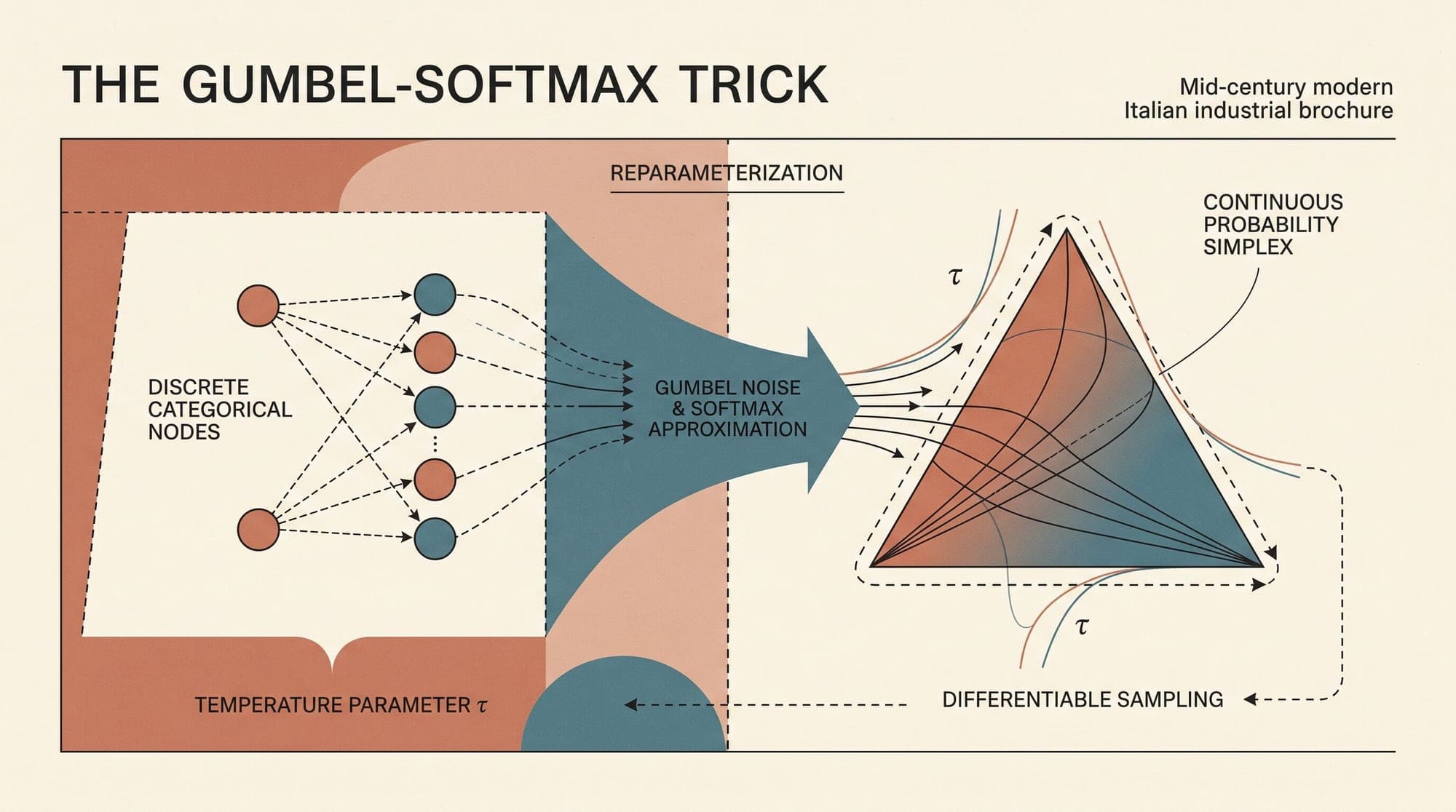
    The Gumbel-Softmax Trick: How Continuous Relaxations Enable Differentiable Discrete Sampling In modern deep learning, end-to-end training depends on reverse-mode automatic differentiation. When an architecture operates on continuous tensors, computing gradients via the chain rule is straightforward. However, many foundational artificial intelligence problems involve discrete choices: selecting tokens from a fixed vocabulary, routing tokens to expert networks in a Mixture-of-Experts (MoE) archit

    1 min
  • The Softmax Bottleneck in Large Language Models: Mathematical Foundations, Matrix Rank Limits, and Mixture of Softmaxes

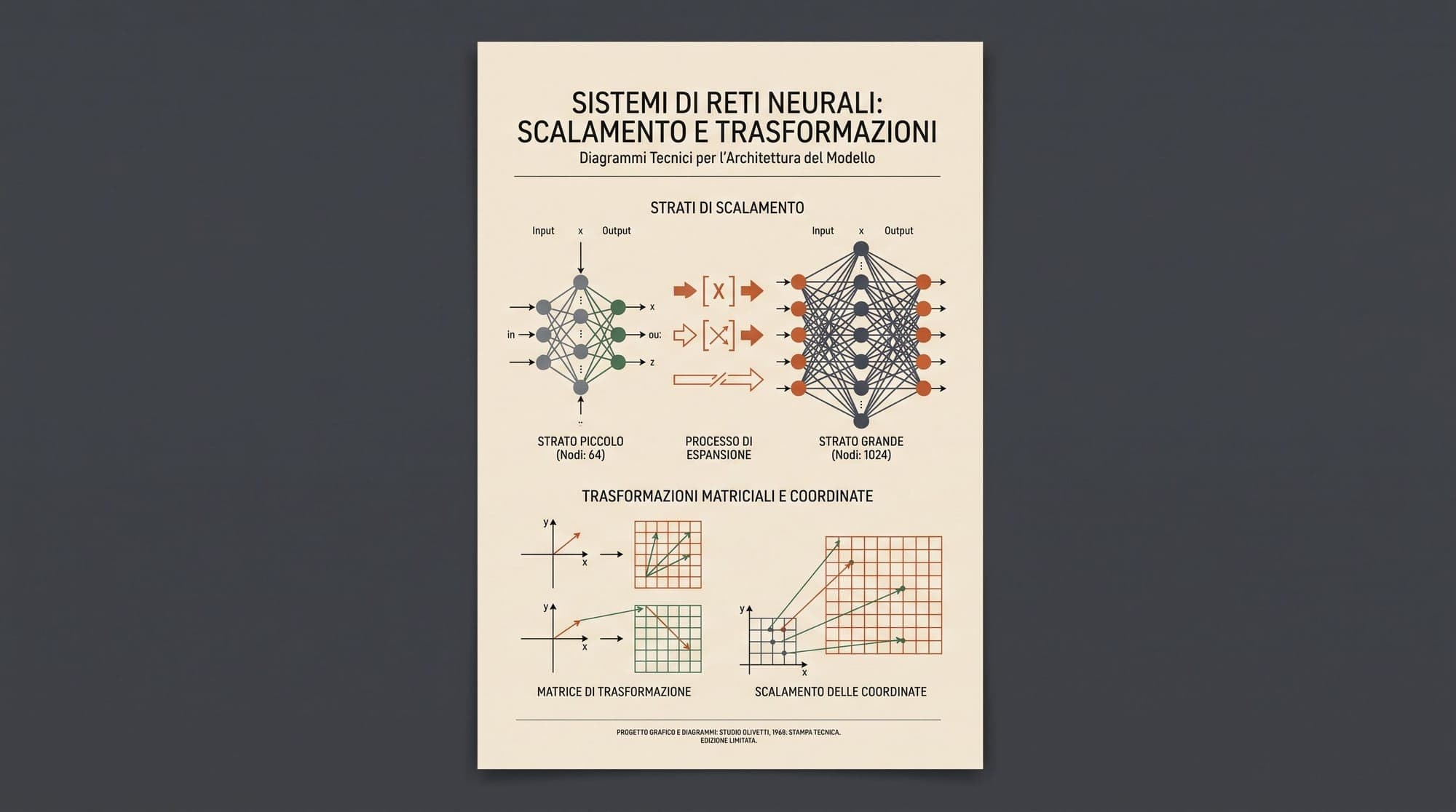
    title: "The Softmax Bottleneck in Large Language Models: Mathematical Foundations, Matrix Rank Limits, and Mixture of Softmaxes" slug: "the-softmax-bottleneck-in-large-language-models-mathematical-foundations-matrix-rank-limits-and-mixture-of-softmaxes" status: "published" feature_image: "https://cms.llms.blog/content/images/2026/08/softmax-bottleneck-cover-1.png" excerpt: "A standard linear projection followed by Softmax caps the rank of predicted log-probability distributions to the hidden dim

    1 min
  • Mental World Modeling: Why Autonomous AI Agents Fail Without Simulating Human Beliefs

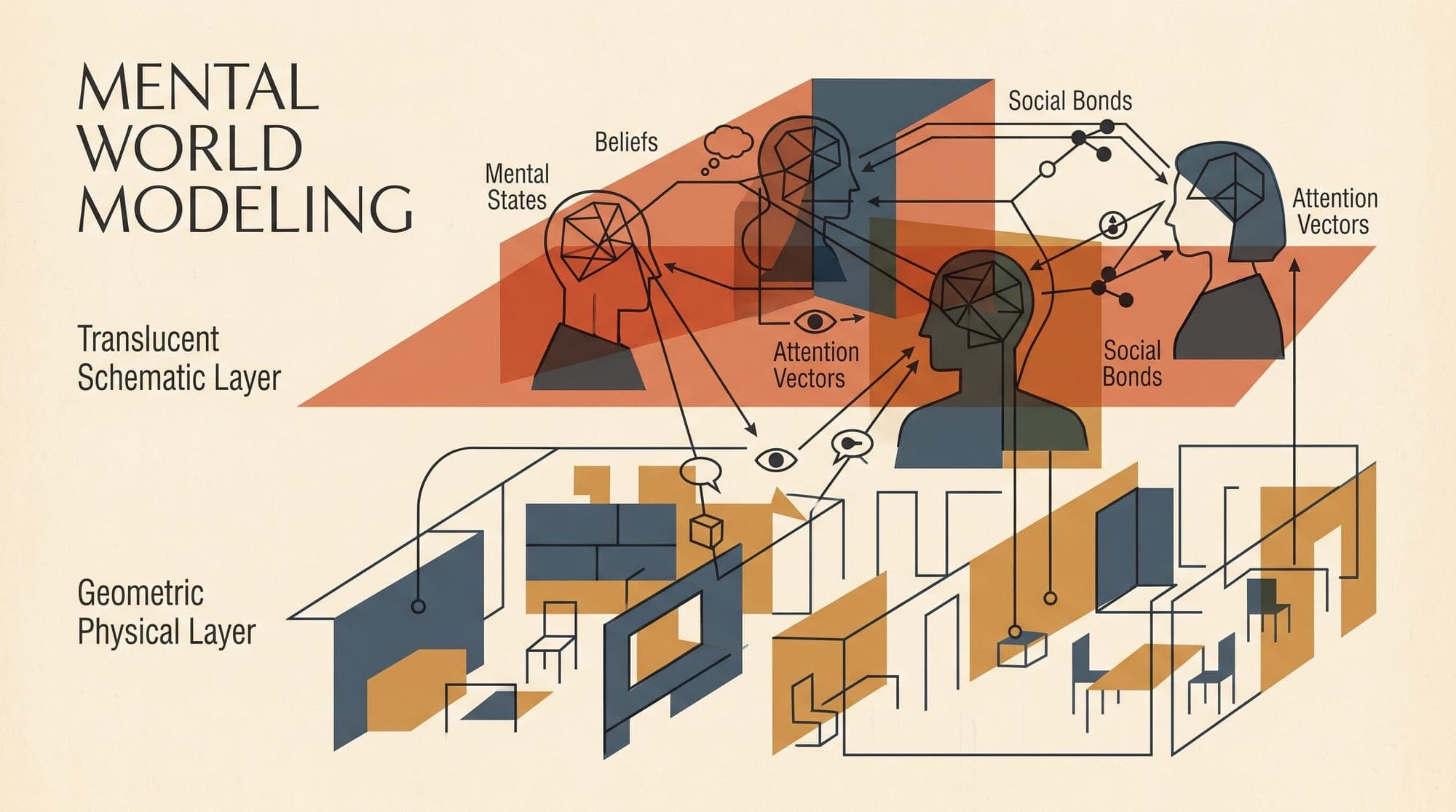
    Mental World Modeling: Why Autonomous AI Agents Fail Without Simulating Human Beliefs Current foundation world models, from video simulators like Sora and Genie to spatial representations like JEPA and Marble, focus almost exclusively on the physical mechanics of an environment. They track geometry, object positions, motion trajectories, and visual continuity. However, when autonomous agents interact with humans in collaborative, medical, or domestic settings, physical state tracking alone cons

    1 min
  • In-Context Learning as Implicit Gradient Descent: How Transformers Optimize Models in Forward Activations

    When large language models (LLMs) adapt to new tasks from a handful of prompt demonstrations, their static weights remain completely untouched. No backpropagation runs through the network, no optimizer updates parameters, and no gradients are calculated. Yet, the model’s predictions improve steadily as more input-output examples are added to the prompt context. For years, this phenomenon (known as in-context learning, or ICL) was treated as an empirical black box. Recent theoretical and mechani

    1 min
  • Cross-Encoder Rerankers in Production RAG: Architecture, Score Calibration, Latency Budgets, and Model Trade-Offs

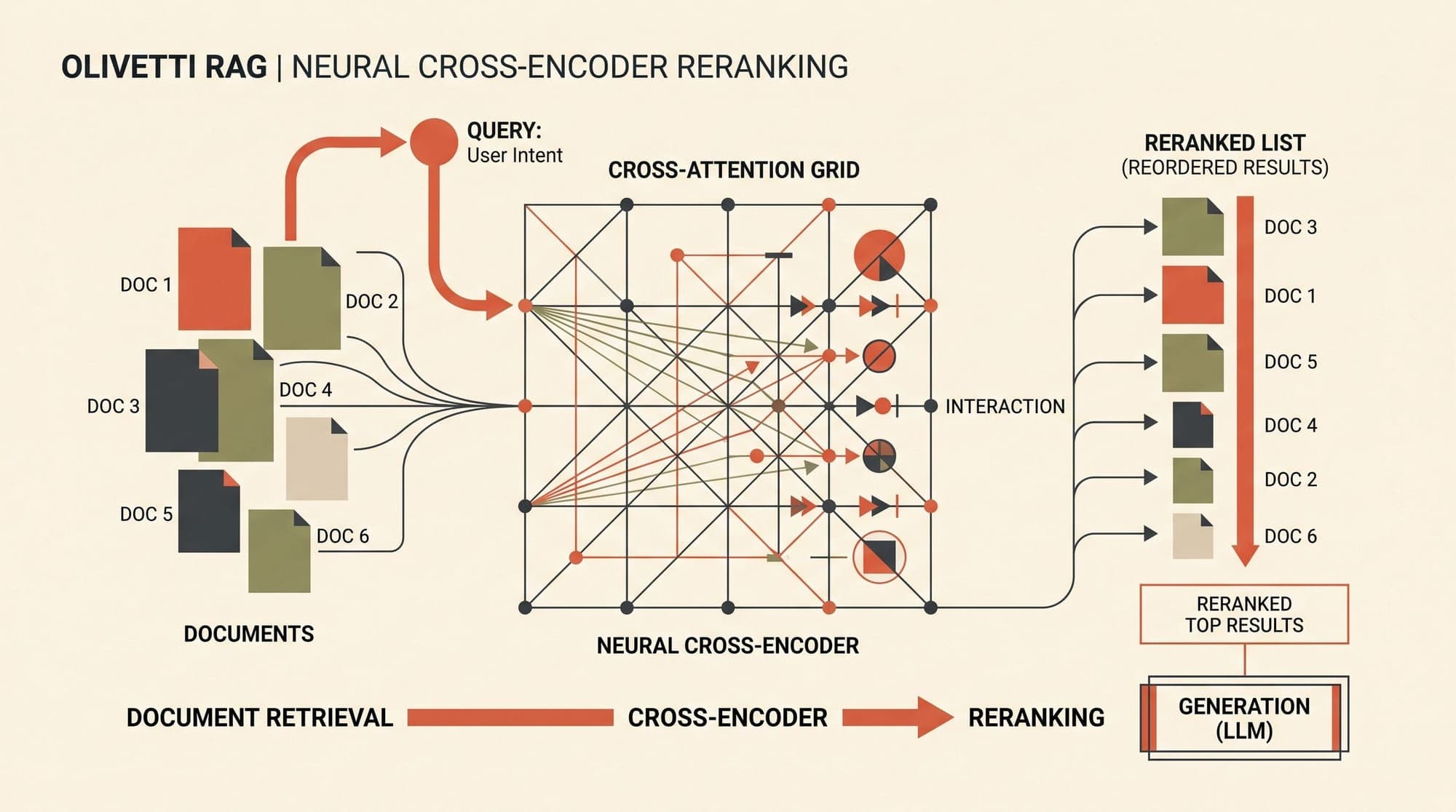
    Retrieval-Augmented Generation (RAG) systems in production frequently suffer from a fundamental precision failure: vector search surfaces the correct chunk somewhere in the top 50 candidates, but fails to place it in the top 3 positions required for high-fidelity LLM synthesis. When irrelevant or tangential chunks lead the context window, generation quality degrades through hallucinations, lost-in-the-middle context neglect, and inflated inference costs. Cross-encoder rerankers serve as the sta

    1 min
  • Stealth Model 'Ox Alpha' Surfaces with 1M Multimodal Context and 100 Trillion Daily Token Allocation

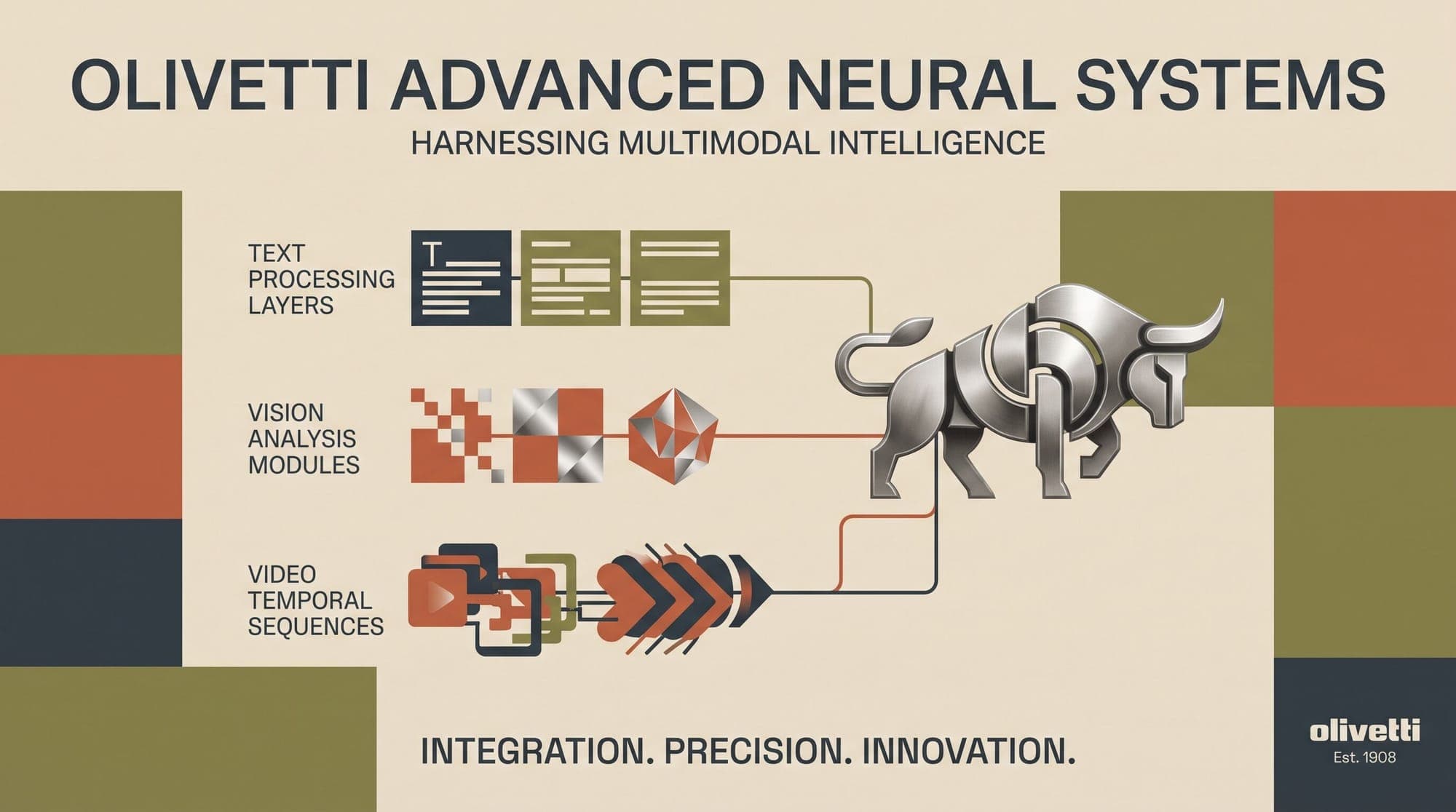
    An anonymous frontier model named "Ox Alpha" has launched across OpenRouter and the OpenCode developer environment, offering free access backed by a reported 100 trillion tokens per day in serving capacity. The model features a 1,048,576-token context window with native multimodal support spanning text, image, and video inputs. The unannounced release follows a pattern of stealth evaluations across AI model aggregators, where frontier labs deploy pre-release checkpoints to collect blind compara

    1 min
  • The Linear Representation Hypothesis in Large Language Models: How Neural Geometry Organizes Concepts, Latent Truth, and Steerable Features

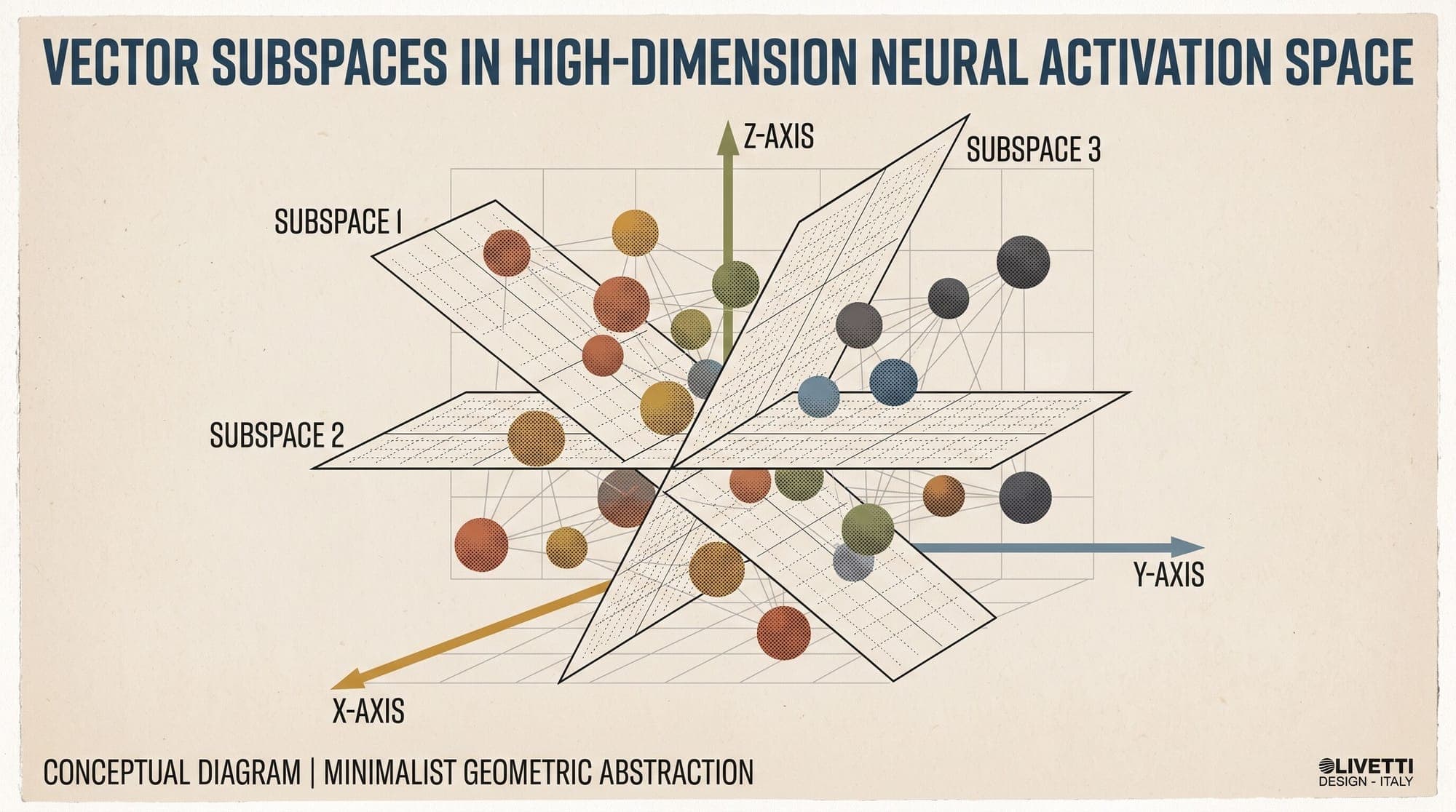
    The Linear Representation Hypothesis in Large Language Models: How Neural Geometry Organizes Concepts, Latent Truth, and Steerable Features Deep neural networks are composed of alternating non-linear activation functions, multi-head attention operations, and high-dimensional matrix projections. Despite this architectural non-linearity, empirical research across mechanistic interpretability reveals a striking geometric regularity: within the intermediate representation spaces of large language m

    1 min
  • Maximal Update Parametrization (muP): How Tensor Programs Enable Zero-Shot Hyperparameter Transfer in LLM Pre-Training

    Pre-training a frontier large language model requires hundreds of thousands of GPU hours and millions of dollars in compute. At that scale, traditional hyperparameter tuning is financially and operationally impossible: teams cannot sweep learning rates, weight initializations, or optimizer betas across multiple 70B parameter runs to find the loss minimum. Historically, practitioners relied on ad-hoc heuristic extrapolation or manual guesses from small runs, often leading to sub-optimal loss curv

    1 min
  • Agentic Search and Multi-Hop Retrieval in Production: Query Decomposition, Evidence-Gap Loops, and Synthesis Architecture

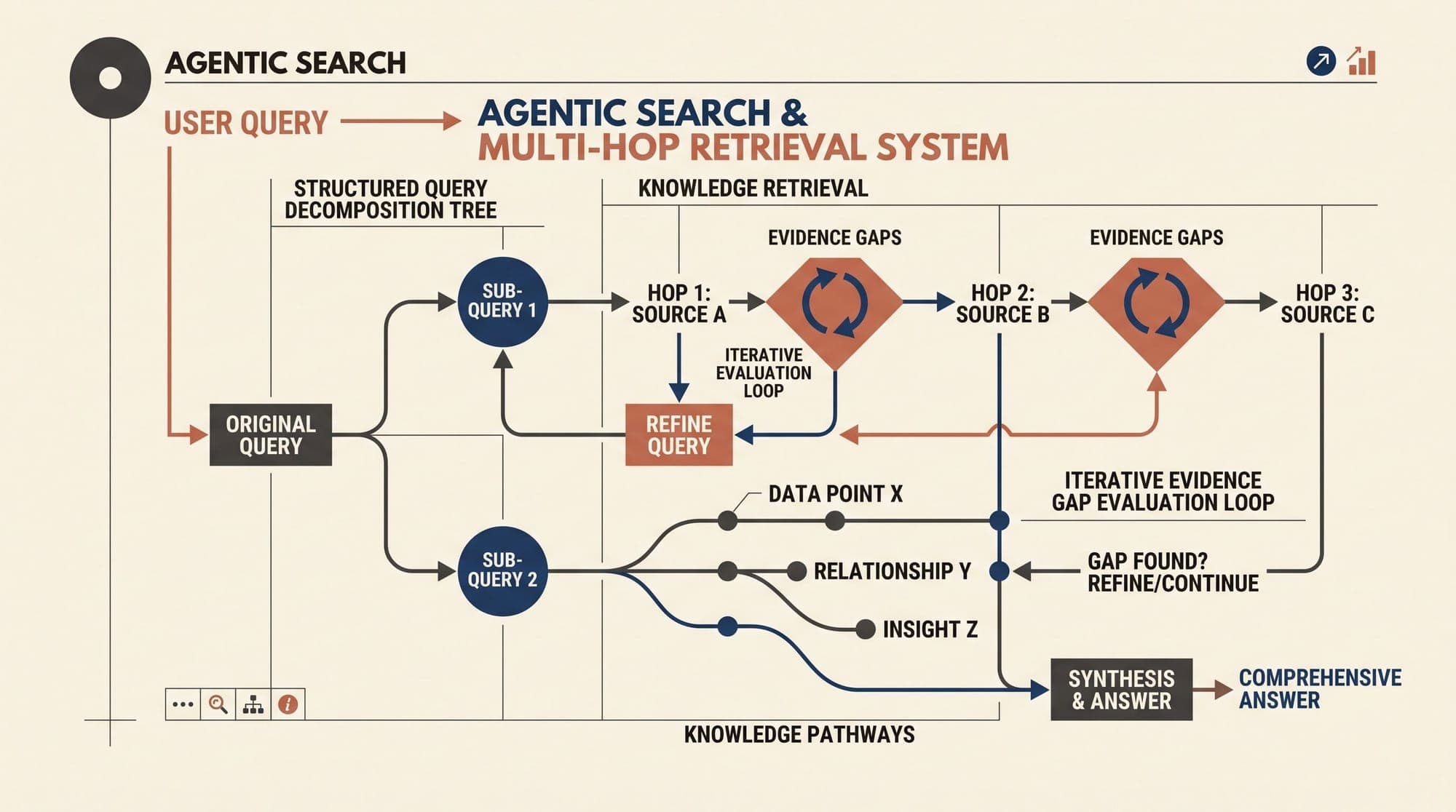
    Standard retrieval-augmented generation (RAG) relies on a single-pass paradigm: an incoming prompt is embedded, matched against a vector or hybrid index, and the top-k passages are injected into the generator's context window. This linear workflow functions reliably for direct fact retrieval, but it breaks down on complex research tasks. When a query requires chained dependencies, comparative analysis across isolated documents, or multi-step reasoning, single-shot retrieval fails because the req

    1 min
  • MIT, Stanford, and 12 Academic Labs Launch Public AI Observatory to Track Real-World LLM Usage

    A consortium of researchers from MIT, Stanford University, and 12 other academic institutions has launched the Public AI Observatory (ai-observatory.org), an independent, auditable data repository designed to measure how individuals interact with artificial intelligence assistants in real-world settings. The initiative aims to address the empirical opacity surrounding commercial LLM deployment. While frontier AI developers such as OpenAI and Anthropic periodically release aggregated user metric

    1 min
  • Z.ai Opens GLM-5.3 API Access at .40/.40 per Million Tokens with Prompt Caching

    Chinese foundation model developer Z.ai (Zhipu AI) has opened public API access to GLM-5.3, offering developers direct endpoint integration following the model's initial release. The company kept base token rates aligned with the prior generation while introducing discounted prompt caching. GLM-5.3 is priced at $1.40 per million input tokens and $4.40 per million output tokens on the Z.ai platform. For workloads utilizing prompt caching, cached input tokens are billed at $0.26 per million, an 8

    1 min
  • Anthropic Demonstrates Autonomous De Novo Protein Design and Chemical Analysis with Claude

    Anthropic Demonstrates Autonomous De Novo Protein Design and Chemical Analysis with Claude Anthropic has published experimental results demonstrating Claude's ability to autonomously design de novo protein binders with physical wet-lab validation and automate complex analytical chemistry workflows. The findings show frontier LLMs acting as autonomous agents across computational biology and molecular characterization pipelines. In the primary experiment, Anthropic evaluated Claude Mythos Previe

    1 min
  • Cerebras Unveils CS-4 Rack-Scale System Powered by Three WSE-3 Turbo Chips and Nexus Architecture

    Cerebras Unveils CS-4 Rack-Scale System Powered by Three WSE-3 Turbo Chips and Nexus Architecture Cerebras Systems has announced the CS-4, a rack-scale AI accelerator system designed around three of its next-generation Wafer Scale Engine 3 Turbo (WSE-3 Turbo) chips and a modular hardware architecture dubbed Nexus. Cerebras confirmed that initial customer shipments for the CS-4 are scheduled to begin in the current quarter. The new system marks a structural shift from Cerebras's single-wafer CS

    1 min
  • Process Reward Models: How Step-by-Step Supervision and Search Drive LLM Reasoning

    When large language models tackle complex multi-step reasoning (such as formal mathematics, algorithm synthesis, or multi-hop logic), evaluating only the final answer creates a severe credit assignment bottleneck. An outcome-based verifier can confirm whether a final numerical result is correct, but it cannot determine whether the underlying derivation was logically sound or reached the right answer through compounding hallucinations and lucky cancellations. Process Reward Models (PRMs) resolve

    1 min