A theoretical study published by researchers from Princeton University, the University of Washington, and collaborating institutions models how large language models alter researchers' time allocation across projects. The authors find that by reducing time friction across different stages of the research lifecycle, AI assistants increase the opportunity cost of researcher time, creating economic incentives to publish a higher volume of less thoroughly refined papers.
The paper, titled The unintended consequences of large language models as a labor-augmenting technology in science (arXiv:2607.17397), models scientific labor using principles from optimal foraging theory in behavioral ecology. To isolate time allocation dynamics from hallucination risks, the authors assume an idealized scenario where language models operate error-free and at negligible financial cost.

Modeling Scientific Effort and Opportunity Cost
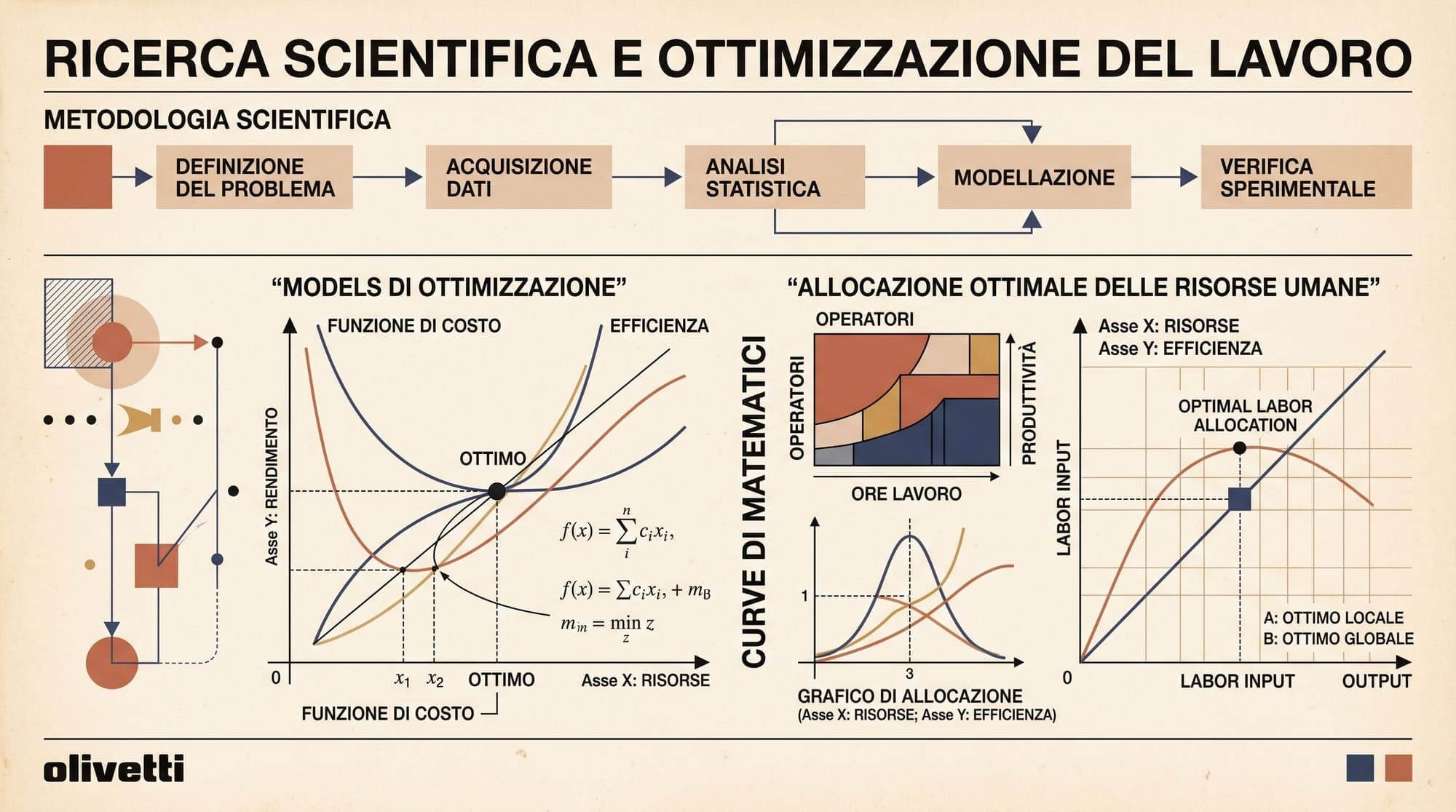
In the authors' formal framework, research projects proceed in two distinct stages: an initial exploration phase to test idea viability, followed by execution. Execution comprises mandatory procedural tasks, such as formatting, text drafting, and manuscript submission, as well as discretionary rigor, including supplemental experiments, sensitivity analyses, and deeper theoretical evaluations.
Because human attention is finite, saving time on any single phase increases the opportunity cost of remaining on the current project rather than starting a new initiative. The model examines three distinct integration scenarios:
- Idea Generation and Early Triage: When AI primarily accelerates initial literature exploration and hypothesis filtering, researchers become more selective about which projects to pursue. However, because starting new projects becomes cheaper, the threshold to move on to the next project drops, leading researchers to invest less discretionary time in refining each surviving paper.
- Procedural Execution and Writing: When AI automates late-stage tasks like manuscript drafting, data formatting, and submission preparation, the barrier to completing projects drops significantly. Lower publication friction incentivizes the completion of marginal, low-yield projects, driving up paper volume while diluting average analytical depth.
- Discretionary Rigor Acceleration: When AI tools directly reduce the cost of deep exploratory analysis, replication passes, and rigorous validation, the time saved directly translates into higher-quality output.
Across two of the three structural pathways, labor savings incentivize researchers to reduce the thoroughness applied to individual manuscripts. The theoretical model suggests that institutional expectations and evaluation metrics must account for how AI selectively reshapes incentives across disciplines rather than assuming automated efficiency gains automatically lead to deeper scientific inquiry.