Long-running autonomous AI agents accumulate hundreds of interaction turns, tool executions, and environment observations across extended deployments. Naive implementations store these raw episodic traces directly in vector databases, retrieving past interactions via dense semantic similarity. In production, this append-only strategy degrades quickly: retrieval queries surface outdated facts, contradictory state assertions pollute prompt context, and the agent fails to extract generalizable problem-solving skills from past experience.
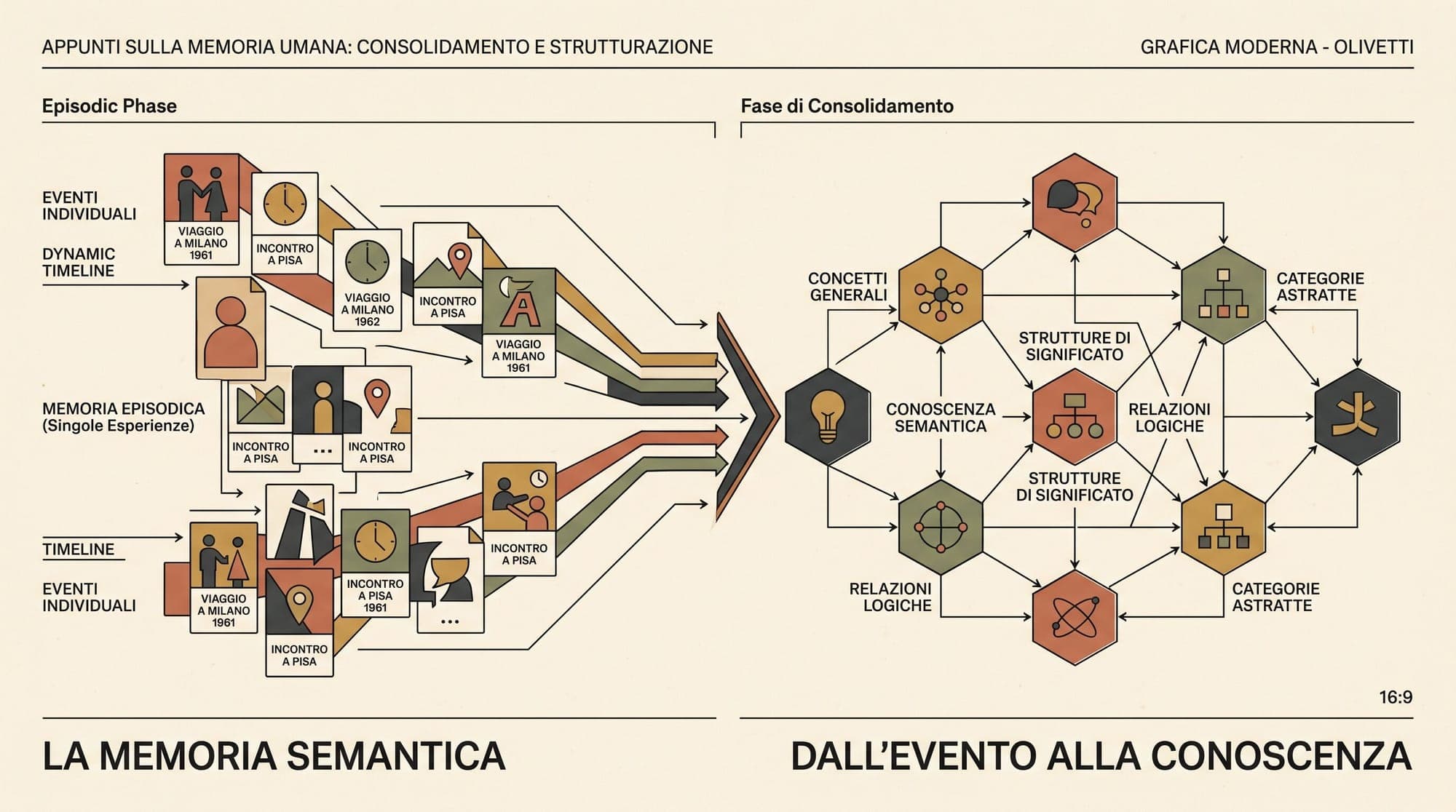
To maintain reliable performance across long operating horizons, production agent architectures are adopting tiered cognitive memory systems. Inspired by biological consolidation and cognitive frameworks such as the Cognitive Architectures for Language Agents (CoALA) framework, modern systems separate raw episodic buffers from consolidated semantic and procedural stores. Through asynchronous background consolidation routines (often termed "sleep cycles"), agents process, compress, resolve contradictions, and distill high-level procedural knowledge from raw interaction logs.

1. The Breakdown of Append-Only Episodic Stores
Early LLM memory implementations treated conversational memory as an uncompressed append-only log indexed by text embeddings. While effective for short-lived chat sessions, this approach exhibits four critical failure modes in autonomous multi-turn agents:
- Context Pollution and Distractor Noise: As the vector database scales to tens of thousands of raw interaction turns, semantic search over broad user prompts returns irrelevant historical fragments. These fragments consume valuable context tokens and introduce distractors that impair LLM reasoning.
- Temporal Incoherence and Contradiction: When an entity's state changes over time (for example, a user's cloud configuration or preferred deployment region), multiple contradictory chunks match the same retrieval query. Standard vector distance metrics possess no native mechanism to prioritize newer assertions over outdated history.
- Absence of Generalization: Storing raw step-by-step logs does not create reusable abstractions. If an agent spends twenty tool invocations debugging a Kubernetes deployment failure, an append-only store retains twenty raw log entries rather than an abstracted procedural playbook for resolving the underlying error.
- Index Inflation and Search Latency: Unbounded episodic growth inflates approximate nearest neighbor (ANN) index size, driving up memory footprint and increasing vector retrieval latency on the critical path.
A recent position paper on Episodic Memory for Long-Term LLM Agents highlights consolidation as the pivotal mechanism required to bridge temporary working context and durable parametric or non-parametric knowledge.
2. Tiered Memory Taxonomy in Modern Agents
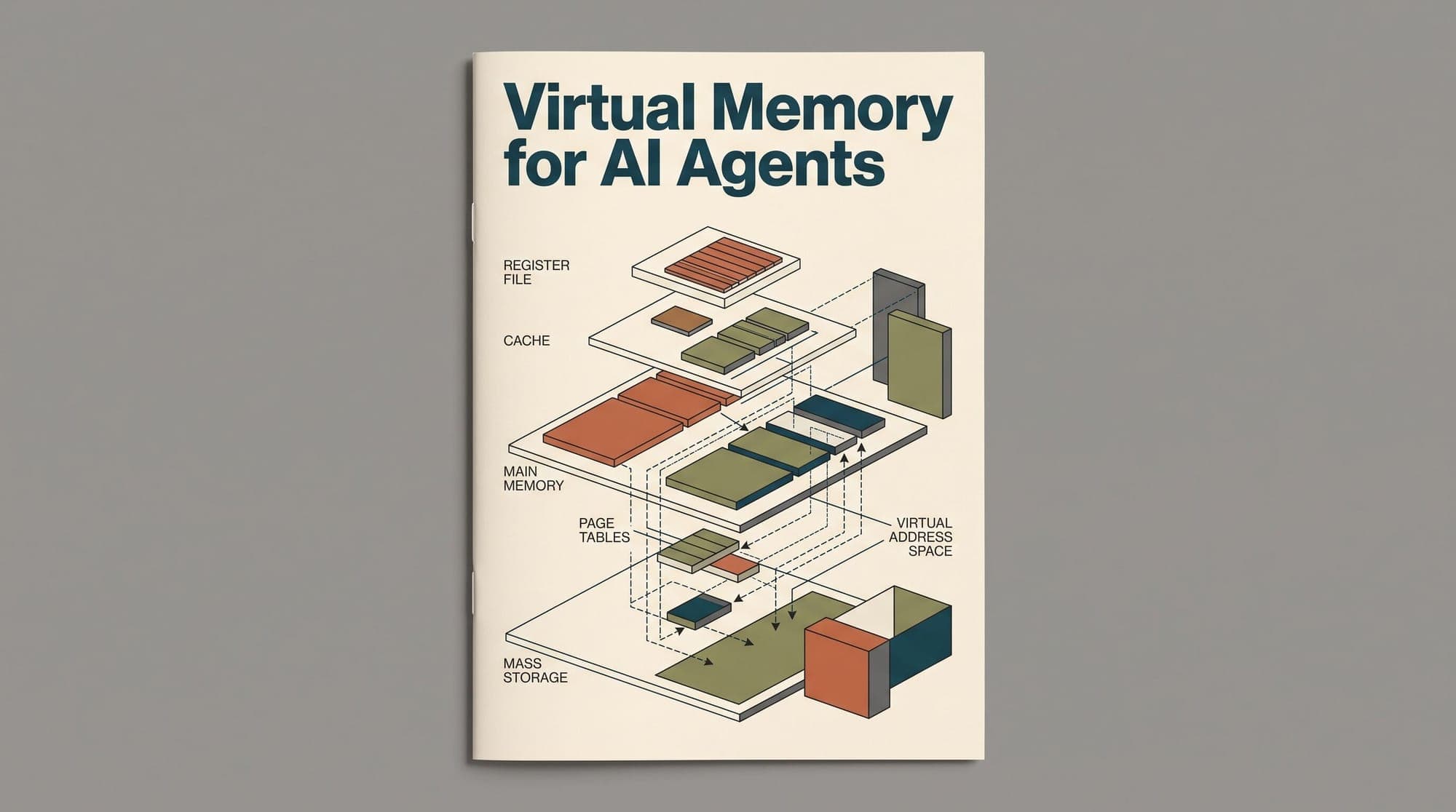
Production agent architectures partition memory into four distinct layers, each tailored to a specific operational lifecycle:
+-------------------------------------------------------------------------+
|                          WORKING CONTEXT (Active)                       |
|   - System Prompt, Active Task Scratchpad, Current Session History     |
+------------------------------------+------------------------------------+
                                     |
                                     v
+------------------------------------+------------------------------------+
|                          EPISODIC BUFFER                                |
|   - Timestamped Raw Execution Logs, Exact Tool Calls, Sensor Feeds     |
|   - Subject to Rapid Exponential Forgetting & Eviction                 |
+------------------------------------+------------------------------------+
                                     |
                   [ Asynchronous Consolidation Cycle ]
                                     |
                  +------------------+------------------+
                  |                                     |
                  v                                     v
+----------------------------------+  +-----------------------------------+
|      SEMANTIC KNOWLEDGE GRAPH    |  |        PROCEDURAL SKILL STORE     |
| - Temporal Entity-Relation Triples|  | - Parameterized Workflows         |
| - Abstract User & System Beliefs |  | - Verified Tool Recovery Recipes  |
| - Contradiction-Resolved Facts   |  | - Markdown/JSON Skill Playbooks   |
+----------------------------------+  +-----------------------------------+
Working Context
The immediate context window of the language model (e.g., 8K to 128K tokens). It holds the system prompt, runtime tool definitions, the active task plan, and the most recent turn dialogue. Working memory is ephemeral and flushed upon task completion.
Episodic Memory
A time-indexed, high-fidelity log of raw interactions. Each episode records:
- Exact user inputs and assistant responses.
- Tool invocations, arguments, and raw stdout/stderr outputs.
- Environment observations and execution timestamps.
Episodic memory provides high precision for immediate multi-step task execution but carries a high decay rate.
Semantic Memory
A curated, non-temporal or temporally grounded knowledge base capturing facts, preferences, user profiles, and domain constraints. Unlike episodic entries, semantic memories represent synthesized facts abstracted from the specific dialogues where they were learned.
Procedural Memory
The agent's library of executable capabilities and problem-solving strategies. While base capabilities are hard-coded in tool schemas, learned procedural memory captures task decomposition strategies, prompt templates, tool parameterization patterns, and error recovery routines discovered during execution.
3. Mathematical Formulation: Forgetting Curves and Retention Scoring
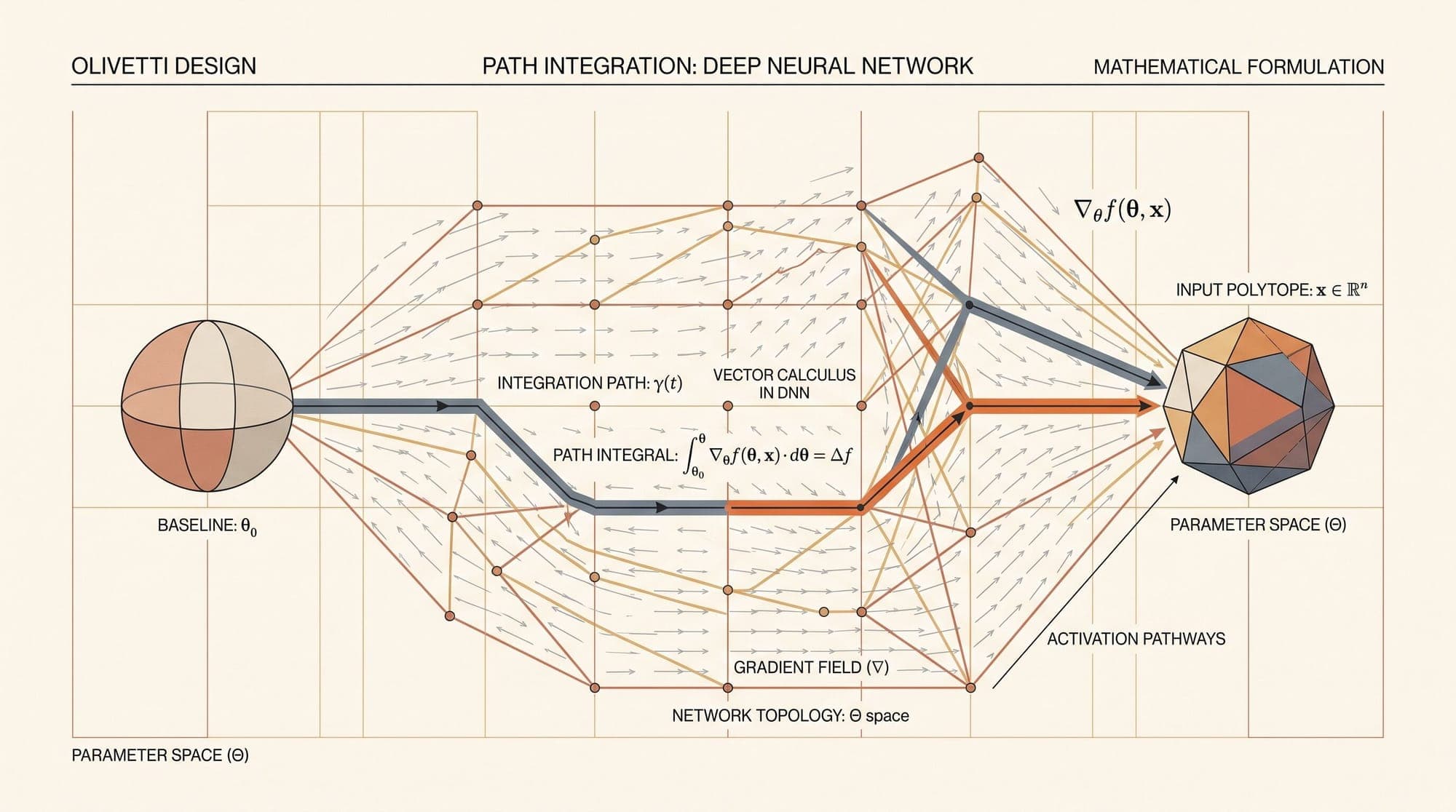
To prevent episodic stores from growing indefinitely, production systems implement mathematical decay models derived from the Ebbinghaus forgetting curve, adapted for vector retrieval.
In the foundational Generative Agents architecture, retrieval combines three core components: recency, importance (salience), and relevance. Production engines extend this model into a composite retention score for memory item , given query and current timestamp :
Where:
- is the cosine similarity between the query embedding and memory embedding .
- is the timestamp of memory creation or most recent reinforcement.
- is the exponential decay parameter determining memory half-life:
- is a base importance score assigned during ingestion via an evaluation model or heuristic classifier.
- represents the historical access count, boosting items that are repeatedly referenced.
- are normalized weighting coefficients summing to 1.0.
Category-Specific Decay Schedules
Production implementations do not apply uniform decay across all memory types:
| Memory Category | Typical Half-Life () | Base Salience () | Pinning Support | | :--- | :--- | :--- | :--- | | Raw Tool Telemetry | 2 to 6 hours | 0.20 | No | | Episodic Dialogues | 24 to 72 hours | 0.40 | No | | Consolidated User Facts | 30 to 90 days | 0.80 | Yes (Optional) | | User Invariant Constraints | (Decay Disabled) | 1.00 | Yes (Immutable) | | Validated Procedural Skills | (Decay Disabled) | 0.90 | Yes |
When an episodic memory item's retention score drops below a configured eviction threshold and its contents have undergone consolidation, it is pruned from the hot vector index and moved to cold archival storage.
4. The Consolidation Lifecycle (Offline Sleep Cycles)
Memory consolidation runs asynchronously outside the critical user-response path. Scheduled via event triggers (session completion) or periodic cron jobs (hourly/nightly), the consolidation pipeline processes unprocessed episodic logs through four stages:
[ Unprocessed Episodic Traces ]
               |
               v
  Stage 1: Temporal & Semantic Clustering (HDBSCAN / GMM)
               |
               v
  Stage 2: Reflection & Information Extraction (LLM Structured Extract)
               |
               +-----------------------+
               |                       |
               v                       v
  Stage 3: Temporal KG & Belief     Stage 4: Procedural Skill
           Revision (Triplets)               Distillation (Recipes)
               |                       |
               v                       v
  [ Semantic Graph Updates ]       [ Validated Skill Store ]
Stage 1: Temporal Segmentation and Semantic Clustering
Raw episodic entries are partitioned by session boundaries and clustered using density-based algorithms such as HDBSCAN over token embeddings. This groups related multi-turn interactions (e.g., all turns associated with configuring a specific database connection) into coherent thematic episodes.
Stage 2: Multi-Perspective Reflection
A dedicated reflection prompt analyzes the clustered episode to extract high-signal insights. Following the methodology of MemGPT and Temporal Semantic Memory architectures, the extraction model outputs structured updates categorized into:
- Factual Invariants: Objective domain facts discovered during execution.
- Entity Attributes: Updates to user profiles, project environments, or resource states.
- Failure Modes: Tool call parameters that triggered errors and the corrective actions that succeeded.
Stage 3: Contradiction Resolution and Temporal Knowledge Graph Updating
When new observations conflict with existing memory items, the consolidation engine performs belief revision. In systems like Zep's Graphiti engine, semantic facts are maintained as temporally bounded knowledge graph triples:
If an episode reveals that a project migrated from PostgreSQL to ClickHouse, the consolidation process sets on the historical triple and instantiates the new triple with .
Stage 4: Procedural Skill Distillation
Multi-step tool sequences that successfully resolved complex tasks are converted into parameterized skills. The consolidation engine strips out instance-specific parameters (such as unique IP addresses or user IDs), abstracts variable names, generates schema validation guards, and writes a modular skill definition into the procedural library.
5. Procedural Knowledge Distillation in Practice
To illustrate procedural distillation, consider an agent that spent twelve turns discovering how to diagnose and restart a stalled background worker process. The raw episodic log contains verbose outputs, failed grep commands, and intermediate shell errors.
During consolidation, the distillation engine condenses this trajectory into a clean, reusable skill definition:
# Generated Procedural Skill: RestartStalledWorker
skill_name: restart_stalled_worker
description: "Diagnose and safely restart an unresponsive background celery/redis worker"
trigger_conditions:
  - "worker_health_check_failed"
  - "redis_queue_blocked"
parameters:
  worker_service_name: "string (default: celery-worker)"
  queue_name: "string (default: default)"
execution_steps:
  1. command: "systemctl is-active ${worker_service_name}"
     validation: "output == 'active' or 'failed'"
  2. command: "redis-cli -h localhost LLEN ${queue_name}"
     validation: "integer >= 0"
  3. command: "systemctl restart ${worker_service_name}"
     validation: "exit_code == 0"
error_recovery:
  - on_error: "systemctl timeout"
    fallback_action: "kill -9 $(pgrep -f ${worker_service_name}) && systemctl start ${worker_service_name}"
When a similar issue occurs in subsequent sessions, the agent loads the distilled skill directly into its working memory, executing the verified three-step procedure without repeating the exploratory failure loop.
6. Serving Economics, Latency, and Safety Boundaries
Integrating memory consolidation into production deployments introduces specific architectural tradeoffs:
Compute and Token Economics
- Online vs. Offline Cost: Executing reflection and extraction during live user turns adds 1.5 to 4.0 seconds of latency and doubles prompt token consumption. Offloading consolidation to asynchronous background workers (using cost-efficient models such as Qwen 2.5 14B or Gemini 1.5 Flash) reduces per-request inference cost while preserving low interactive latency.
- Context Compression Ratio: Empirical benchmarks from LightMem and CoALA implementations show that periodic consolidation compresses raw episodic logs by 80% to 92% in token volume while maintaining over 94% recall on critical entity state queries.
Security and Prompt Injection Inoculation
Consolidated memory is a persistent vector for indirect prompt injection. If an adversary injects a malicious prompt payload into a tool's stdout output, a naive consolidation worker could extract the malicious directive as a "permanent user preference."
Production pipelines mitigate this vulnerability by:
- Source Attribution Tagging: Tagging all extracted facts with provenance metadata (
source: user_explicitvs.source: tool_output_untrusted). - Privilege Boundary Enforcement: Prohibiting untrusted tool observations from mutating system invariants or procedural execution rules without explicit user confirmation.
- Structured Schema Validation: Enforcing strict JSON/Pydantic schemas during extraction, preventing arbitrary executable code injection into semantic facts.
Summary
Append-only vector memory fails at scale. Production-grade autonomous agents require structured memory consolidation pipelines that mimic biological cognitive tiers: absorbing raw interaction traces in an ephemeral episodic buffer, decaying irrelevant telemetry through mathematical forgetting functions, and asynchronously distilling stable facts and reusable procedural skills into durable knowledge graphs.
By decoupling real-time task execution from background memory synthesis, engineering teams build agents that continuously improve with experience while maintaining bounded context windows, low query latencies, and deterministic operational safety.
Sources
- Sumers, T. R., et al. (2023). Cognitive Architectures for Language Agents (CoALA). arXiv:2309.02427.
- Park, J. S., et al. (2023). Generative Agents: Interactive Simulacra of Human Behavior. arXiv:2304.03442.
- Packer, C., et al. (2023). MemGPT: Towards LLMs as Operating Systems. arXiv:2310.08560.
- Chhikara, P., et al. (2025). Position: Episodic Memory is the Missing Piece for Long-Term LLM Agents. arXiv:2502.06975.
- Liu, S., et al. (2026). Beyond Dialogue Time: Temporal Semantic Memory for Personalized LLM Agents. arXiv:2601.07468.
- Zep AI. (2024). Graphiti: Temporal Knowledge Graph Engine for Dynamic Agent Memory.