Memory4 articles

Memory

Articles

  • Agent Memory Engines in Production: Comparing Mem0, Zep, and Letta Architecture, Graph Stores, and Retrieval Latency

    Large language models are inherently stateless functions. Every invocation begins with an empty memory register, relying entirely on the tokens packed into its context window. In production multi-turn applications, naive context management strategies quickly collapse: appending raw conversational logs inflates inference costs and eventually hits hard context limits, while standard semantic vector search (retrieval-augmented generation) lacks temporal awareness, treats contradictions blindly, and

    1 min
  • Micron Launches Micron Research Labs with $10B Commitment for AI Memory Architecture

    Micron Technology announced on August 20, 2026, the creation of Micron Research Labs, a domestic long-horizon research institution headquartered in Boise, Idaho. Backed by a planned $10 billion investment across the next decade, the entity is designed to conduct precompetitive semiconductor and architecture research positioned upstream of commercial fabrication roadmaps. The funding operates independently from the more than $250 billion in domestic manufacturing and commercial development that

    1 min
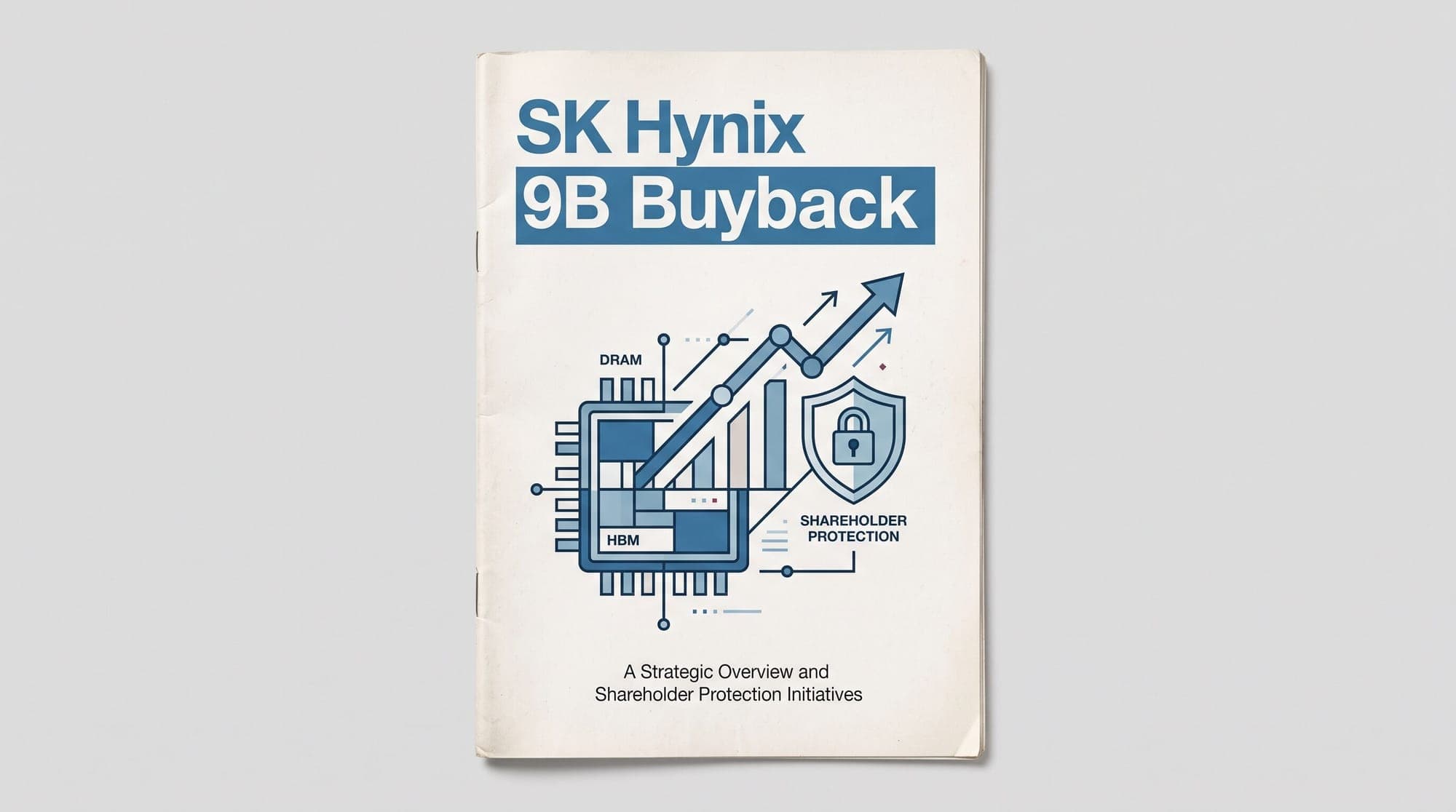
  • SK Hynix Announces 9 Billion Share Buyback to Calm AI Spending Worries

    SK Hynix announced Wednesday it will buy back and cancel 40 trillion won ($28.61 billion) worth of treasury shares, allocating more than 50 percent of free cash flow generated between 2025 and 2027 to shareholder returns. The buyback, to be executed between August 20 and November 19, represents roughly 24 million shares. The company also said it would pursue an expansion of its total shareholder return target from the previous "within 50 percent of cumulative FCF" to "over 50 percent of cumulat

    1 min
  • IBM Research Evaluates Agentic Memory Sizing Across 8 Models: Dosage Calibrations, Ceiling Effects, and Token Efficiency

    In a technical report published on August 18, 2026, researchers at IBM Research detailed empirical evaluations on sizing and calibrating agentic memory across eight large language models. The study, conducted using the open-source ALTK-Evolve framework across the AppWorld benchmark, demonstrates that agentic memory performance is governed by capability-dependent dosage rather than uniform prompt accumulation. Agentic memory architectures typically extract procedural guidelines from prior execut

    1 min