Retrieval4 articles

Retrieval

Articles

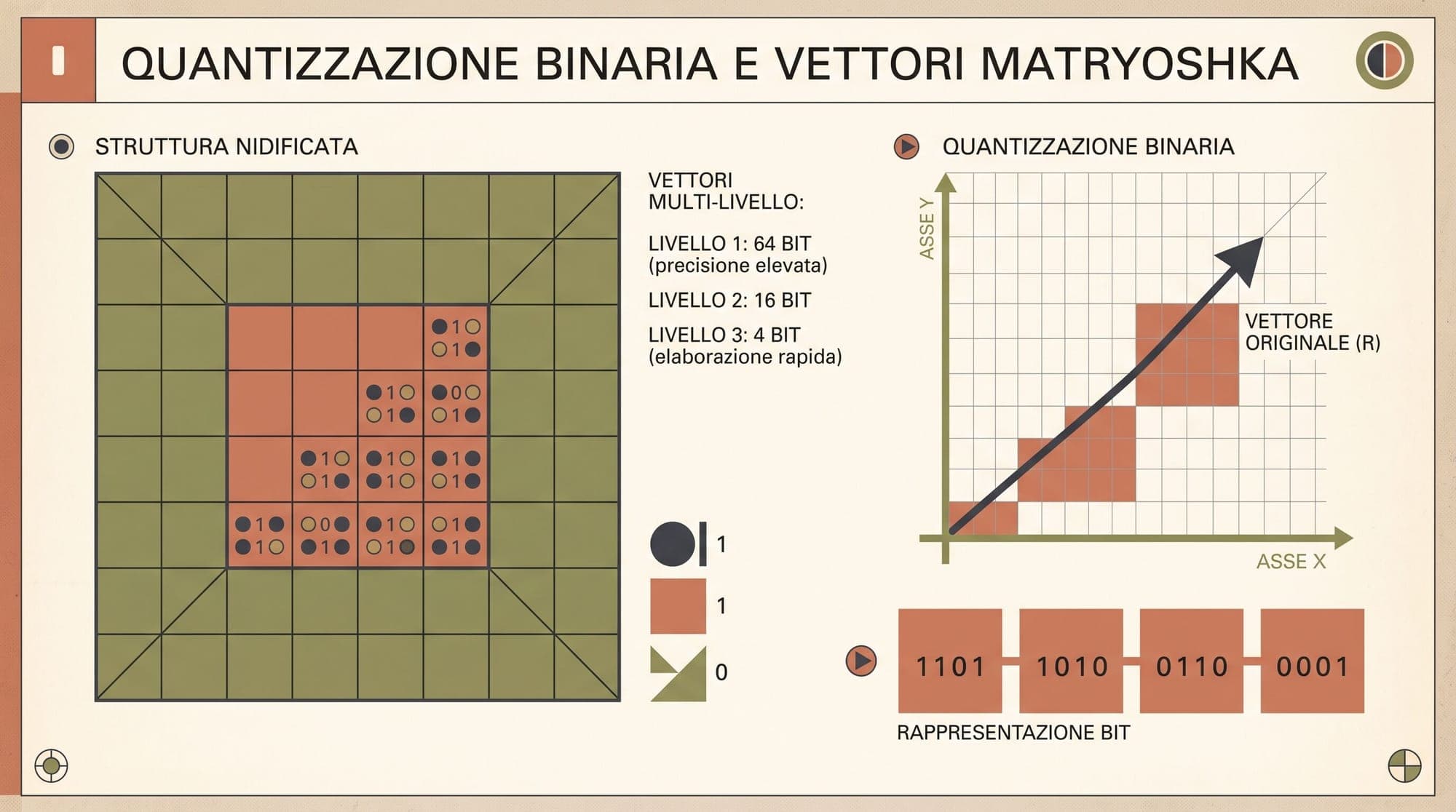
  • Binary Quantization and Matryoshka Embeddings in Production: Two-Stage Rescoring, Hamming Distance Acceleration, and Vector Storage Economics

    Production vector search workloads face a severe memory scaling bottleneck. In retrieval-augmented generation (RAG) and semantic search architectures, indexing tens of millions of high-dimensional embeddings in raw 32-bit floating-point (FP32) format exhausts memory capacity and drives up infrastructure costs. Indexing 100 million 1536-dimensional vectors requires 614.4 GB of RAM purely for vector payloads, before accounting for graph edges and memory fragmentation in Approximate Nearest Neighbo

    1 min
  • Corrective RAG and Adaptive Retrieval in Production: Architecture, Confidence Scoring, and Web Fallback Loops

    Standard retrieval-augmented generation (RAG) pipelines follow a rigid, feed-forward paradigm: embed the query, fetch top-$k$ chunks via vector or hybrid search, inject the raw chunks into the prompt context, and sample a completion. While functional for homogeneous corpora with high semantic overlap, this naive retrieve-and-generate approach degrades rapidly in production environments. When a vector index returns irrelevant, noisy, or out-of-domain chunks, the generator inevitably suffers from

    1 min
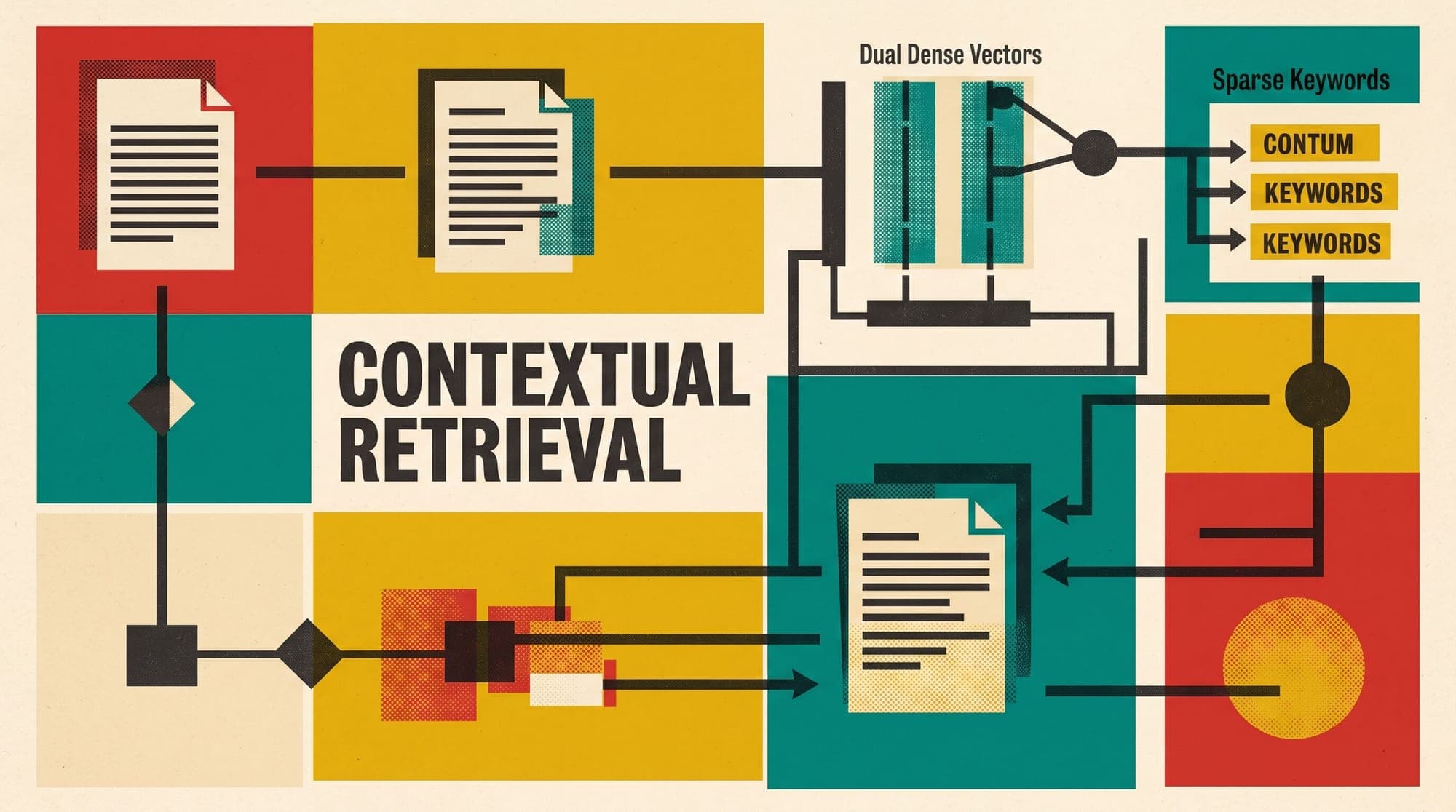
  • Contextual Retrieval in Production RAG: Architecture, Prompt Caching Economics, Hybrid Fusion, and Reranking Pipelines

    Contextual Retrieval in Production RAG: Architecture, Prompt Caching Economics, Hybrid Fusion, and Reranking Pipelines Standard Retrieval-Augmented Generation (RAG) architectures suffer from an inherent design flaw at the preprocessing stage: chunking destroys document hierarchy. When a system divides a large document corpus into fixed-size passages (such as 300 to 800 tokens) or applies semantic boundaries, the resulting chunks lose their surrounding narrative, parent headings, entity definiti

    1 min
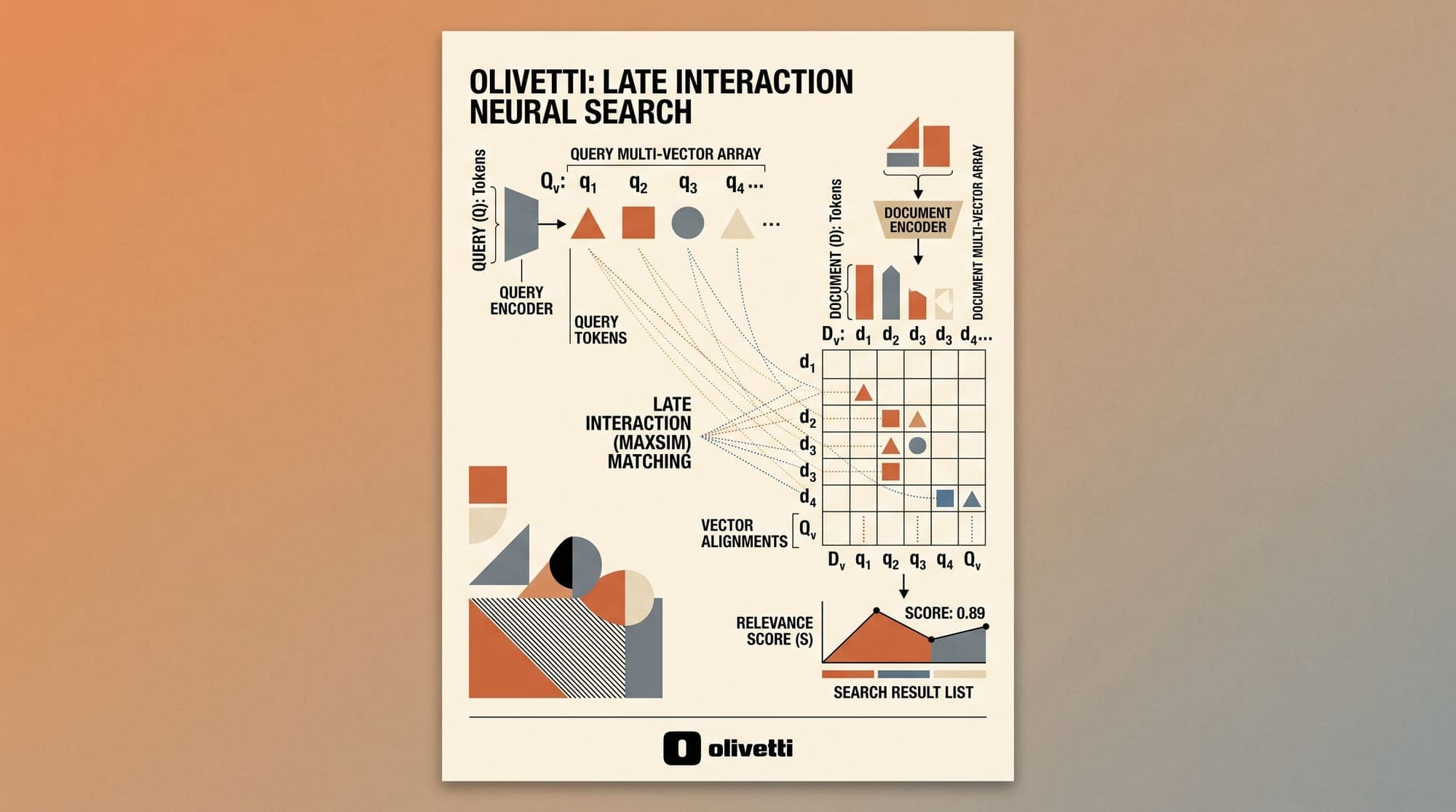
  • Late Interaction and ColBERT: How Multi-Vector Embeddings and the MaxSim Operator Transform Neural Retrieval

    Information retrieval systems have long wrestled with a fundamental tension between computational efficiency and semantic expressiveness. Traditional dense bi-encoders like DPR compress an entire passage into a single dense vector, allowing sub-linear approximate nearest neighbor (ANN) search over millions of documents. However, forcing multi-sentence passages into a single vector representation creates an information bottleneck that discards fine-grained token-level nuances, entities, and keywo

    1 min