Generative AI3 articles

Generative AI

Articles

  • Flow Matching for Generative Modeling: How Continuous Normalizing Flows and Optimal Transport Paths Replace Diffusion SDEs

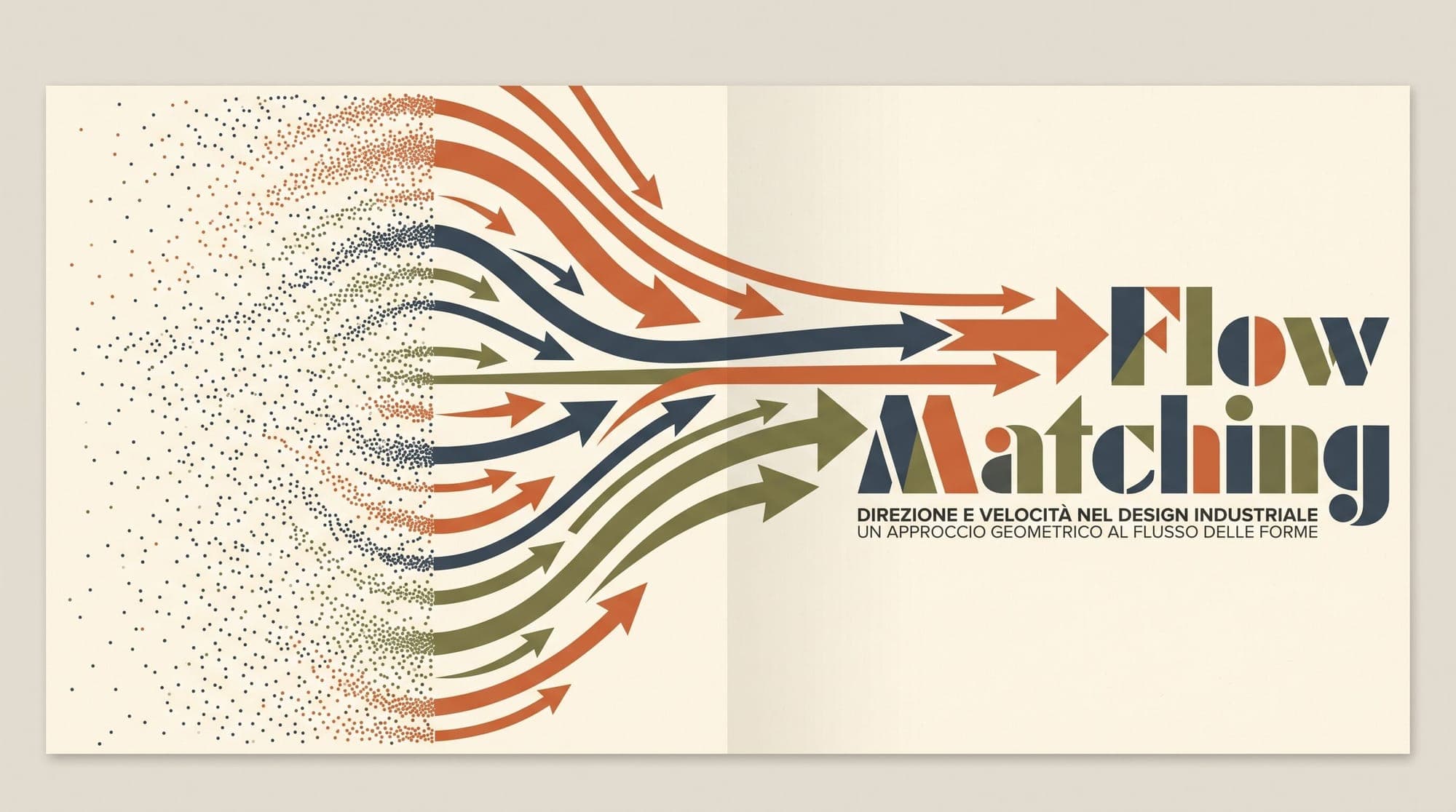
    Flow Matching for Generative Modeling: How Continuous Normalizing Flows and Optimal Transport Paths Replace Diffusion SDEs Generative modeling underwent a structural shift with the introduction of Flow Matching (FM), formulated independently by Lipman et al. (2022), Albergo and Vanden-Eijnden (2022), and Liu et al. (2022). While Denoising Diffusion Probabilistic Models (DDPM) and score-based Stochastic Differential Equations (SDEs) established state-of-the-art sample quality across vision and a

    1 min
  • Score-Based Generative Modeling via Stochastic Differential Equations: How Continuous SDEs and Score Matching Unify Diffusion Models

    Diffusion and score-based models represent one of the foundational paradigms of modern generative artificial intelligence, underpinning systems across image synthesis, video generation, audio modeling, and continuous multimodal representations. For years, generative diffusion was approached from two distinct perspectives: discrete-step denoising diffusion probabilistic models (DDPM) pioneered by Sohl-Dickstein et al. and Ho et al., and score matching with Langevin dynamics (SMLD / NCSN) introduc

    1 min
  • Classifier-Free Guidance: How Score Extrapolation and Implicit Classification Steer Generative Models

    Conditional generative models face an inherent tension between mode coverage and prompt adherence. When a model is trained to maximize data log-likelihood, its learned distribution matches the broad, messy variety of the underlying dataset. In unconditional generation, this diversity is desirable. In conditional generation, however, unconditional priors dilute the prompt: models generate generic, average samples that only weakly align with nuanced text descriptions, spatial layouts, or class lab

    1 min