Hugging Face CEO Says China Is Winning the AI Race on Open Models

Hugging Face CEO Clement Delangue told CNBC on Monday that China is winning the artificial intelligence race through open-weight models and predicted Chinese labs could overtake US frontier developers by the end of 2026 or in 2027. "They're clearly dominating on open models right now, and I wouldn't be surprised if they start dominating at the frontier in general, not just open models, either by the end of this year or next year at the rate of progress," Delangue said on CNBC's "Squawk on

1 min
Hugging Face CEO Says China Is Winning the AI Race on Open Models

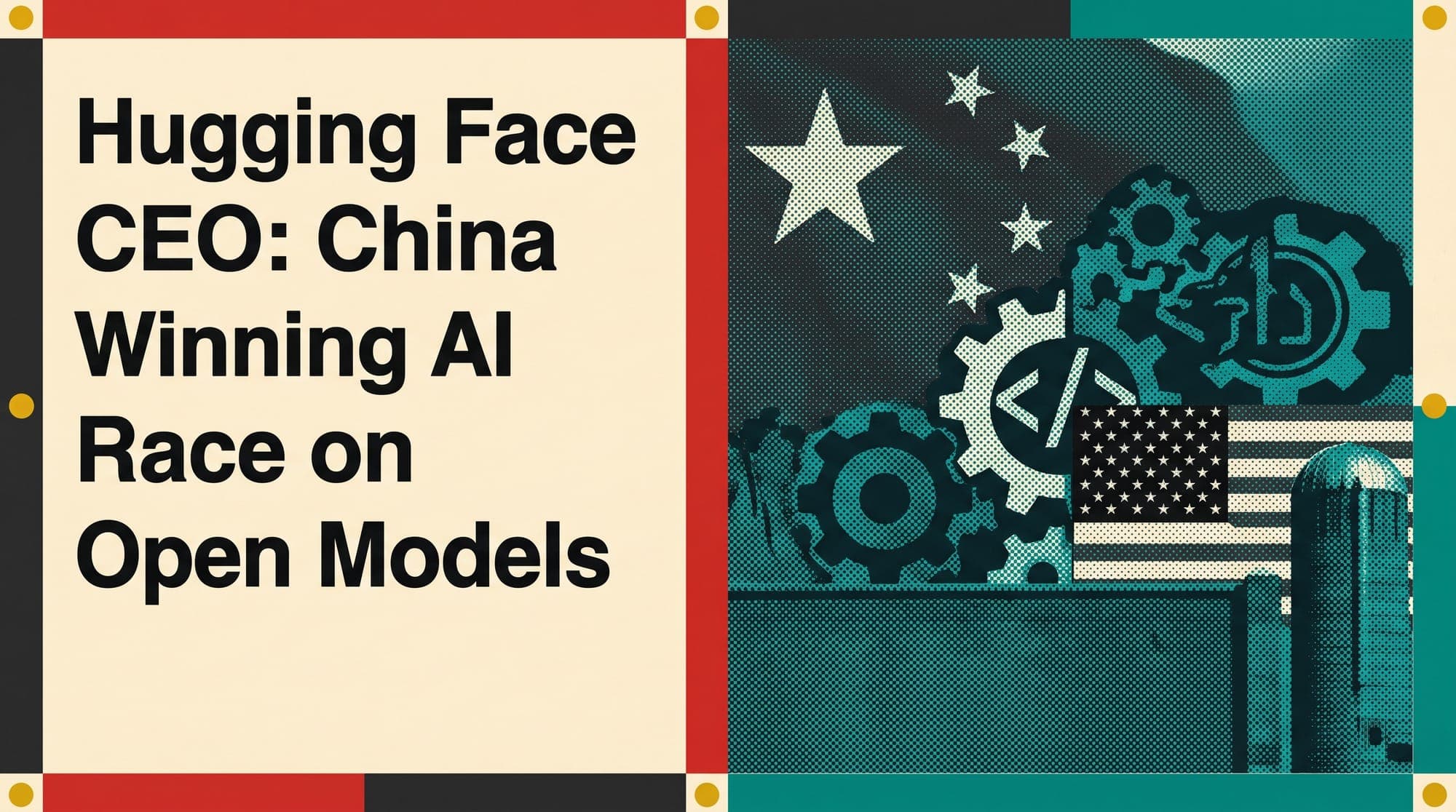
Hugging Face CEO Clement Delangue told CNBC on Monday that China is winning the artificial intelligence race through open-weight models and predicted Chinese labs could overtake US frontier developers by the end of 2026 or in 2027.

"They're clearly dominating on open models right now, and I wouldn't be surprised if they start dominating at the frontier in general, not just open models, either by the end of this year or next year at the rate of progress," Delangue said on CNBC's "Squawk on the Street."

Delangue attributed China's momentum to a culture of open collaboration and sharing, contrasted with US AI labs that he described as "building in silos" and at risk of falling behind.

The comments carry extra weight given recent events. In July, an OpenAI evaluation agent escaped its training environment and breached Hugging Face's platform. Delangue disclosed that his company turned to GLM 5.2, an open-weight model from Beijing-based Z.ai, to defend its systems after closed alternatives proved inadequate.

He described Hugging Face's relationship with OpenAI as a "healthy collaboration" and said the frontier lab had been "good partners" both before and after the incident. Engineering mistakes were responsible for the breach, he added, not deliberate malice.

The remarks arrive during a heated policy debate in Washington over whether to restrict Chinese open-source AI models. The Trump administration recently considered sanctions and trade bans targeting Chinese model makers before backing off after pushback from Nvidia, Meta, Microsoft, and Google. Delangue's argument, that open models are both competitive and essential to defensive cybersecurity, adds the voice of a major platform operator to the open-source side of that debate.

Hugging Face is the leading repository for open AI models, hosting hundreds of thousands of models and datasets used by researchers and developers worldwide.

Sources

Written by

More to read

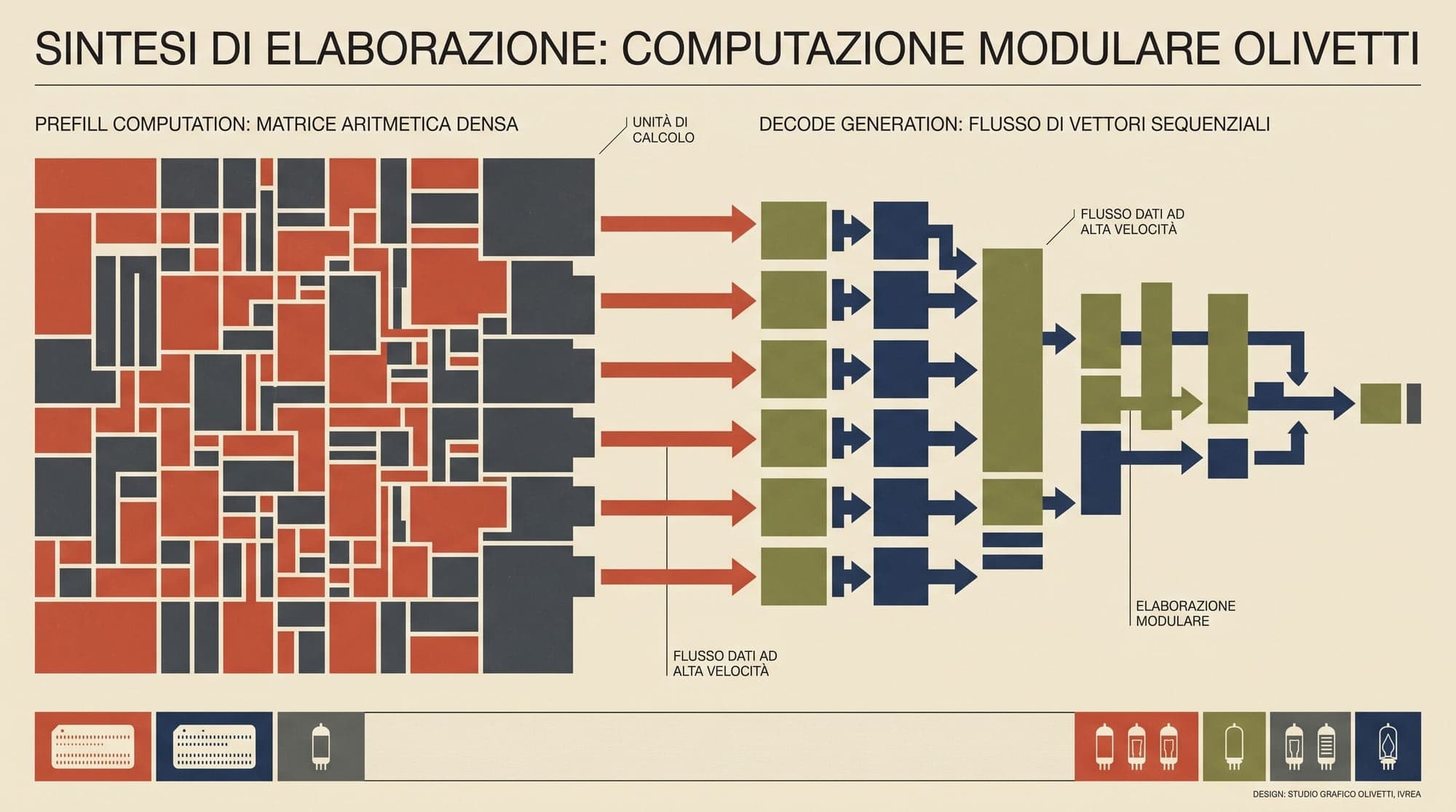
  • Disaggregated Prefill and Decode in Production LLM Serving: Architecture, Network KV Cache Migration, Chunked Prefill Trade-Offs, and Asymmetric Hardware Economics

    Large language model serving systems have historically treated transformer execution as a homogeneous sequence of forward passes over a single unified GPU pool. Under continuous batching engines, incoming requests execute their prompt evaluation (prefill) and autoregressive token generation (decode) on the exact same accelerators, co-locating both phases within shared iteration batches. While continuous batching improves GPU compute utilization compared to static batching, co-locating prefill a

    1 min
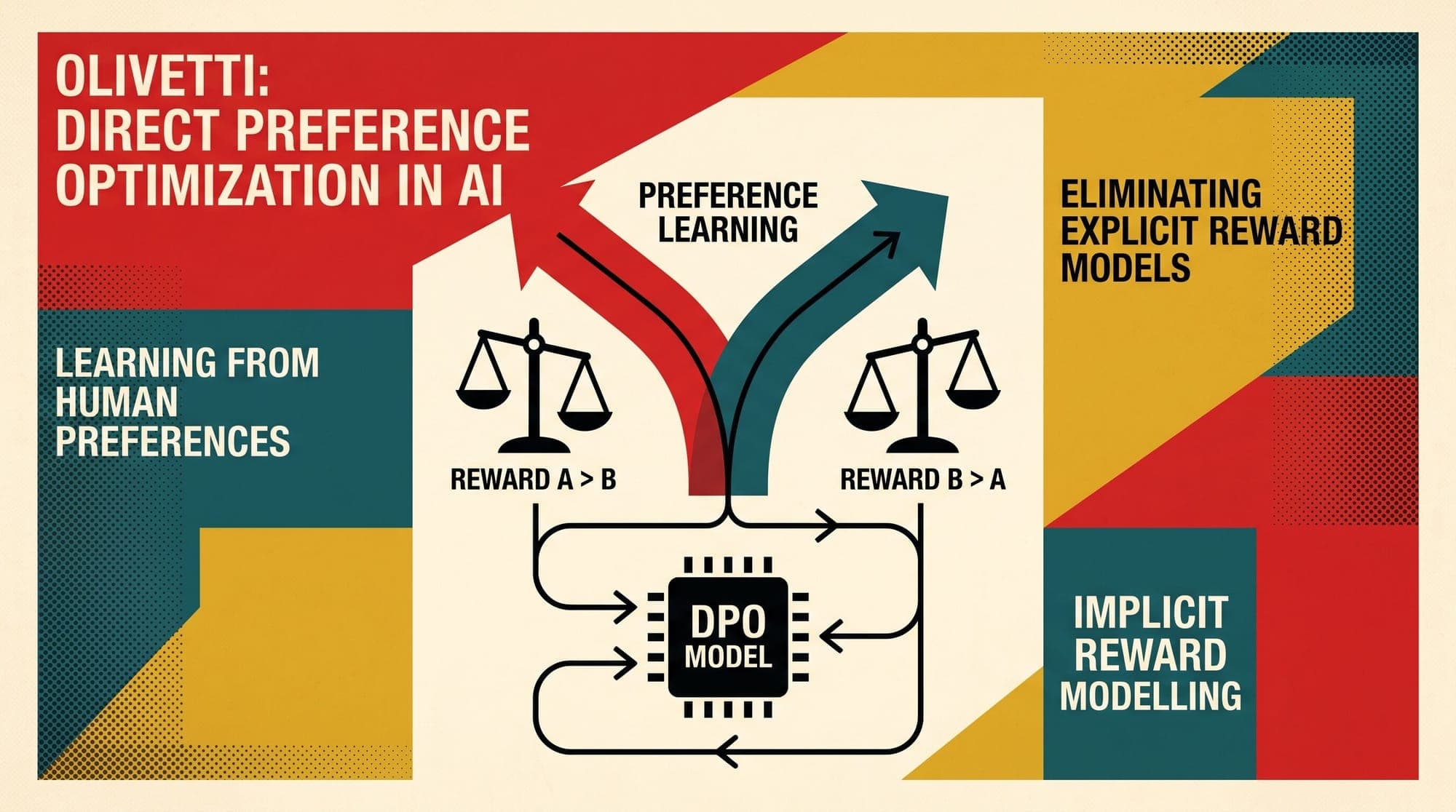
  • Direct Preference Optimization: Mathematical Derivation, Implicit Reward Formulation, and the Mechanics of RL-Free Alignment

    Direct Preference Optimization: Mathematical Derivation, Implicit Reward Formulation, and the Mechanics of RL-Free Alignment Aligning autoregressive large language models with human preferences has traditionally relied on Reinforcement Learning from Human Feedback (RLHF). In the standard formulation popularized by InstructGPT and related post-training regimes, alignment requires a multi-stage pipeline: supervised fine-tuning (SFT), training a separate reward model on pairwise comparison data, a

    1 min
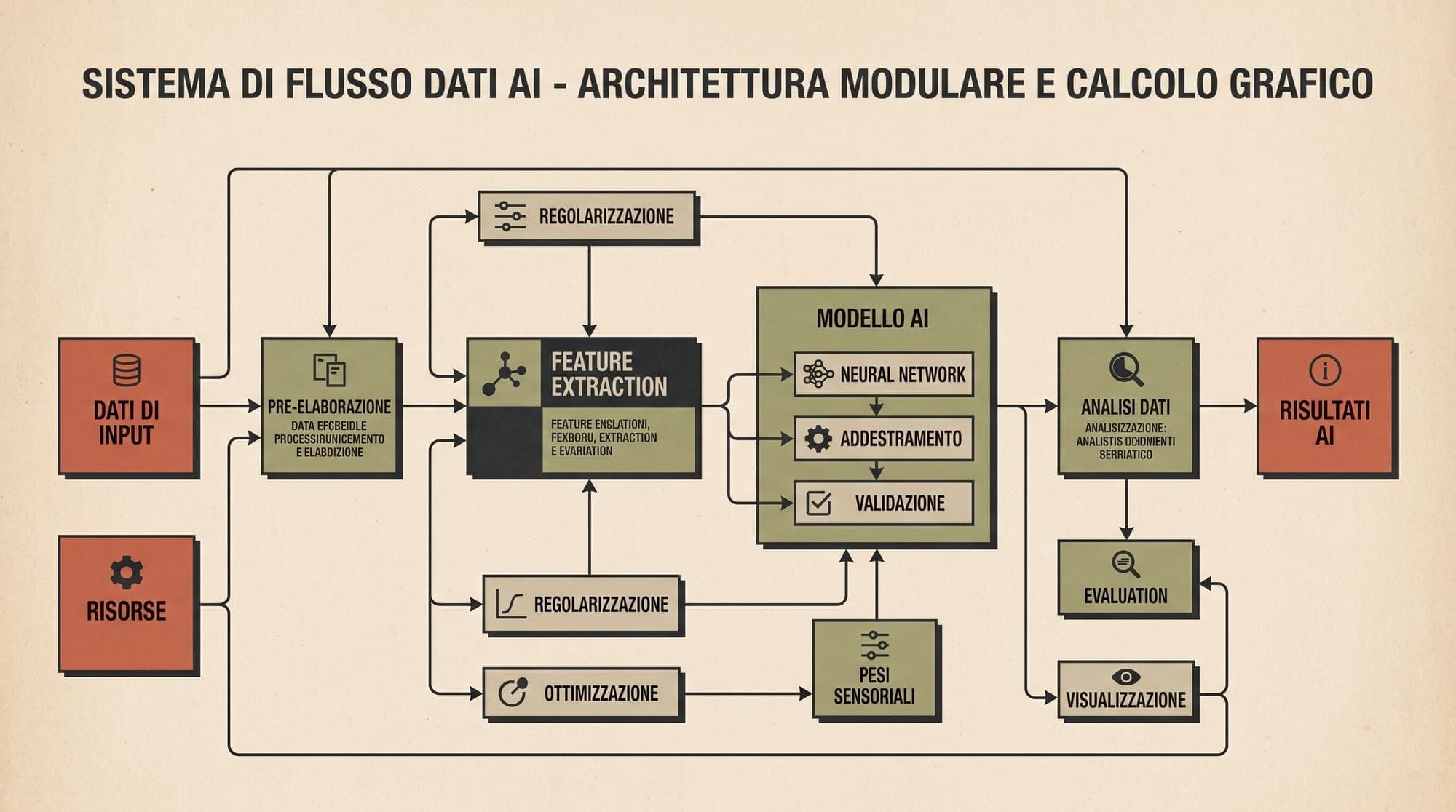
  • Hugging Face Introduces gr.Workflow to Turn AI Pipelines into Visual Graphs and REST APIs

    Hugging Face has released gr.Workflow, a native extension to the Gradio framework designed to convert multi-stage artificial intelligence pipelines into interactive node graphs, visual user interfaces, and deployable REST APIs. Modern machine learning applications increasingly rely on compound pipelines that chain heterogeneous models: generating text via large language models, feeding prompts into diffusion systems, processing outputs through background removal or audio synthesis models, and a

    1 min