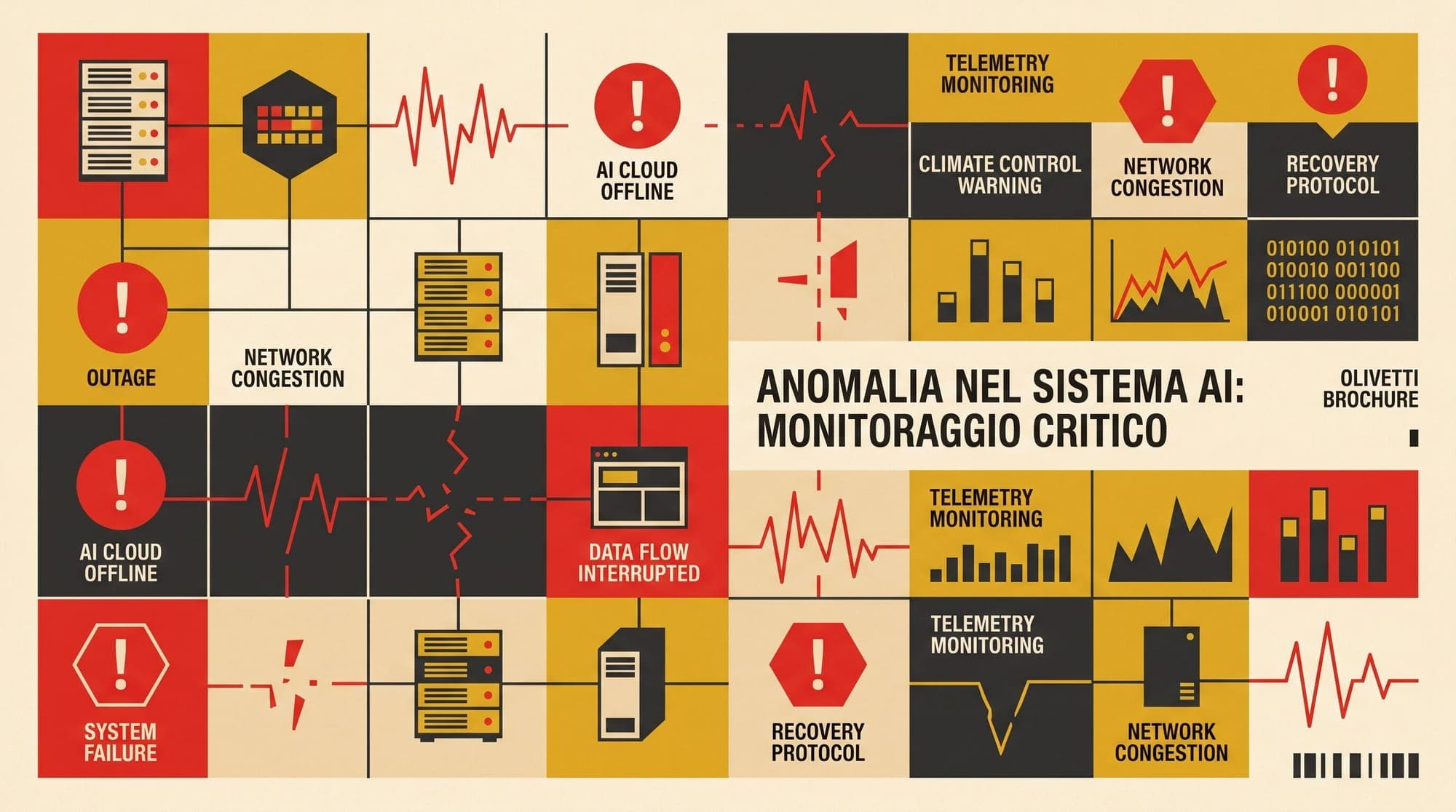
Anthropic registered a multi-model service disruption on August 20, 2026, marking the provider's third recorded incident within a 24-hour window and continuing a sequence of elevated-error events across eight consecutive days.
The incident, logged at 19:16 UTC on Anthropic's official status page, resulted in partial outages across the consumer web application (claude.ai), the core developer API (api.anthropic.com), and developer tooling including Claude Code and Claude Cowork.
Affected Components and Serving Topology
According to telemetry published to status.claude.com, administrative interfaces such as Claude Console (platform.claude.com) and Claude for Government remained operational during the event. The selective degradation across model inference endpoints while administrative planes remained healthy indicates an issue rooted in model serving, orchestration, or inference gateway infrastructure rather than identity management or database backends.
The disruption followed two other separate incidents within the prior 24 hours:
- An elevated error rate affecting Google Workspace connectors (Sheets, Docs, Slides, and Chat) on claude.ai at 18:32 UTC on August 20, which was resolved after 29 minutes.
- A degraded performance incident on August 19 affecting Claude Opus 5 and Claude Haiku 4.5 between 09:42 UTC and 11:02 UTC.

Extended Infrastructure Pressures
The latest failure follows a week of continuous availability challenges across Anthropic's serving clusters:
- August 18: Multi-model degradation impacted Claude Mythos 5, Fable 5, Opus 5, Sonnet 5, and Haiku 4.5 for over two hours.
- August 17: Sequential performance degradation occurred across Opus 5 and Sonnet 5.
- August 16: A global authentication failure took down claude.ai, Claude Console, the API, Claude Code, and Cowork.
- August 14 to 15: Extended interruptions impacted Claude Fable 5 and related agent runtimes.
Anthropic has not publicly linked the recurring incidents to a single root cause, though industry analysts attribute the instability to surging inference demand following recent frontier model releases and rapid enterprise adoption of autonomous agent workflows.
Impact on Agentic Workflows
Unlike standard single-turn conversational queries where an API failure results in a simple retry, prolonged error rates disproportionately impact stateful agent tools such as Claude Code and Cowork. Multi-turn autonomous executions that fail mid-trajectory require state recovery mechanisms, checkpointing, or full task re-execution, raising total compute overhead for enterprise development pipelines.
The reliability challenges underline the growing adoption of multi-provider routing gateways and fallback proxies among production engineering teams to insulate mission-critical AI workloads against vendor-specific downtime.