AWS brings vibe coding into enterprise private clouds via Superblocks deal

Superblocks, a startup building "vibe coding" tools for business users, has signed a multi-year joint marketing agreement with Amazon Web Services that embeds its platform inside AWS customers' private clouds. The deal, announced Monday, lets enterprises offer Superblocks' no-code app builder to internal users without sending data to external model providers or third-party databases. Apps built with Superblocks on AWS will spin up Amazon Aurora databases within the customer's own cloud account

1 min

Superblocks, a startup building "vibe coding" tools for business users, has signed a multi-year joint marketing agreement with Amazon Web Services that embeds its platform inside AWS customers' private clouds.

The deal, announced Monday, lets enterprises offer Superblocks' no-code app builder to internal users without sending data to external model providers or third-party databases. Apps built with Superblocks on AWS will spin up Amazon Aurora databases within the customer's own cloud account and route inference through Amazon Bedrock, AWS's AI gateway service.

"We're going to bring it to your data inside your private cloud," Superblocks co-founder and CEO Brad Menezes told TechCrunch. Data stays within the customer's AWS account, governed by existing audit, encryption, and network controls.

AWS does not yet offer its own vibe-coding agent for business users. It has Kiro, a developer-focused AI coding tool, and Quick, a Copilot-style assistant. Neither competes directly with consumer vibe-coding platforms like Lovable or Replit. The Superblocks partnership fills that gap without AWS having to build the product itself.

AWS will help sell Superblocks to enterprise customers through its Marketplace channel. An AWS spokesperson said the company supports partners "where we see strong customer demand and alignment with how customers want to build."

Superblocks has 50 employees and has raised $60 million to date, including a Series A announced in June 2025.

The partnership signals a broader shift: vibe coding is moving from a consumer curiosity to an enterprise procurement category, and cloud providers are positioning themselves as the delivery channel.

Sources

- [AWS is helping vibe-coding startup Superblocks, and the implications are big](https://techcrunch.com/2026/08/03/aws-is-helping-vibe-coding-startup-superblocks-and-the-implications-are-big/) - TechCrunch, August 3, 2026

Written by

More to read

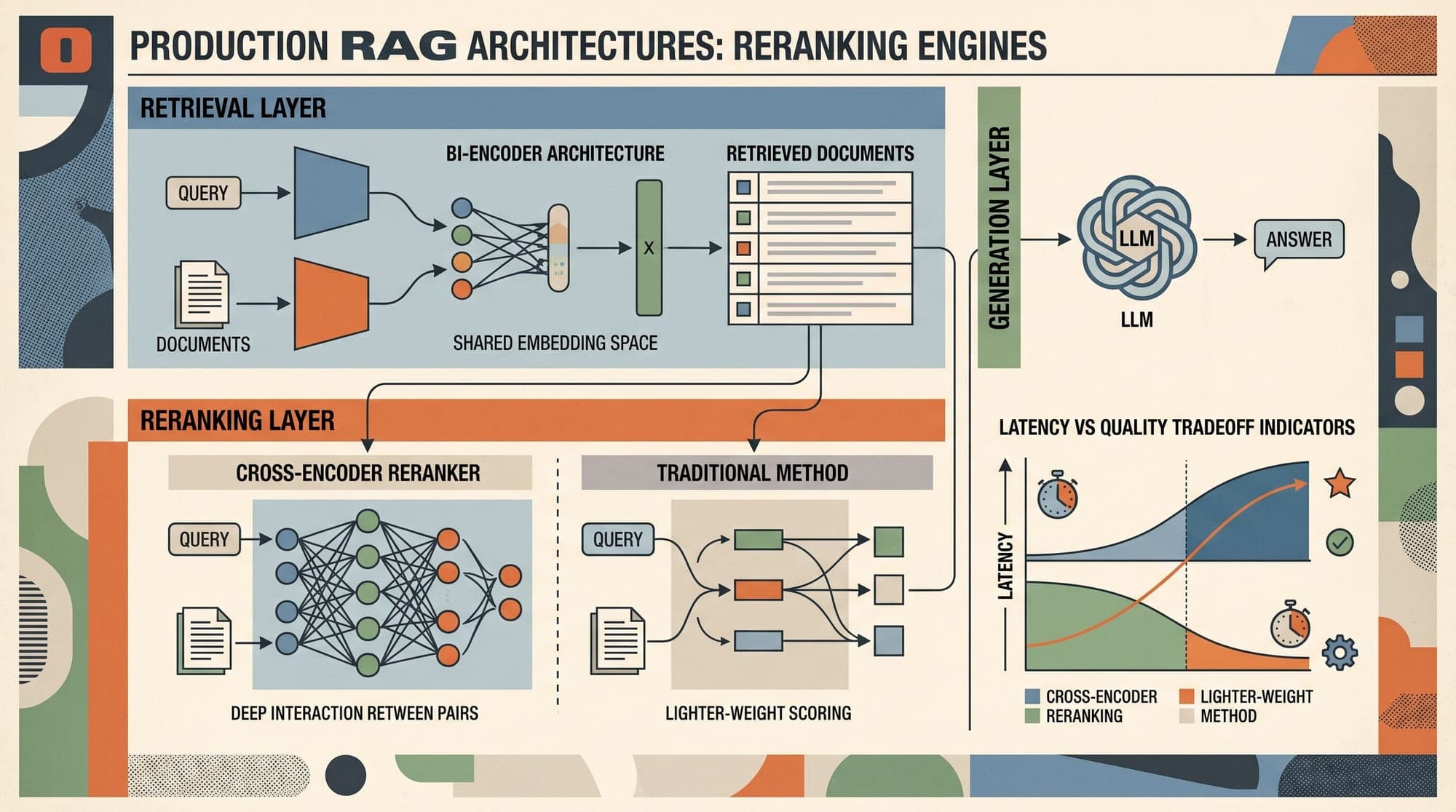
  • Reranking Engines in Production RAG: Comparing BGE-Reranker, Qwen3-Reranker, Cohere Rerank, Jina, ColBERT, and FlashRank — Architecture, Latency, Quality, and Self-Hosted Economics

    Reranking Engines in Production RAG: Comparing BGE-Reranker, Qwen3-Reranker, Cohere Rerank, Jina, ColBERT, and FlashRank — Architecture, Latency, Quality, and Self-Hosted Economics Reranking is the highest-ROI component most production RAG systems can add. A vector index retrieves 50–200 candidates in sub-millisecond time; a cross-encoder reranker jointly attends over each query-document pair and returns a precision-tuned top 10 for the LLM. The typical quality lift is +5 to +15 NDCG@10 points

    1 min
  • Mixture of Experts: How Sparse Activations Scale Models to Trillions of Parameters Without Trillion-Dollar Bills

    Mixture of Experts: How Sparse Activations Scale Models to Trillions of Parameters Without Trillion-Dollar Bills In a dense transformer, every parameter participates in every forward pass. The feed-forward layer — a two-layer perceptron with a hidden expansion of four to eight times the model dimension — alone accounts for roughly two thirds of the FLOPs per token. Scale the model, and cost scales linearly: 10 times the parameters means roughly 10 times the compute at inference, 10 times the me

    1 min
  • OpenAI Expands ChatGPT for Teachers to Over 100,000 Additional Educators

    OpenAI Expands ChatGPT for Teachers to Over 100,000 Additional Educators OpenAI announced on August 26, 2026 that it is bringing ChatGPT for Teachers to more than 100,000 additional educators and staff through new partnerships with 55 school systems across 20 states. The expansion builds on the initial 2025 launch that reached nearly 150,000 teachers and staff, now totaling over 300,000 educators across 30 states. The new cohort includes one in five of the nation’s 20 largest public school dis

    1 min