Search7 articles

Search

Articles

  • Multi-Vector Late Interaction in Production: PLAID Indexing, Residual Compression, and Serving Architectures

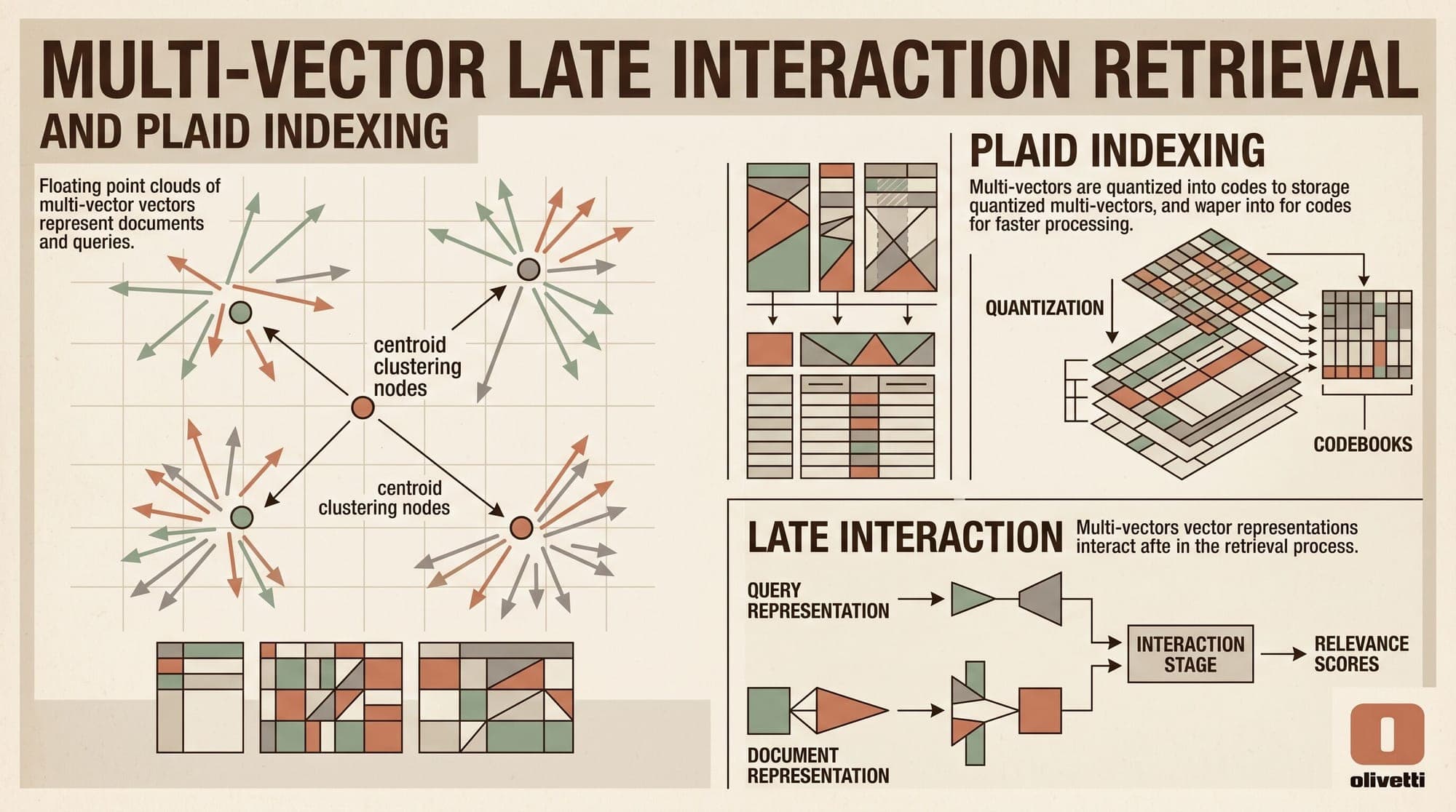
    Multi-Vector Late Interaction in Production: PLAID Indexing, Residual Compression, and Serving Architectures Dense single-vector embeddings and cross-encoder rerankers represent the two traditional extremes of neural information retrieval. Single-vector models collapse entire documents into a single dense representation (typically 768 to 3,072 dimensions), losing token-level nuance, lexical precision, and localized facts. Cross-encoders preserve token interactions across the entire input sequen

    1 min
  • Hybrid Search Score Fusion in Production: Reciprocal Rank Fusion vs. Relative Score Fusion vs. Distribution-Based Score Fusion

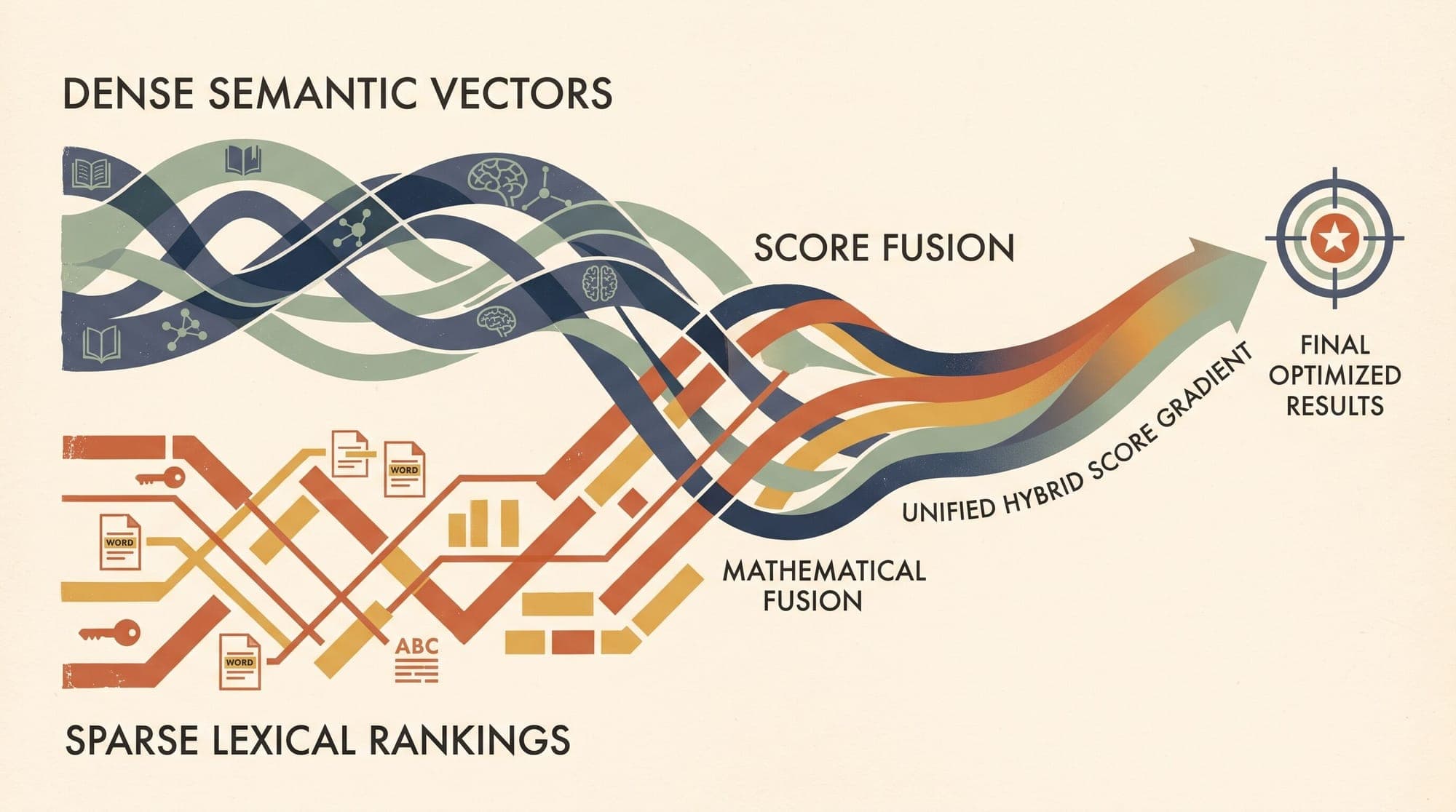
    Combining lexical search and dense vector retrieval is the standard architecture for modern enterprise retrieval-augmented generation (RAG). Lexical algorithms like BM25 excel at exact token matching, code identifiers, and acronyms, while dense embeddings capture semantic context and paraphrased intent. However, merging these two disparate retrieval streams into a single, coherent ranking presents a fundamental mathematical challenge: lexical engines and vector indices operate in completely inc

    1 min
  • ChatGPT Search Shifts to Domain-Scoped Queries as Reddit Citations Drop 86%

    OpenAI has overhauled how ChatGPT Search retrieves external context, dramatically expanding domain-scoped query fanouts while curtailing citations from broad community forums. Data published by generative engine analytics firm Promptwatch shows that domain-targeted queries utilizing the site: filter surged from 0.37% to 16.8% of all ChatGPT Search background fanouts on August 8, 2026. This represents a 46-fold jump in domain-scoped retrievals within a single day. At the same time, the average n

    1 min
  • Mistral Launches Agentic Search Toolkit with Active Navigation Primitives

    Mistral AI has released Agentic Search, a document retrieval system and developer toolkit designed to replace standard one-shot retrieval-augmented generation with an interactive navigation loop. The capability is integrated into the Mistral Search Toolkit and available within Libraries across Mistral Studio and Vibe. Traditional RAG architectures retrieve a fixed set of top-k text chunks during an initial query pass and require the language model to generate a final answer immediately. In long

    1 min
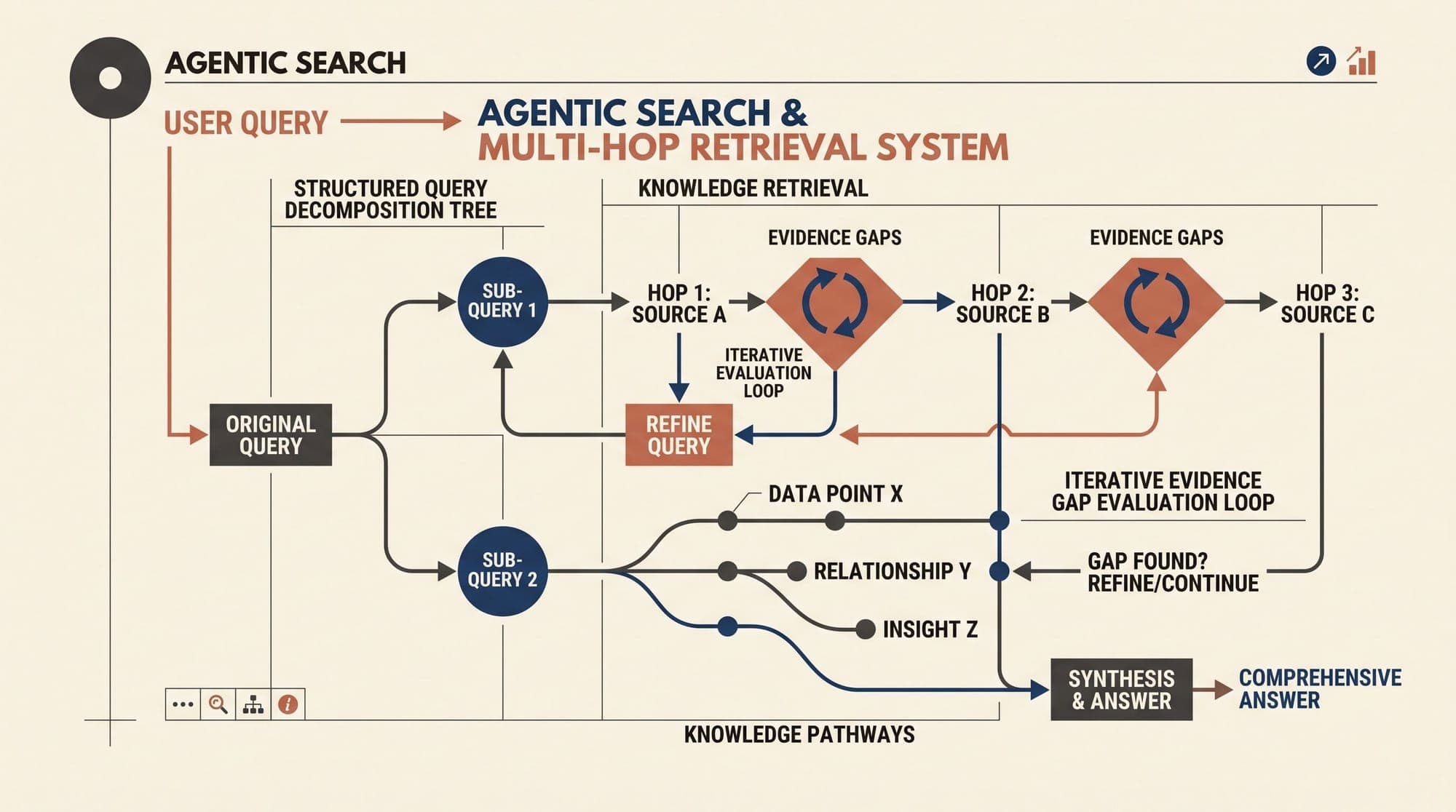
  • Agentic Search and Multi-Hop Retrieval in Production: Query Decomposition, Evidence-Gap Loops, and Synthesis Architecture

    Standard retrieval-augmented generation (RAG) relies on a single-pass paradigm: an incoming prompt is embedded, matched against a vector or hybrid index, and the top-k passages are injected into the generator's context window. This linear workflow functions reliably for direct fact retrieval, but it breaks down on complex research tasks. When a query requires chained dependencies, comparative analysis across isolated documents, or multi-step reasoning, single-shot retrieval fails because the req

    1 min
  • Artificial Analysis Launches Search Index Benchmark for AI Agent Search APIs

    Artificial Analysis has released the Search Index, a benchmark suite designed to evaluate web search APIs for autonomous AI agents across retrieval quality, query latency, and end-to-end task economics. The initial evaluation tests seven dedicated search providers: Parallel, Exa, Firecrawl, You.com, Tavily, Keenable, and Brave. Benchmark Setup and Evaluation Methodology To isolate search API performance from model variance, the evaluation executes all tests with GPT-5.6 Luna inside Stirrup,

    1 min
  • Why Dense Vector Search Alone Fails: Architecting Production Hybrid Retrieval for RAG

    In early Retrieval-Augmented Generation (RAG) deployments, single-stage dense vector search served as the standard retrieval primitive. The workflow appeared straightforward: partition a document corpus into chunks, compute vector embeddings for each chunk using a pre-trained bi-encoder, index the vectors in an approximate nearest neighbor (ANN) store, and retrieve the top candidates by cosine similarity against the query embedding. In production systems handling technical documentation, softwa

    1 min