Performers and FAVOR+: How Positive Orthogonal Random Features Linearize Transformer Attention
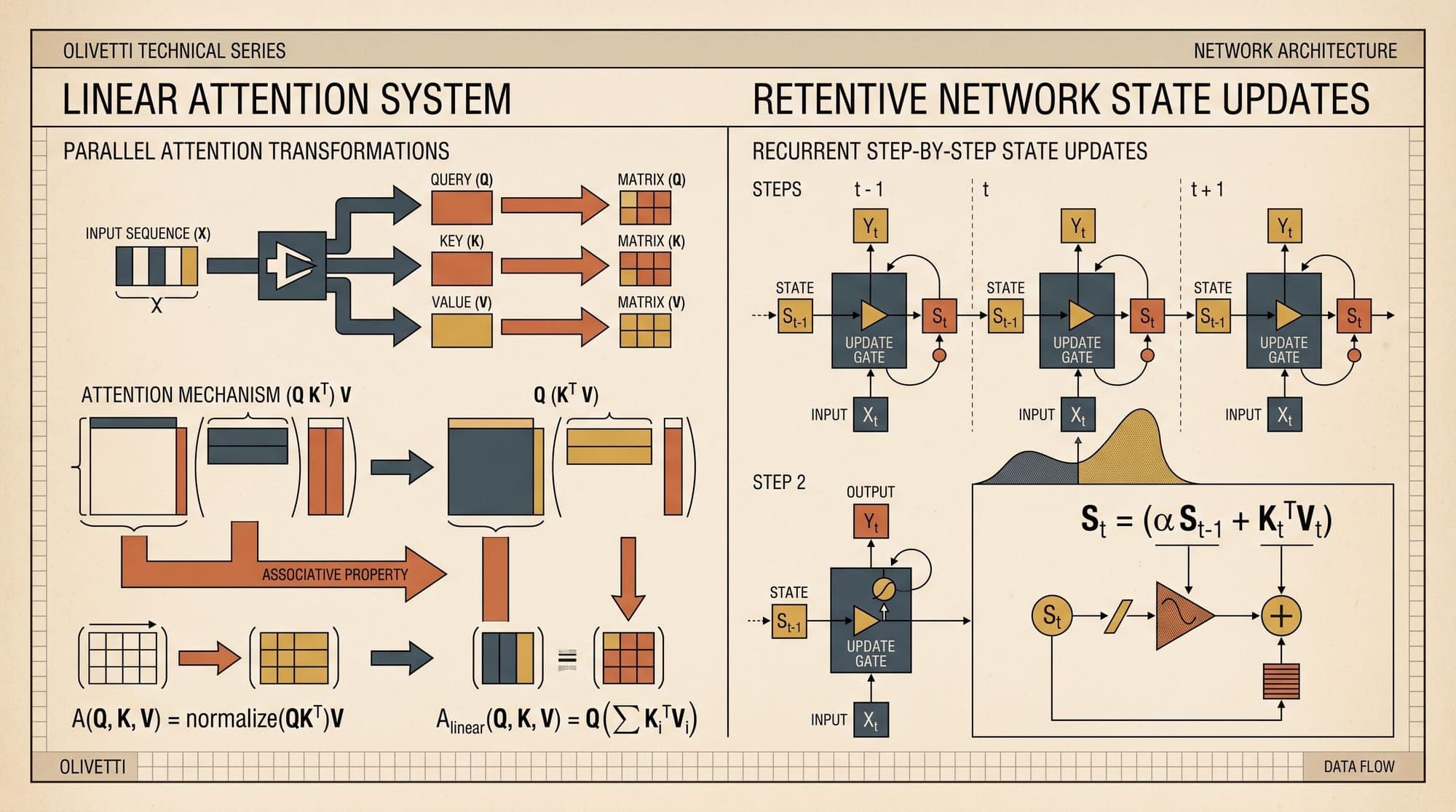
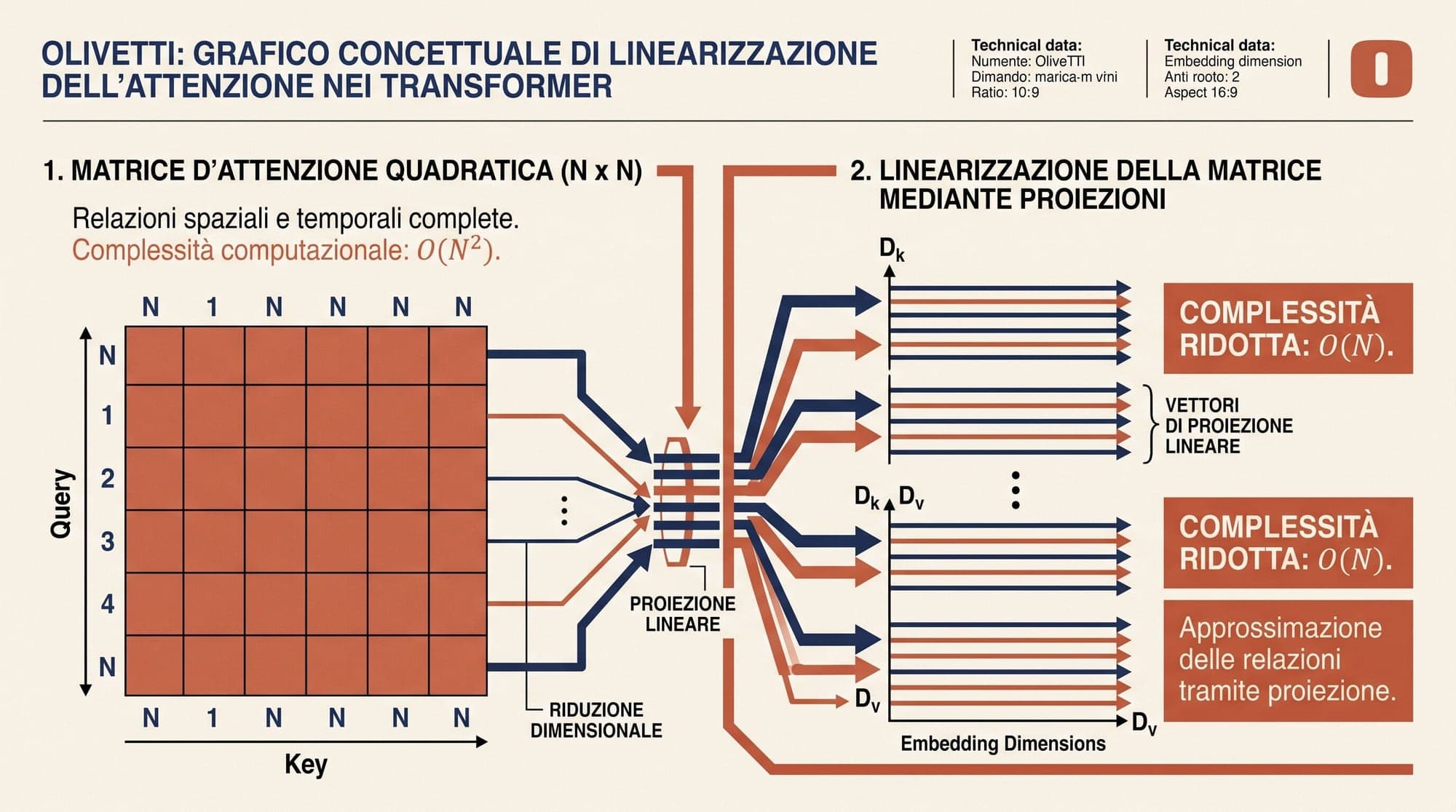
The quadratic complexity of standard self-attention has remained a central computational ceiling in Transformer architectures. Because standard attention computes pairwise similarity across all token pairs in a sequence of length $L$, memory consumption and compute scale as $O(L^2)$. For long contexts, high-resolution visual tokens, and biological sequence modeling, this quadratic bottleneck forces strict sequence truncation or aggressive hardware partitioning. In Rethinking Attention with Perf
1 min