Modular Open-Sources Mojo Language Compiler and Toolchain Under Apache 2.0
Modular has released the complete source code for the Mojo programming language compiler, standard tooling, and runtime infrastructure under the Apache 2.0 license with LLVM exceptions. The announcement, delivered on August 18, 2026 during the company's ModCon developer conference, fulfills a multi-year roadmap commitment to transition the systems programming language to a fully open development model.
The compiler source code is now publicly hosted in Modular's primary GitHub repository (modular/modular), allowing developers to inspect, modify, and build the full Mojo toolchain from scratch.

Open Sourcing the Full Compiler Stack
Mojo was first introduced in May 2023 by Modular co-founders Chris Lattner and Tim Davis as a high-performance systems language designed for AI hardware acceleration. While Modular had previously open-sourced the Mojo standard library and over 450,000 lines of kernel code across 2024 and 2025, the compiler core remained proprietary during initial language design.
The public release covers:
- The Core Compiler: Complete front-end parsing, type checking, borrow checking, and code generation components.
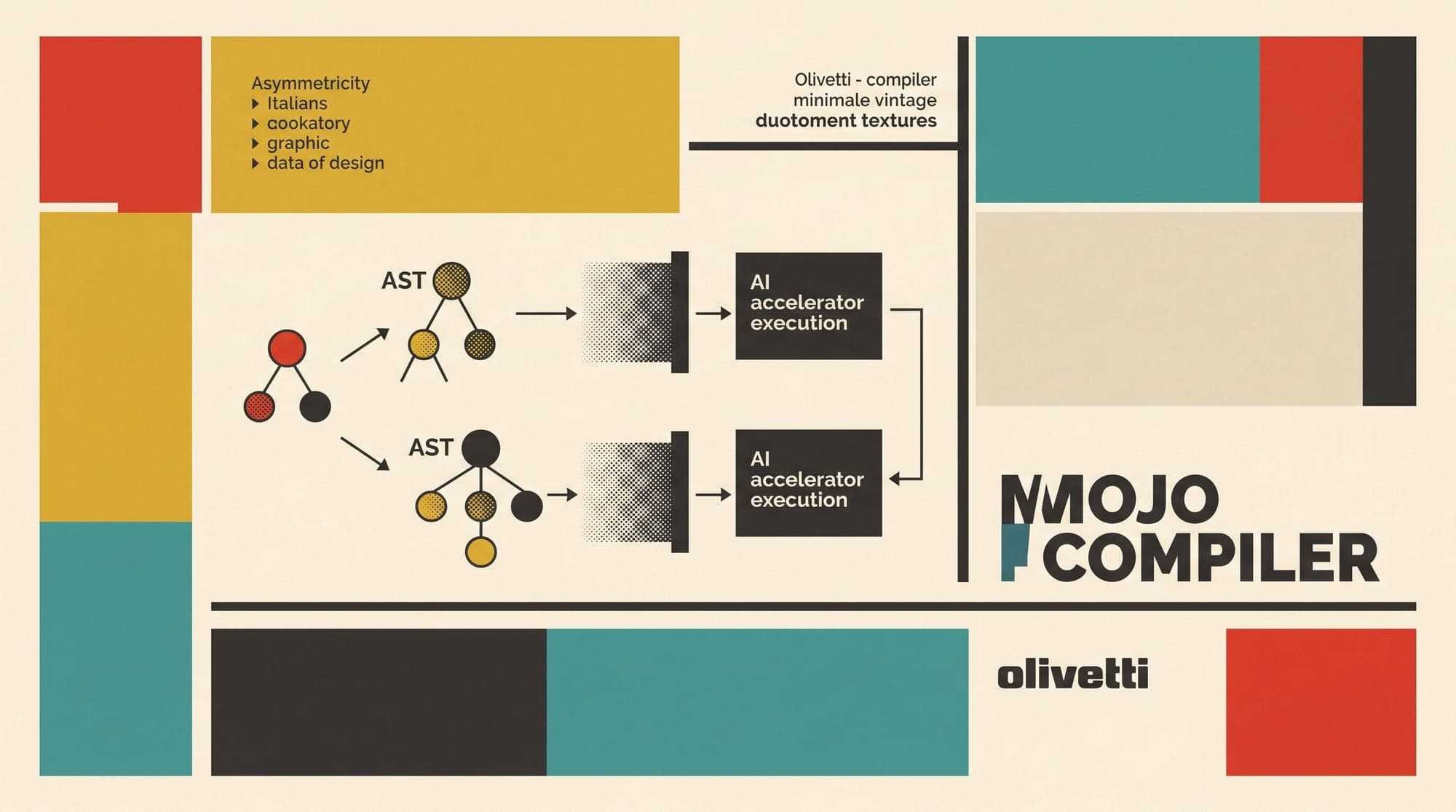
- MLIR and LLVM Integration: Lowering pipelines that translate high-level Mojo code through Multi-Level Intermediate Representation (MLIR) dialects to generate optimized machine code for heterogeneous targets, including CPUs, GPUs, and custom AI accelerators.
- Build System Configuration: Standardized build and test definitions using Bazel (
./bazelw), allowing developers to compile the language binary via--config=build-mojoor test the standard library with--config=prebuilt-mojo.
Modular adopted the Apache 2.0 license with LLVM exceptions, matching the licensing model used across the wider LLVM ecosystem to enable commercial integration without restrictive copyleft requirements.
Transition from Python Superset to Independent Systems Language
Mojo originally launched with the ambition to function as a strict superset of Python. As the language evolved toward production deployment, Modular shifted that design goal in late 2025. Rather than maintaining full backward compatibility with dynamic Python semantics, Mojo prioritized high-performance systems primitives, strict type safety, zero-cost abstractions, and hardware-level control over memory layouts and SIMD vectors.
On August 11, 2026, Modular released Mojo 1.0 (version 26.5), marking the language's first source-stable milestone. The 1.0 release standardized variable declarations, consolidated closure semantics, unified pointer types, and finalized core language syntax. The compiler release on August 18 builds directly on that stabilized base.
Contribution Roadmap and Corporate Status
Modular stated that while the compiler repository is now open for public inspection and cloning, external pull requests for the compiler and tooling will remain paused until later in 2026. The company cited the need to establish structured governance and code review pipelines before accepting community contributions to the compiler backend. The Mojo standard library continues to accept community pull requests.
The open-source milestone also marks Modular's first major product release following its acquisition by Qualcomm, which was completed on July 29, 2026. Modular continues to operate its software stack, including the MAX serving framework and Modular Cloud, as part of Qualcomm's broader AI compute strategy.