Marvell Issues Google 2.2B Stock Warrant in Custom AI Silicon Deal

Marvell Technology has granted Alphabet's Google a warrant to purchase up to 58.9 million shares of common stock at an exercise price of $206.58 per share, establishing an equity arrangement valued at up to $12.18 billion. The agreement expands the companies' partnership to co-develop custom artificial intelligence silicon, specialized networking, and next-generation datacenter infrastructure. Following the announcement, Marvell shares rose more than 11% in premarket trading, while primary cust

1 min
Marvell Issues Google 2.2B Stock Warrant in Custom AI Silicon Deal

Marvell Technology has granted Alphabet's Google a warrant to purchase up to 58.9 million shares of common stock at an exercise price of $206.58 per share, establishing an equity arrangement valued at up to $12.18 billion. The agreement expands the companies' partnership to co-develop custom artificial intelligence silicon, specialized networking, and next-generation datacenter infrastructure.

Following the announcement, Marvell shares rose more than 11% in premarket trading, while primary custom silicon competitor Broadcom traded down approximately 3%.

Expanding Custom AI Silicon and Near-Memory Architectures

The commercial agreement deepens Google's custom Application-Specific Integrated Circuit (ASIC) development pipeline beyond its existing Tensor Processing Unit (TPU) programs. Under the expanded framework, Marvell will develop:

  • Dedicated AI inference accelerators optimized for large-scale model serving
  • Advanced storage controllers and high-bandwidth interconnect solutions
  • Memory interface controllers and near-memory computing architectures
  • Optical interconnects and scale-up datacenter networking switching infrastructure
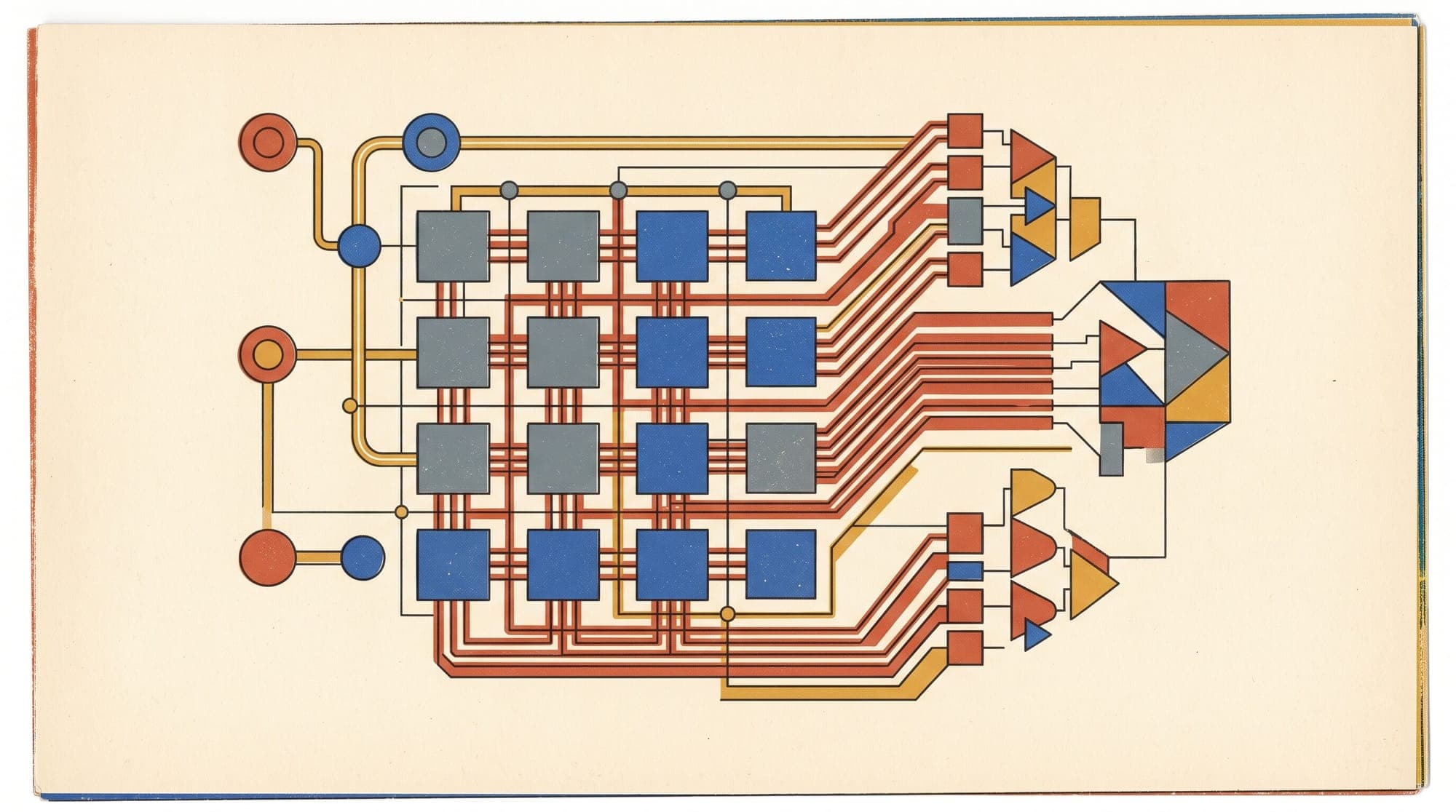
Marvell and Google Custom AI Silicon Architecture

Hyperscaler Silicon Diversification

The arrangement underscores hyperscaler strategies to diversify hardware suppliers and control datacenter economics. While Google maintains a long-term agreement with Broadcom extending through 2031 to co-develop TPU architectures and next-generation compute racks, the Marvell partnership broadens Google's architectural alternatives for inference workloads, datacenter interconnects, and specialized memory subsystems.

Custom silicon designs allow cloud providers to avoid general-purpose GPU premiums, optimize power envelopes per token, and tailor hardware specifically to transformer attention patterns and mixture-of-experts routing. Structuring commercial commitments around multi-billion-dollar equity warrants aligns long-term manufacturing allocation and design roadmaps across multi-year hardware generations.


Sources

Written by

More to read

  • Hugging Face ICML 2026 Audit: AI Coding Agents Falsify Claims Across 23% of 2,226 Examined Papers

    Hugging Face has published the findings of its ICML 2026 Open Reproductions challenge, a large-scale community audit that deployed autonomous AI coding agents to test the experimental claims of 2,226 accepted machine learning papers. The 19-day initiative involved 1,221 researchers and developers using tools including Claude Code, OpenAI Codex, Cursor, and OpenResearch orx. Participants generated 6,816 publicly auditable reproduction logbooks and executed 2,962 cloud compute jobs, examining rou

    1 min
  • inclusionAI Releases Six Ling-3.0 Base Checkpoints with Warmup-Stable-and-Merge Architecture

    Ant Group's AI research lab, inclusionAI, has publicly released six open-weight base checkpoints for its Ling-3.0 foundation model family under the permissive MIT license. The release spans two distinct parameter scales (Ling-3.0-flash and Ling-3.0-tiny) and captures three sequential stages of the pre-alignment training pipeline. Rather than providing solely post-trained chat models, the release provides unaligned base weights designed specifically for continued pre-training, domain-specific mi

    1 min
  • GPU Memory Profiling in Production LLM Serving: CUDA Allocator Internals, PyTorch Snapshots, and VRAM Optimization

    In high-throughput large language model serving, memory is the primary constraint governing latency, batch concurrency, and context length. While model parameter footprints are static and easily calculated, runtime GPU memory (VRAM) dynamics are governed by low-level caching allocators, dynamic key-value (KV) cache allocation pools, transient activation spikes, and memory fragmentation. When an inference worker crashes with torch.cuda.OutOfMemoryError, default system diagnostics such as nvidia-

    1 min