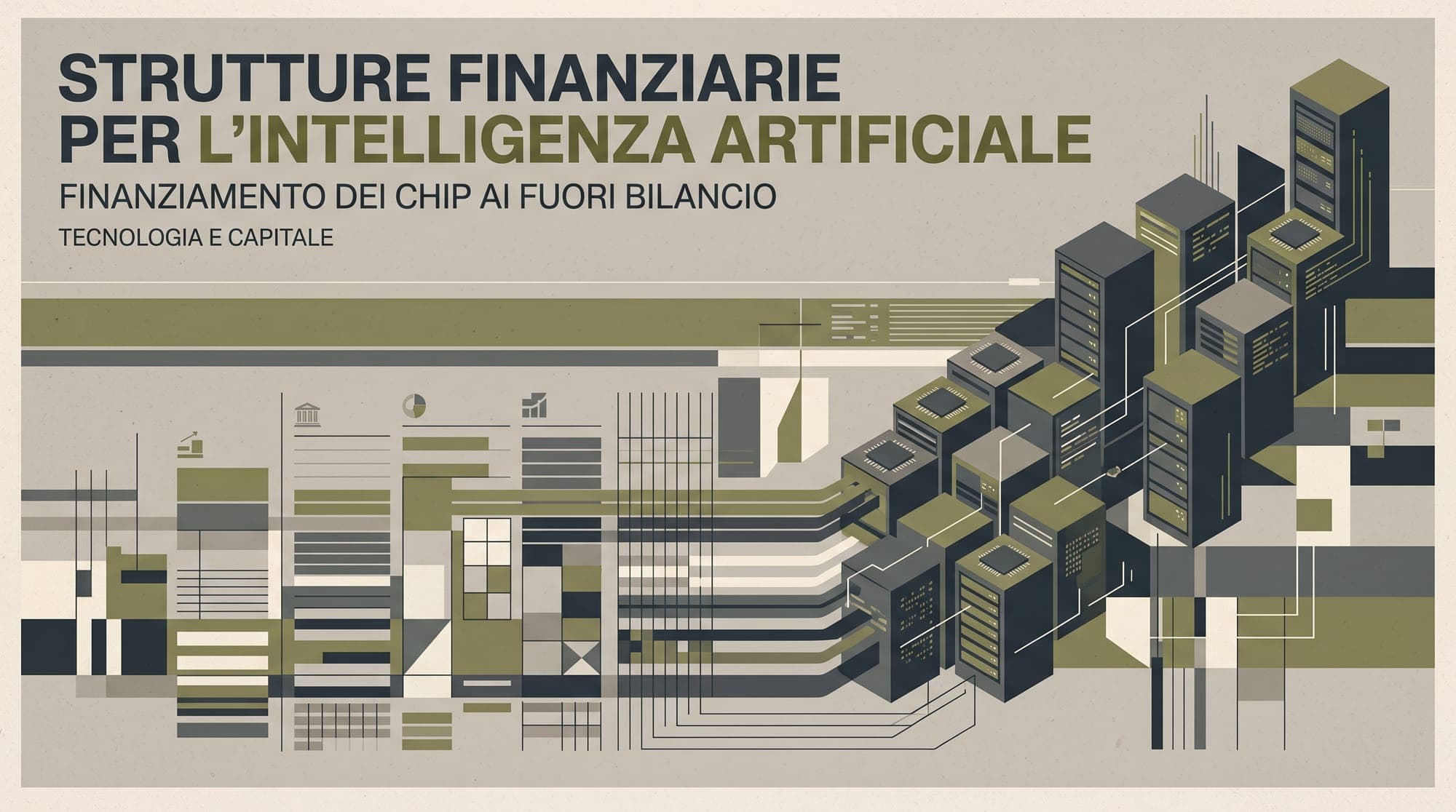
Google has assembled one of the largest infrastructure financing programs in history to supply Anthropic with its proprietary AI chips while keeping the hardware off everyone's balance sheets, according to Financial Times reporting.
The arrangement involves Google, Broadcom, Morgan Stanley, Apollo, Blackstone, and several cryptocurrency mining companies in a chain of deals designed to sidestep the balance-sheet constraints that would otherwise make the transaction impossible.
How the structure works
Anthropic needs tens of billions of dollars in AI hardware but has no credit rating. Banks will not lend the startup that amount. Google, already spending record sums on its own infrastructure, does not want the chips on its books either. Broadcom, which manufactures Google's Tensor Processing Units (TPUs) and resells them, also wants the liability off its balance sheet.

Morgan Stanley designed a special-purpose vehicle called Compute SPV to solve the deadlock. The vehicle buys the chips using capital from outside investors, primarily Apollo and Blackstone, then leases the hardware to Anthropic. The first transaction, executed in June, covers roughly one gigawatt of TPU hardware for $35 billion, equivalent to about one million TPUs.
Broadcom provides a backstop covering approximately $30 billion of the purchase if Anthropic stops making lease payments. The structure has since become a template. An April agreement covers Google's sale of another 3.5 gigawatts of TPU hardware to Broadcom for Anthropic. Broadcom's financial filings list $128 billion in purchase commitments through 2028, and FT sources say nearly all of it is tied to Google TPUs.
Crypto miners supply the data centers
Financing the chips only solves half the problem. Google also needs data centers with sufficient power to run them. The company is turning to cryptocurrency mining operators that already hold large electricity contracts.
TeraWulf is the first recipient, with a Google guarantee backing a 360-megawatt data center in New York. Morgan Stanley packages the guarantee into a $3.2 billion construction bond, and Google receives an equity stake in TeraWulf in return. The model has expanded to include Cipher Digital and Hut 8, with Google backing ten projects totaling 2.4 gigawatts of capacity.
The risk stays concentrated
Despite structuring the deals off its balance sheet, Google retains substantial exposure. The FT reports Google could face up to $44 billion in obligations if every lease defaults, yet the company records only $815 million of that liability. All told, $200 billion in contracts depend on Anthropic continuing to make its payments.
Google sits on both sides of the table as both an Anthropic investor and its chip supplier. An earlier report from The Information indicated Anthropic has committed to roughly $200 billion in Google Cloud spending over five years in exchange for five gigawatts of server capacity. That figure accounts for more than 40 percent of Google's committed future cloud revenue.
The financing also gives Google a structural advantage over Nvidia's ecosystem. Data center projects backed by Google borrow at a median rate of 7.1 percent, compared with 9.3 percent for neocloud operators using Nvidia chips. Jefferies analysts described the gap as "a structural cost-of-capital disadvantage" for Nvidia-dependent companies.
The entire structure assumes Anthropic's revenue will grow 20 to 30 times by 2029. If that growth slows, the chain of guarantees, leases, and bonds could unwind across multiple counterparties.