Etched in Talks to Raise 00M Led by Jane Street at 1B Valuation

AI inference chip startup Etched is in negotiations to raise $700 million in a new financing round led by existing investor Jane Street, according to reporting from The Wall Street Journal. The proposed financing would value the San Jose-based semiconductor company at approximately $21 billion. The planned round follows a $300 million Series C led by Sequoia Capital that valued the startup at $10.3 billion, effectively doubling its valuation within weeks amid intensifying enterprise demand for

2 min
Etched in Talks to Raise 00M Led by Jane Street at 1B Valuation

AI inference chip startup Etched is in negotiations to raise $700 million in a new financing round led by existing investor Jane Street, according to reporting from The Wall Street Journal. The proposed financing would value the San Jose-based semiconductor company at approximately $21 billion.

The planned round follows a $300 million Series C led by Sequoia Capital that valued the startup at $10.3 billion, effectively doubling its valuation within weeks amid intensifying enterprise demand for specialized inference hardware.

Hardwired Transformer ASICs vs General-Purpose GPUs

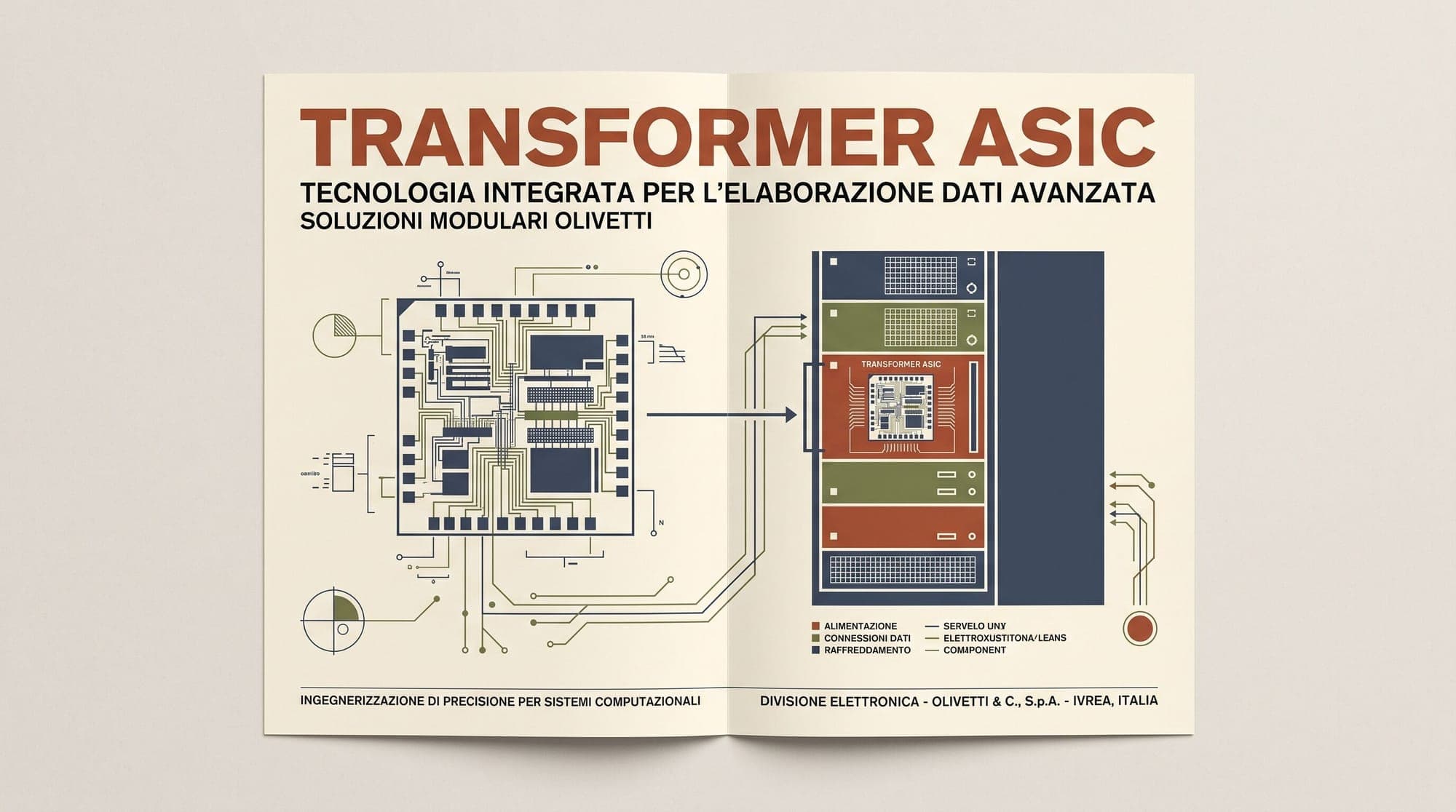
Founded in 2022 by Gavin Uberti, Chris Zhu, and Robert Wachen, Etched takes an architectural approach distinct from general-purpose graphics processing units (GPUs). Rather than supporting arbitrary parallel compute workloads or training routines, Etched designs application-specific integrated circuits (ASICs) hardwired directly to execute transformer attention mechanisms and frontier model architectures.

By baking transformer mathematical operations directly into silicon pathways, the design aims to eliminate runtime instruction overhead, maximize memory bandwidth utilization, and significantly lower power consumption per generated token compared to conventional GPUs.

Etched Inference Architecture and System Design

Rack-Scale System Design and Production Scaling

In addition to custom silicon manufactured on advanced TSMC process nodes, Etched develops full rack-scale systems in-house. The company's engineering scope encompasses:

  • Custom Server Enclosures: Proprietary circuit boards, power delivery networks, and liquid cooling cold plates built to support high-density inference clusters.
  • Model Compatibility: Hardware validation across prominent open-weight and proprietary architectures, including DeepSeek, Qwen, Llama, and hybrid state-space models.
  • Manufacturing Expansion: Operating from an 80,000-square-foot prototyping and production facility in San Jose to handle customer rack deployments.

Etched previously disclosed over $1 billion in commercial pre-orders and customer deployment commitments from major quantitative trading firms and cloud infrastructure providers.

The funding round terms remain subject to final closing conditions.

Sources

Written by

More to read

  • Continuous Pre-Training in Production: Domain Adaptation, Replay Buffers, Learning Rate Restarts, and Catastrophic Forgetting Mitigation

    Continuous Pre-Training in Production: Domain Adaptation, Replay Buffers, Learning Rate Restarts, and Catastrophic Forgetting Mitigation Adapting general-purpose foundation models to specialized enterprise domains (such as clinical medicine, corporate law, quantitative finance, and proprietary software codebases) presents a fundamental architectural challenge. While Retrieval-Augmented Generation (RAG) and Supervised Fine-Tuning (SFT) remain standard first-line approaches, both exhibit severe s

    1 min
  • Hybrid SSM-Transformer Architectures: How Interleaving Attention and Recurrence Solves the State-Retrieval Trade-Off

    Hybrid SSM-Transformer Architectures: How Interleaving Attention and Recurrence Solves the State-Retrieval Trade-Off Autoregressive language models face a fundamental tension between inference efficiency and long-context retrieval capacity. Pure Transformer architectures scale quadratic computational complexity during sequence prefill and linear key-value (KV) cache memory consumption during autoregressive token generation. Conversely, pure State Space Models (SSMs) and linear recurrent neural

    1 min
  • Study: Why Labor-Saving LLMs Incline Scientists to Do More Work Less Well

    A theoretical study published by researchers from Princeton University, the University of Washington, and collaborating institutions models how large language models alter researchers' time allocation across projects. The authors find that by reducing time friction across different stages of the research lifecycle, AI assistants increase the opportunity cost of researcher time, creating economic incentives to publish a higher volume of less thoroughly refined papers. The paper, titled The unint

    1 min