DeepReinforce Releases Ornith-1.5: MIT-Licensed 9B, 35B, and 397B Open Weights Trained on Autonomous Self-Improvement Loops

DeepReinforce and the Ornith team have released Ornith-1.5, a family of open-weight foundation models trained using autonomous self-improvement loops. Released under the permissive MIT license, the model family spans three architectures: a 9B dense model, a 35B mixture-of-experts model activating approximately 3B parameters per token (35B-A3B), and a flagship 397B mixture-of-experts model. The release expands on the team's earlier Ornith-1.0 release by automating the entire post-training optimi

2 min
DeepReinforce Releases Ornith-1.5: MIT-Licensed 9B, 35B, and 397B Open Weights Trained on Autonomous Self-Improvement Loops

DeepReinforce and the Ornith team have released Ornith-1.5, a family of open-weight foundation models trained using autonomous self-improvement loops. Released under the permissive MIT license, the model family spans three architectures: a 9B dense model, a 35B mixture-of-experts model activating approximately 3B parameters per token (35B-A3B), and a flagship 397B mixture-of-experts model.

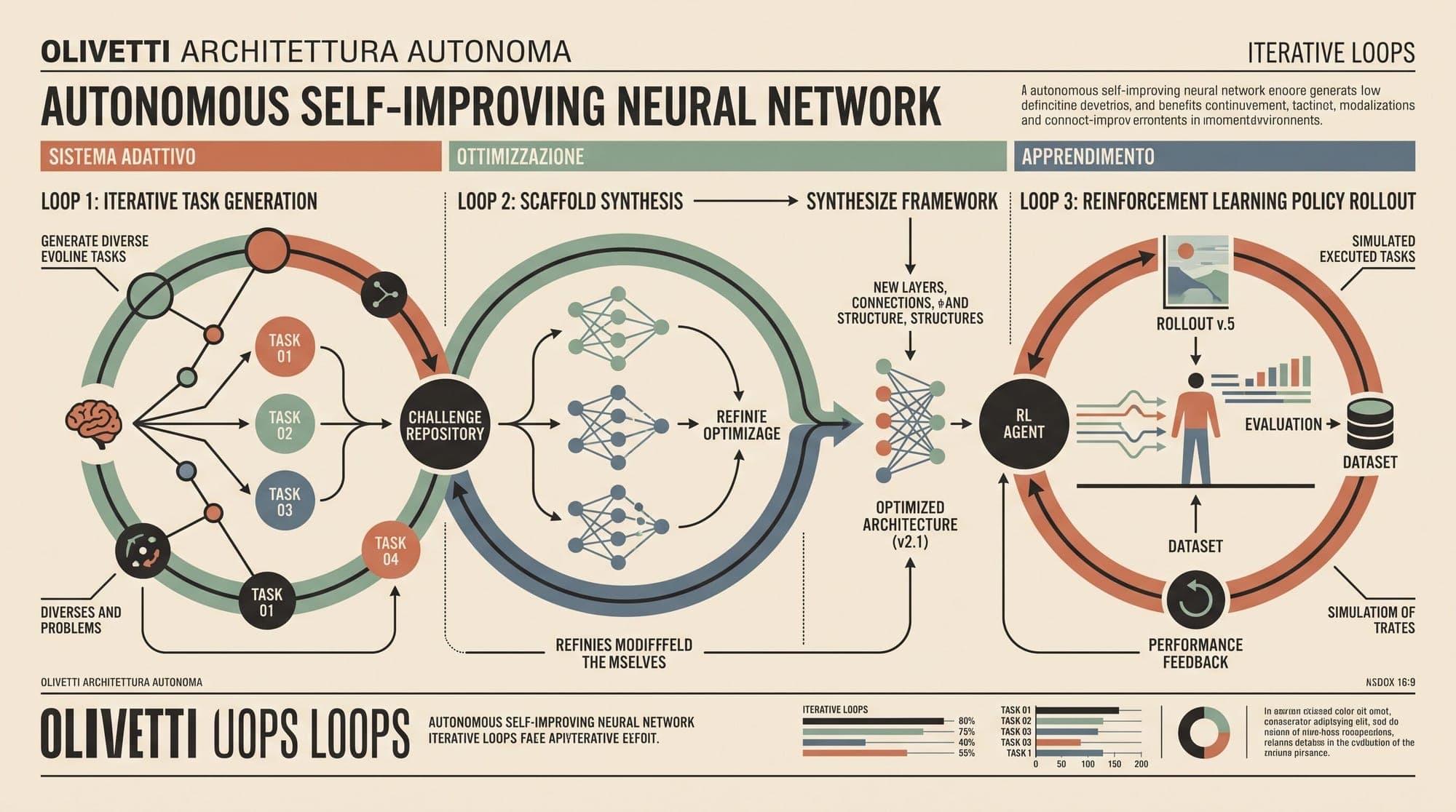
The release expands on the team's earlier Ornith-1.0 release by automating the entire post-training optimization cycle. While earlier iterations focused on optimizing scaffolds and solution rollouts on curated tasks, Ornith-1.5 jointly automates synthetic task generation, environment scaffold construction, and reinforcement learning policy rollouts without relying on human task curation.

Ornith-1.5 Evaluation and Benchmark Architecture

Benchmark Results and Autonomous Performance

The flagship Ornith-1.5-397B model targets frontier coding and complex agentic tasks. On standardized evaluations, the model achieves:

  • Terminal-Bench 2.1 (Terminus-2): 86.1%, outperforming DeepSeek-V4-Flash-0731 (82.7%) and GLM-5.2 (81.0%), while matching Claude Opus 4.8 (85.0%).
  • SWE-bench Verified: 86.0%, compared to 85.8% for Claude Opus 4.8 and 86.2% for Kimi K3.
  • DeepSWE: 56.0%, up from 8.0% in Ornith-1.0-397B and approaching Claude Opus 4.8 (59.0%).
  • GPQA Diamond: 92.8%, showing competitive scientific reasoning against frontier proprietary models.
  • Agentic Workloads: 80.0% on MCP-Atlas, 71.2% on Toolathlon-Verified, and 86.6% on BrowseComp.

The mid-size Ornith-1.5-35B-A3B variant activates roughly 3B parameters per token during inference. It delivers 67.8% on Terminal-Bench 2.1 and 79.0% on SWE-bench Verified, exceeding denser competitors including Gemma-4-31B (42.1% and 52.0% respectively) and Qwen3.6-35B-A3B (52.5% and 73.4%).

Architecture, Context Windows, and Serving Support

All Ornith-1.5 models are native reasoning models that generate explicit <think> scratchpads before producing final answers and OpenAI-compatible structured tool calls. Key architectural specifications include:

  • Native Context: 262,144 tokens (256K) natively supported across the family.
  • Context Scaling: Extendable to 1,000,000 tokens using YaRN RoPE interpolation at a 4.0x scaling factor.
  • Ecosystem Integration: Checkpoints are available in BF16, FP8, and GGUF formats on Hugging Face, with immediate day-one serving support across vLLM, SGLang, Ollama, llama.cpp, Unsloth, OpenCode, and Hermes Agent.

The Ornith team has released model weights, calibration matrices, and evaluation configurations openly on Hugging Face under the MIT license.

Sources

Written by

More to read

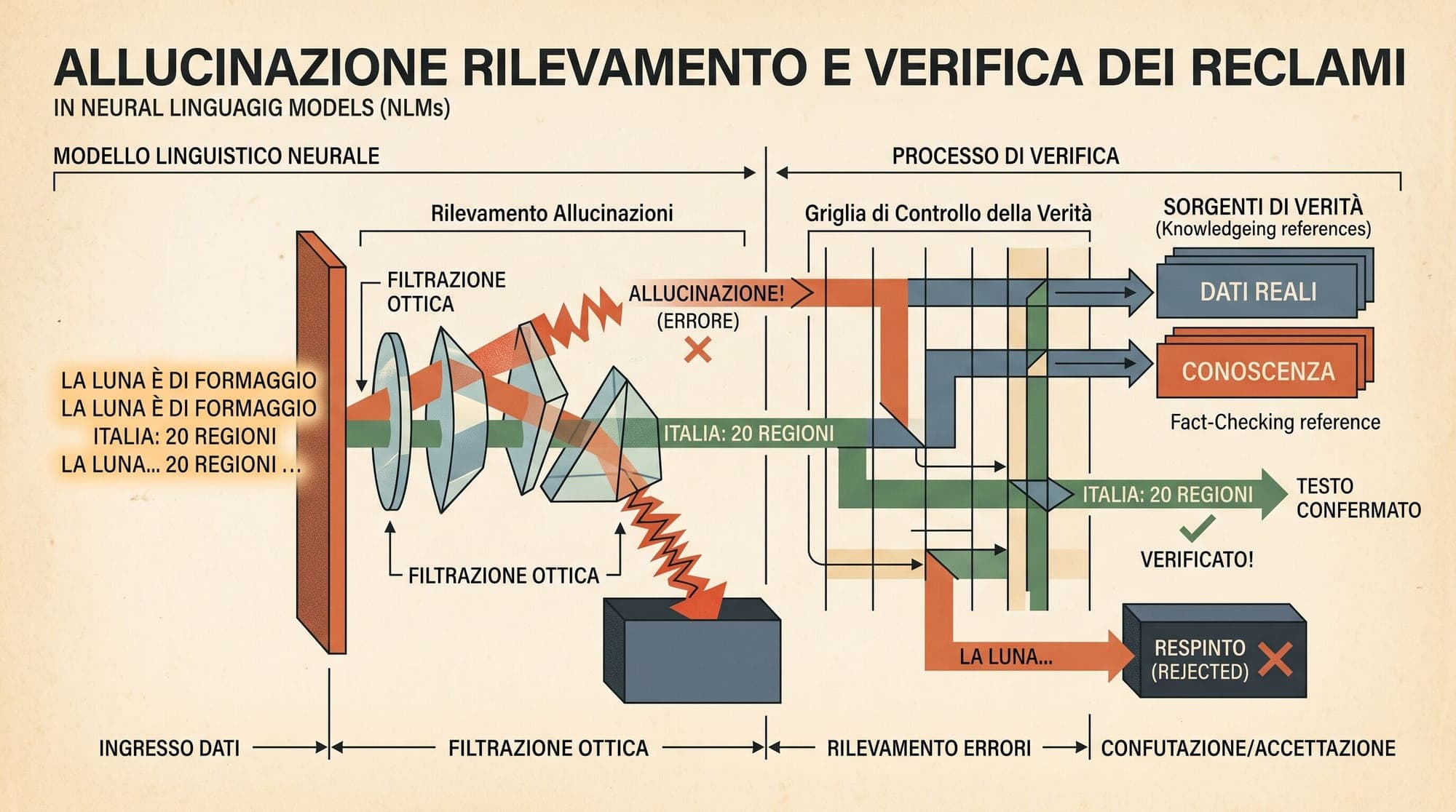
  • Hallucination Detection and Faithfulness Verification in Production RAG: Architecture, NLI Claim Decomposition, and Runtime Guardrail Economics

    Retrieval-Augmented Generation (RAG) is commonly deployed under the assumption that grounding generation in retrieved passages eliminates factual inaccuracies. In practice, grounding provides an evidence boundary but does not guarantee factual fidelity. Production language models regularly synthesize claims absent from the retrieved context (extrinsic hallucinations) or directly assert statements conflicting with retrieved premises (intrinsic contradictions). As enterprise RAG pipelines scale i

    1 min
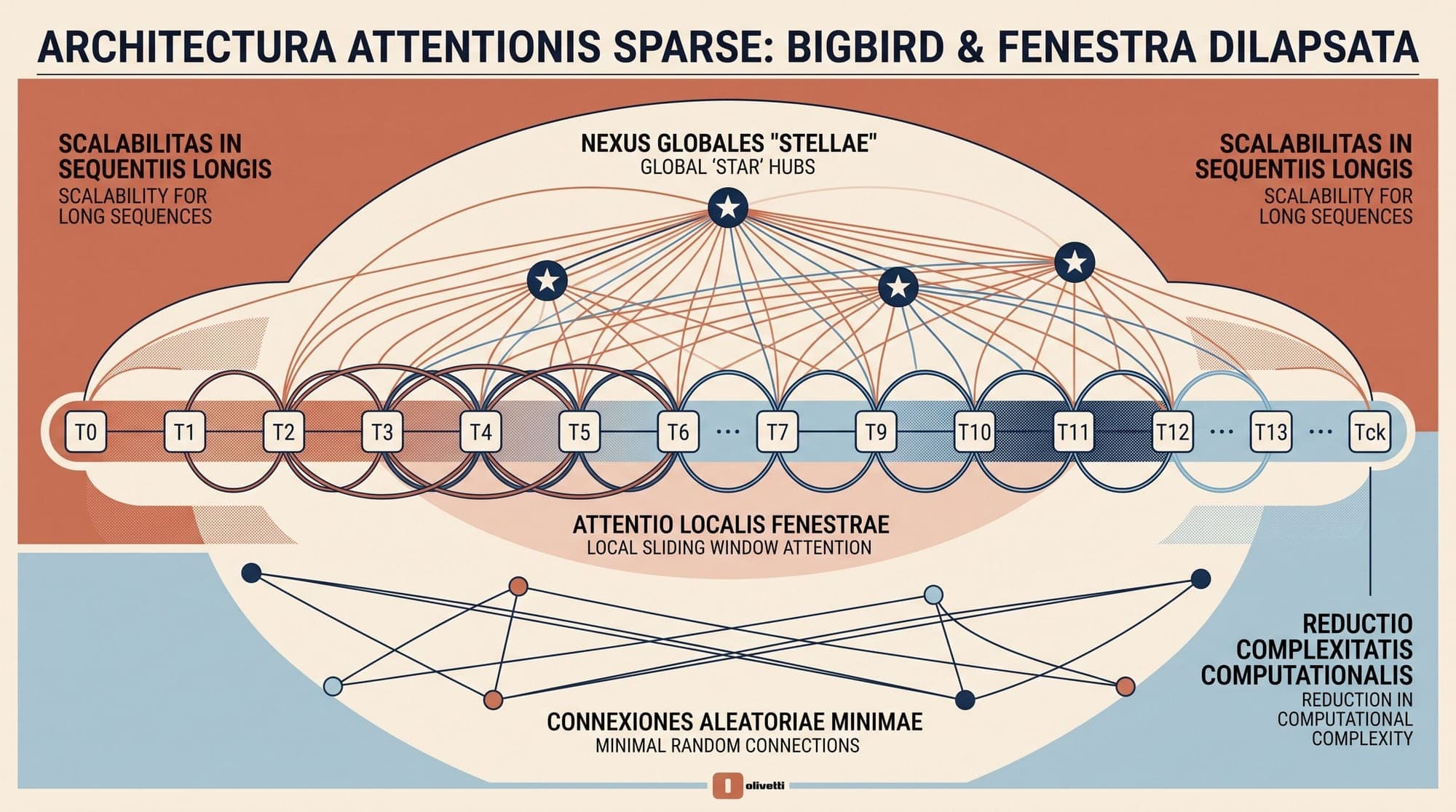
  • Sparse Attention and BigBird: How Window, Global, and Random Graphs Preserve Turing Completeness in Linear Time

    Standard self-attention in transformer architectures scales quadratically with sequence length. Computing full pairwise interactions between n tokens requires evaluating an n x n attention matrix, yielding O(n^2) computational complexity and memory consumption. While hardware accelerators and IO-aware tiling algorithms like FlashAttention optimize memory traffic, the quadratic compute and KV footprint remains a barrier for processing long contexts, document-level summarization, and genomic seque

    1 min
  • Oxford Study Details Chinese Gray-Market Proxies Reselling Claude Tokens at 90% Discounts

    An investigation by the Oxford China Policy Lab reveals that Chinese developers routinely access Anthropic's frontier Claude models at discounts between 70% and 90% below list price, bypassing geographical blocks, payment filters, and biometric identity verification through a decentralized network of API proxies known locally as "transfer stations" (中转站). The analysis, authored by Oxford researcher Zilan Qian and published via ChinaTalk, outlines the modular supply chain and economic mechanics

    1 min