Cursor Launches Origin Code Hosting with Bidirectional GitHub Sync and Agent Reviews

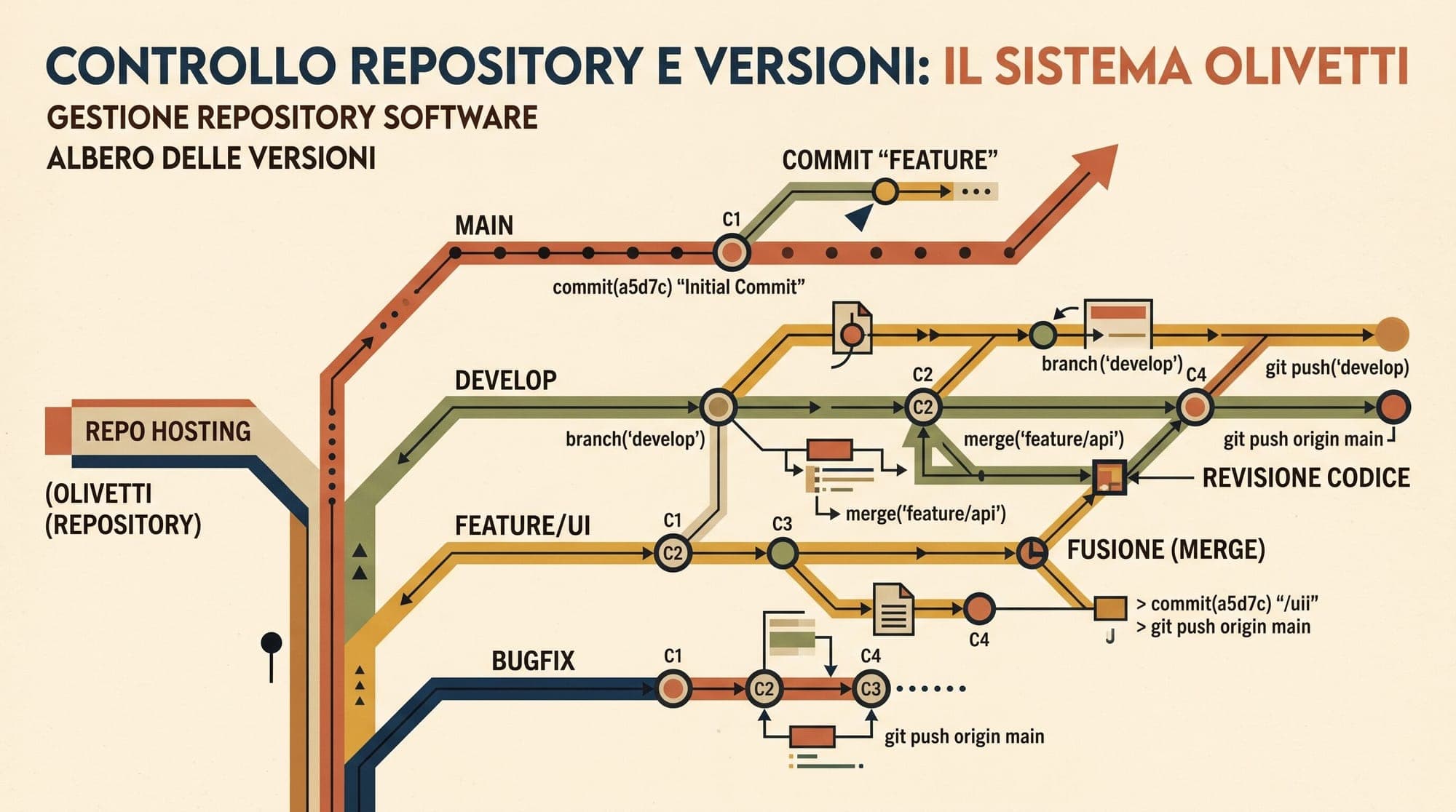
Cursor has launched Origin, a proprietary code hosting service currently in early beta across all paid subscription tiers. The platform introduces native Git repository hosting directly inside the Cursor ecosystem, competing with GitHub and GitLab while embedding AI agents directly into version control and code review workflows. Origin allows developers to create and manage repositories, review pull requests, browse code, and automate continuous integration workflows without leaving the Cursor

2 min
Cursor Launches Origin Code Hosting with Bidirectional GitHub Sync and Agent Reviews

Cursor has launched Origin, a proprietary code hosting service currently in early beta across all paid subscription tiers. The platform introduces native Git repository hosting directly inside the Cursor ecosystem, competing with GitHub and GitLab while embedding AI agents directly into version control and code review workflows.

Origin allows developers to create and manage repositories, review pull requests, browse code, and automate continuous integration workflows without leaving the Cursor interface. While developers can host new repositories natively using standard Git commands via the Origin CLI, Cursor has also built a bidirectional GitHub synchronization layer to facilitate incremental adoption.

Dual Hosting and Bidirectional GitHub Sync

Rather than requiring an immediate migration away from existing infrastructure, Origin supports parallel operation alongside GitHub organizations. Teams can connect an existing GitHub organization and select specific repositories to mirror into Origin.

These mirrored repositories maintain real-time synchronization. Code pushes continue targeting GitHub as the primary source of truth, while pull requests, code reviews, and inline discussions synchronize bidirectionally across both platforms. A review comment submitted inside Cursor appears on GitHub within seconds, and replies or reactions from GitHub immediately reflect in Origin.

Cursor Origin pull request and deployment pipeline

Native Agent Integration and Ecosystem Extensions

The core technical distinction of Origin lies in its native integration with Cursor's AI coding agents. Because the repository, pull request interface, and underlying codebase reside within the same operational environment, agents can directly answer questions about repository history, generate diffs, update pull requests, and push changes to designated branches.

At launch, Cursor announced third-party integrations with infrastructure and CI/CD providers:

  • Vercel: Connecting an Origin repository automatically triggers preview deployments for pull requests, followed by production deployments upon merging.
  • Depot and Buildkite: Provide CI pipeline execution, supporting standard GitHub Actions workflows as well as Buildkite native execution pipelines.

Availability and Administration

Origin is rolling out immediately in early beta to all users on Cursor Pro and Business plans. Enterprise administrators have been provided with management settings to opt out or restrict repository access according to organizational security policies.


Sources

Written by

More to read

  • LLM Inference on AMD ROCm in Production: MI300X Architecture, Triton Kernel Parity, and vLLM Serving Benchmarks

    LLM Inference on AMD ROCm in Production: MI300X Architecture, Triton Kernel Parity, and vLLM Serving Benchmarks Serving frontier large language models in enterprise production has historically been synonymous with NVIDIA CUDA infrastructure. However, the deployment of AMD Instinct MI300X accelerators across tier-one hyperscalers and neoclouds has established a viable alternative for high-throughput inference fleets. With 192 GB of high-bandwidth memory (HBM3) and 5.3 TB/s of peak theoretical m

    1 min
  • Identity Preference Optimization (IPO): How Exact Loss Inversion Prevents Overfitting in Direct Alignment

    The post-training alignment of large language models underwent a structural shift with the introduction of Direct Preference Optimization (Rafailov et al., 2023). By reparameterizing the closed-form optimal policy under a Kullback-Leibler (KL) constrained Reinforcement Learning from Human Feedback (RLHF) objective, DPO eliminated the need to fit an explicit reward model or maintain complex actor-critic rollout loops. However, standard DPO introduces a distinct mathematical pathology: under dete

    1 min
  • AI Workflow Startup Relay Shuts Down as Team Joins Google Chrome to Build Browser Agents

    AI-driven workflow automation startup Relay is shutting down its independent product operations, with founder and chief executive officer Jacob Bank and key engineering staff joining Google's Chrome division to develop browser-native AI agent capabilities. Relay, founded in July 2021 to compete with legacy workflow platforms like Zapier through generative AI integrations, raised $8.1 million across two venture funding rounds. The company phased out free tier access on August 15, 2026, and will

    1 min