Cohere has released Parse 5, a specialized 2.3-billion-parameter vision-language model (VLM) engineered to convert complex enterprise documents into structured Markdown and HTML blocks in a single inference pass.
Priced at $1.50 per 1,000 pages via API, Parse 5 targets large-scale enterprise retrieval-augmented generation (RAG) and document processing pipelines where routing millions of pages through frontier foundation models is cost-prohibitive.
Single-Pass Architecture and Capabilities
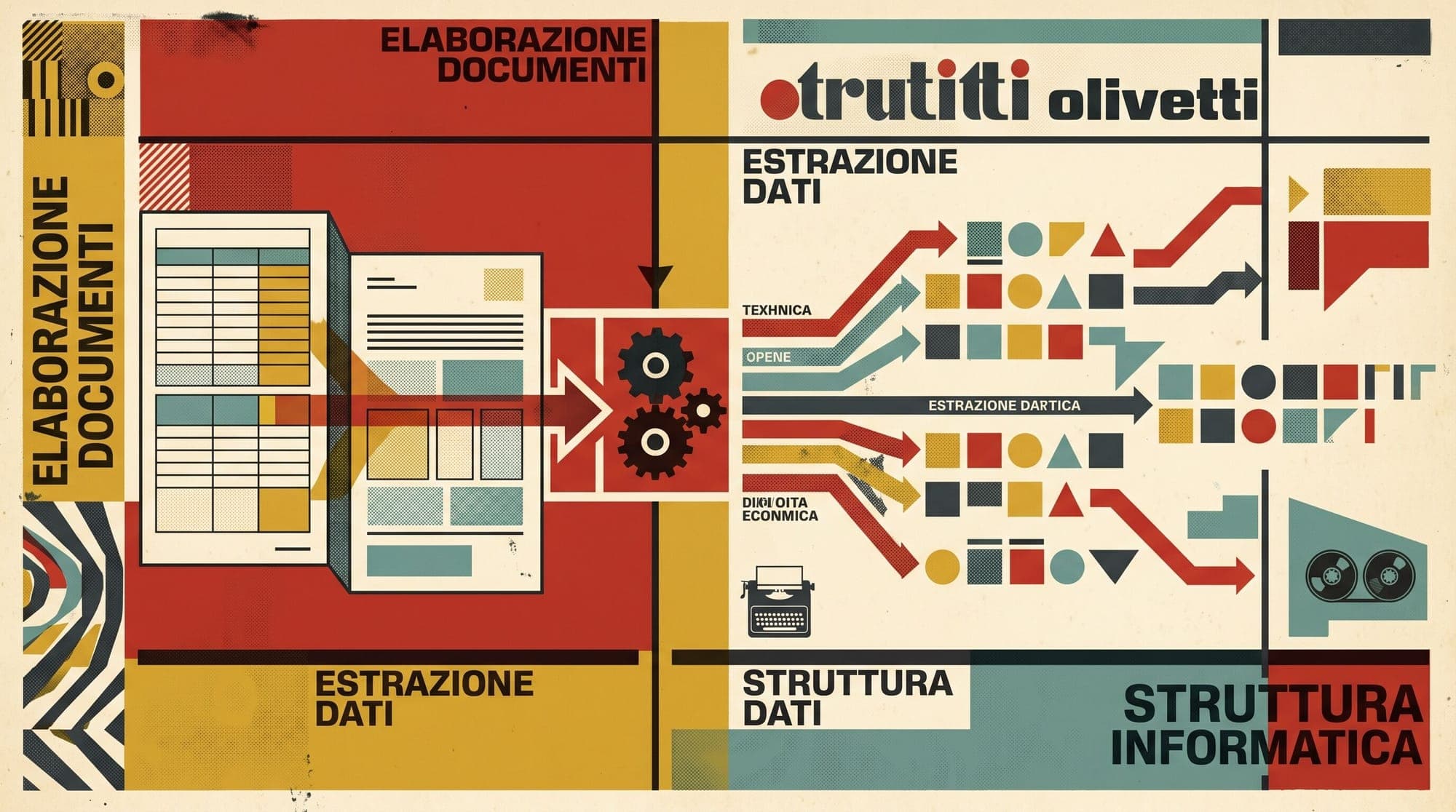
Traditional enterprise document parsing relies on multi-stage pipelines that combine optical character recognition (OCR), layout detection heuristics, and secondary language models to reconstruct tabular data and reading hierarchy. These multi-stage systems frequently drop spatial relationships, misinterpret multi-column flows, or introduce latency bottlenecks.

Parse 5 is built on Cohere Labs' North-Micro-Vision-Instruct architecture. It features an 8,192-token context window and a compact memory footprint of approximately 4.6 gigabytes, enabling cost-effective private deployment alongside hosted API access. The model processes input pages (PDFs, slide decks, or scanned JPEG images) as base64-encoded visual frames and yields structured output in two primary formats:
- Reading-Order Markdown: Page-level text organized by hierarchical reading order, preserving headings, lists, and inline formatting.
- Structured Blocks Mode: Typed document elements where tables are rendered directly as semantic HTML, accompanied by bounding-box pixel coordinates and visual element descriptions designed for agentic citation and spatial grounding.
Language coverage includes primary support for English, French, German, Spanish, Italian, Portuguese, Japanese, Korean, and Arabic, with zero-shot support for lower-resource scripts. For visual elements such as charts and diagrams, Parse 5 provides descriptive summaries and visual inspection indicators rather than extracting raw underlying tabular data, avoiding hallucination traps in downstream reasoning agents.
ParseBench Evaluation and Serving Economics
On Cohere's ParseBench evaluation suite, which measures table parsing accuracy, content faithfulness, and semantic formatting across human-annotated enterprise documents, Parse 5 scored an aggregate 79.2 points.
Benchmark results on ParseBench:
- GPT-5.5: 84.4 points (Frontier multimodal model)
- Claude Opus 4.8: 84.3 points (Frontier multimodal model)
- Gemini 3.5 Flash: 81.8 points (Frontier multimodal model)
- Cohere Parse 5: 79.2 points (2.3B dedicated VLM)
- LlamaParse (Cost Effective): 78.3 points (Specialized parser)
- Mistral OCR 4: 74.5 points (Specialized vision model)
- Databricks AI Parse: 72.4 points (Hyperscaler ingestion tool)
- Azure Document Intelligence: 69.3 points (Cloud document service)
Cohere positions the release around operational economics. In high-volume workloads processing hundreds of millions of annual pages, running dedicated small-footprint VLMs can reduce document preparation costs by more than 95 percent compared to standard frontier model APIs.
Parse 5 is available immediately through the Cohere API, Model Vault for single-tenant VPC deployments, Microsoft Azure Foundry, and AWS SageMaker.