Autonomous AI agents deployed in enterprise environments face an operational bottleneck: general-purpose frontier models possess broad linguistic reasoning, but lack the domain-specific procedural discipline required to complete multi-step workflows reliably. When engineering teams attempt to bridge this gap, standard techniques encounter severe architectural ceilings:
- Monolithic system prompts degrade reasoning performance as instructions accumulate, triggering attention saturation, needle-in-a-haystack decay, and prompt bloat.
- Atomic tool calling (such as standard function calling interfaces) provides point-in-time execution primitives, but fails to encode sequence logic, precondition checks, branching heuristics, and error-recovery policies.
- Passive retrieval-augmented generation (RAG) injects factual knowledge into the context window, but retrieved text passages cannot enforce operational runbooks or package deterministic execution scripts.
To resolve this limitation, production agent architectures have converged around Agent Skills: modular, filesystem-based packages encapsulating structured natural language runbooks (SKILL.md), executable deterministic scripts, reference specifications, and asset templates. Standardized by Anthropic's open Agent Skills specification and formalized in recent academic surveys such as Xu and Yan (2026), the agent skill abstraction decouples procedural knowledge from model weights and static system prompts through progressive disclosure.
Here is an architectural analysis of how agent skill systems are implemented in production runtimes, how progressive context loading operates, and how procedural scaffolding compares against declarative prompt engineering.
The 3-Tier Progressive Disclosure Architecture
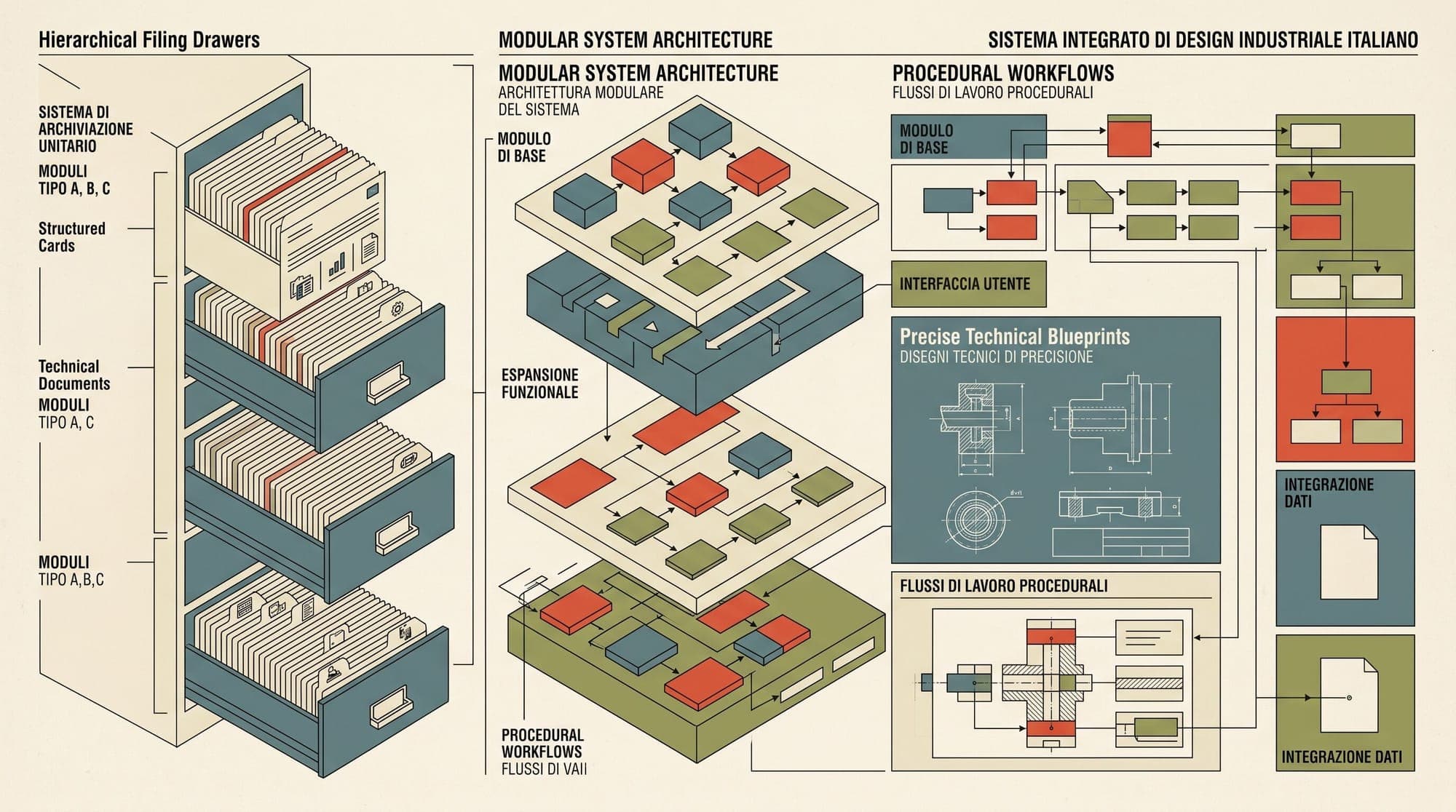
The primary design principle governing production skill systems is progressive disclosure, a pattern adapted from human interface engineering to manage finite agent context windows. Rather than dumping entire operational manuals into the initial system prompt, the agent runtime reveals complexity in three graduated tiers.

Tier 1: System Prompt Index (Metadata and Triggers)
At session initialization, the agent harness parses the root metadata of all available skills installed on the filesystem. Only the YAML frontmatter (the skill name, a brief 1-2 sentence description, and optional category tags) is injected into the root system prompt.
---
name: database-migration-validator
description: Validates PostgreSQL schema migrations, checks for locking hazards, and runs dry-run queries against staging replica.
version: 1.2.0
triggers:
  - "run db migration"
  - "validate schema change"
  - "check migration locks"
---
This index consumes between 30 and 80 tokens per skill. An agent equipped with 50 domain skills incurs a baseline overhead of only 1,500 to 4,000 tokens in its system prompt, leaving 98% of the working context window available for user instructions, codebase maps, and multi-turn execution logs.
Tier 2: Dynamic Runbook Loading (SKILL.md)
When an incoming user request or intermediate agent plan matches the trigger conditions of a registered skill, the agent invokes an internal file-reading tool to pull the full SKILL.md body into its active conversation context.
The SKILL.md file serves as a structured execution contract containing:
- Pre-flight requirements: Required CLI binaries, environment variables, and permission checks.
- Numbered operational workflows: Exact CLI command patterns, parameter flags, and ordered execution sequences.
- Failure modes and recovery routines: Explicit handling instructions for common tool error codes and network timeouts.
- Verification gates: Concrete assertions that the agent must evaluate before marking a task complete.
Tier 3: Just-in-Time Asset and Script Navigation
When a workflow involves extensive edge-case documentation, API schema references, or template files, the core SKILL.md references linked files located in subdirectories (such as references/api-spec.json, templates/config.yaml, or scripts/verify.py).
The agent loads these supplementary resources on demand only when branching logic requires them. For example, a PDF manipulation skill can keep its main runbook lean (under 1,000 tokens) while linking to a separate forms.md or acroform_parser.py that is read only when the agent encounters an interactive PDF form.
skills/
└── database-migration-validator/
    ├── SKILL.md                 # Tier 2: Core runbook (1.2K tokens)
    ├── scripts/
    │   └── lock_analyzer.py    # Deterministic script (executed via CLI)
    ├── references/
    │   └── postgres_locks.md   # Tier 3: Deep reference (loaded on demand)
    └── templates/
        └── migration_report.md # Tier 3: Output template
Procedural Anchoring vs. Declarative Knowledge Injection
Recent empirical research highlights a fundamental distinction between how language models process declarative documentation versus procedural instructions. An empirical study of over 8,000 agent trajectories by Penn State and Tsinghua researchers (2026) demonstrated that providing agents with procedural runbooks increased task completion rates on complex multi-step benchmarks by up to 34% compared to raw API documentation or RAG passages.
Key differences between declarative documentation injection and procedural skill anchoring include:
- Context Delivery: Declarative RAG relies on passive text chunks retrieved via semantic similarity, which often miss operational sequence constraints. Procedural skills deliver structured step-by-step runbooks activated directly by execution triggers.
- Action Prescriptiveness: API documentation describes what endpoints exist and leaves multi-step orchestration to model zero-shot planning. Skills prescribe exact command syntax, required argument flags, and deterministic ordering.
- Error Handling: Declarative documentation rarely covers operational recovery paths, forcing models to guess remediation strategies. Skills provide explicit mapping between exit codes and fallback subroutines.
- Execution Determinism: Unanchored agents exhibit wide trajectory variance across repeated runs. Procedural anchoring constrains the agent to verified, reproducible execution paths.
- Token Efficiency: RAG retrieval often injects 2,000 to 8,000 tokens of surrounding documentation prose. Progressive skill loading scopes context injection strictly to the active procedural branch (typically 500 to 1,500 tokens).
When an agent relies solely on general knowledge or documentation, it frequently invents non-existent CLI flags, misconfigures multi-argument API calls, or fails to verify side effects before proceeding. Procedural anchoring constrains the agent's action space by defining canonical execution templates and explicit exit-code validation steps.
Bundled Script Execution and the Model Context Protocol (MCP) Boundary
A common antipattern in autonomous agents is using autoregressive token generation for tasks that are inherently algorithmic. Operations such as sorting large data arrays, calculating checksums, parsing complex regular expressions, or traversing deep ASTs consume excessive tokens and introduce probabilistic error into deterministic operations.
Production skill architectures solve this by bundling executable scripts (written in Python, Bash, or TypeScript) directly within the skill directory.
# skills/git-release-manager/scripts/validate_semver.py
import sys, re

def validate(version_str):
    pattern = r"^v?(0|[1-9]\d*)\.(0|[1-9]\d*)\.(0|[1-9]\d*)(?:-((?:0|[1-9]\d*|\d*[a-zA-Z-][0-9a-zA-Z-]*)(?:\.(?:0|[1-9]\d*|\d*[a-zA-Z-][0-9a-zA-Z-]*))*))?(?:\+([0-9a-zA-Z-]+(?:\.[0-9a-zA-Z-]+)*))?$"
    return bool(re.match(pattern, version_str.strip()))

if __name__ == "__main__":
    if len(sys.argv) < 2 or not validate(sys.argv[1]):
        sys.exit(1)
    sys.exit(0)
Instead of asking the LLM to inspect a version string across several reasoning tokens, the agent invokes the bundled script via its terminal or execution sandbox:
python3 skills/git-release-manager/scripts/validate_semver.py "v2.1.4-rc.1"The script executes deterministically, returning an exit code and clean stdout. The model consumes zero tokens parsing intermediate regex states.
Dividing Responsibilities: Skills vs. MCP
In modern agent stacks, Agent Skills and the Model Context Protocol (MCP) serve complementary functions:
- Model Context Protocol (MCP) provides the connectivity and transport layer ("how to connect"). It defines JSON-RPC mechanisms, server lifecycle management, authentication, and standard resource schemas to bridge agents to external systems (databases, GitHub, Slack, file servers).
- Agent Skills provide the orchestration and procedural guidance layer ("what to do"). A skill instructs the agent on which MCP tools to invoke in what order, how to map intermediate JSON outputs between disparate servers, and what business logic to apply when a tool returns an error.
+-------------------------------------------------------------+
|                     Agent Reasoning Loop                    |
+-------------------------------------------------------------+
                              |
                              | Reads runbook & workflow rules
                              v
+-------------------------------------------------------------+
|                     Agent Skill Layer                       |
|  - SKILL.md (Procedural Runbooks & Branching Rules)         |
|  - Local Scripts (Deterministic Fast-Path Execution)        |
|  - Verification Checklists & Error Handling Routines        |
+-------------------------------------------------------------+
                              |
                              | Invokes standardized tool calls
                              v
+-------------------------------------------------------------+
|              Model Context Protocol (MCP) Client            |
|  - Tool Discovery & Parameter Marshaling                    |
|  - Authentication & Transport (Stdio / SSE / HTTP)          |
+-------------------------------------------------------------+
                              |
        +---------------------+---------------------+
        |                                           |
        v                                           v
+-----------------------+                   +-----------------------+
|  Database MCP Server  |                   |   GitHub MCP Server   |
+-----------------------+                   +-----------------------+
Security Governance, Sandboxing, and Dynamic Skill Synthesis
As organizations scale skill libraries across teams, two critical operational challenges emerge: security governance and autonomous skill evolution.
Security and Sandboxed Execution
According to security analyses synthesized by Xu and Yan (2026), community-contributed agent skills introduce distinct threat vectors:
- Indirect Prompt Injection: Malicious instructions embedded in
SKILL.mdfiles or reference documents designed to hijack the agent's root system prompt. - Arbitrary Code Execution: Bundled scripts that initiate unauthorized network egress, exfiltrate environment variables, or overwrite critical system files.
- Privilege Escalation: Skills instructing the agent to bypass confirmation gates or elevate MCP tool scopes.
To mitigate these risks, production agent platforms implement a graduated permission model:
- Static Schema Validation: Automated linters verify YAML frontmatter, validate markdown formatting, and disallow executable code within documentation blocks.
- Process Isolation: All bundled skill scripts run inside restricted sandbox environments (such as rootless containers, gVisor sandboxes, or WebAssembly runtimes) with explicit filesystem bounds and disabled network egress unless whitelisted.
- Capability Scoping: Skills declare required tool permissions upfront (such as read-only filesystem access or specific MCP endpoints), preventing unprivileged skills from executing destructive actions.
Autonomous Skill Discovery and Self-Refinement
Beyond human-authored runbooks, frontier agent platforms are implementing autonomous skill acquisition loops (such as SEAgent and SAGE architectures). When an agent successfully navigates a complex, novel multi-step task involving trial and error, it executes a reflection step:
- Trajectory Distillation: The agent strips failed exploration branches, dead ends, and repetitive retries from its execution history.
- Parameter Generalization: Hardcoded values (file paths, entity IDs) are parameterized into dynamic variables.
- SKILL.md Generation: The agent authors a canonical
SKILL.mdrunbook with prerequisites, step commands, and validation assertions. - Offline Verification: The synthesized skill is committed to a local staging repository and validated on synthetic evaluation tasks before graduating to the production skill library.
By organizing operational intelligence into modular, human-readable, and machine-executable packages, Agent Skills bridge the gap between general foundation models and robust enterprise automation.
Sources
- Agent Skills for Large Language Models: Architecture, Acquisition, Security, and the Path Forward (arXiv:2602.12430)
- Equipping Agents for the Real World with Agent Skills (Anthropic Engineering)
- Demystifying Agent Skills: Empirical Study of Procedural Anchoring in LLM Agents (arXiv:2608.14036)
- Model Context Protocol Specification
- Agent Skills Open Specification Directory