Optimization9 articles

Optimization

Articles

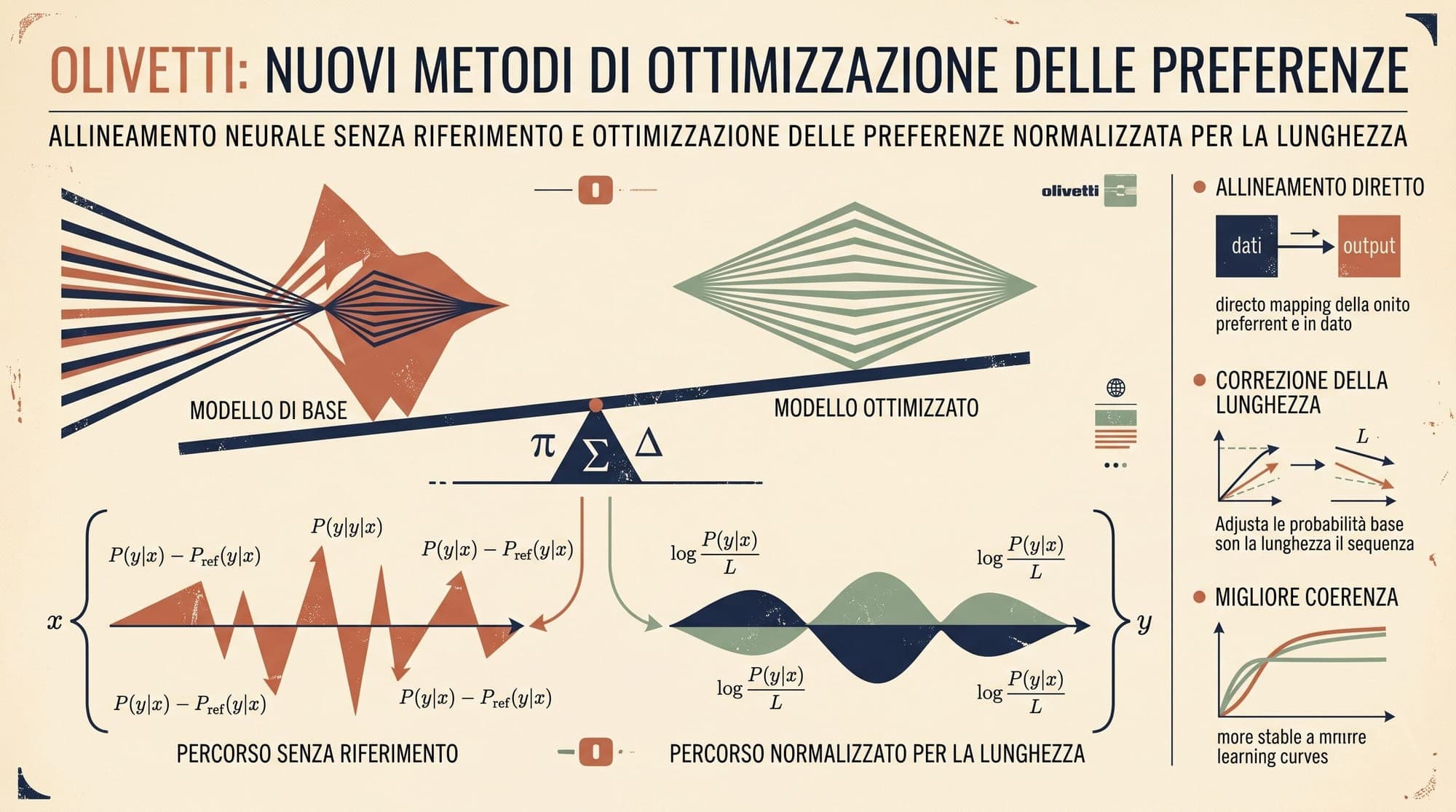
  • Identity Preference Optimization (IPO): How Exact Loss Inversion Prevents Overfitting in Direct Alignment

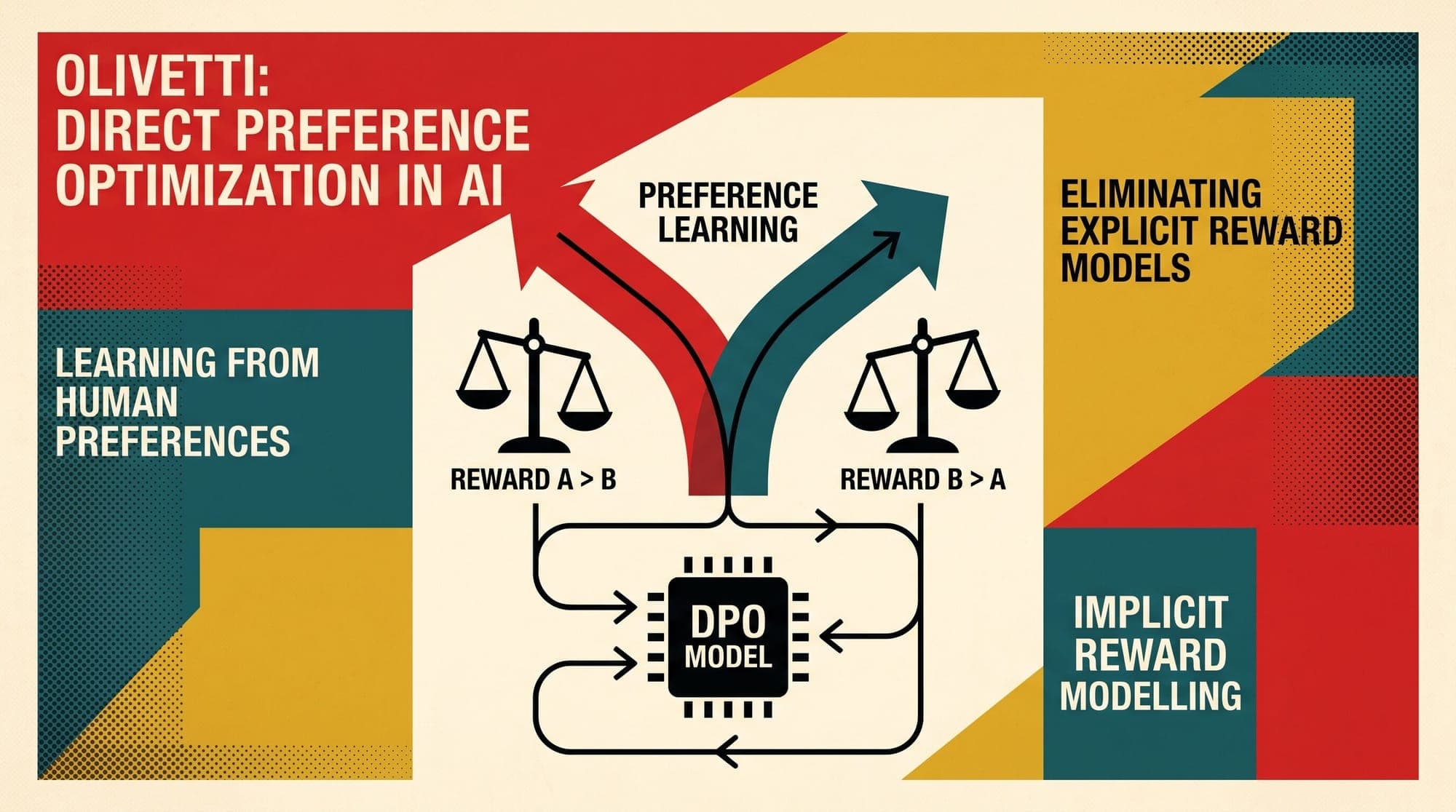
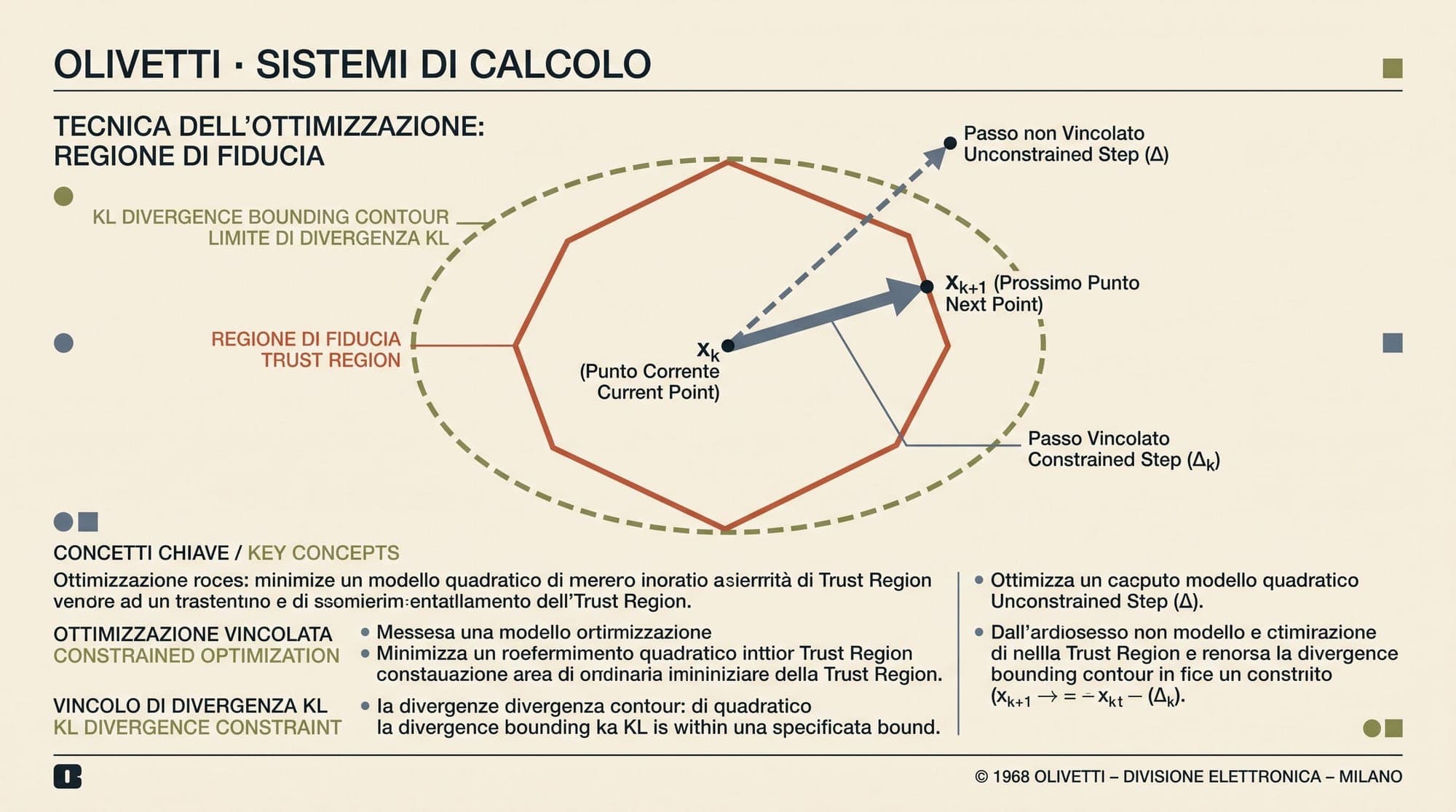
    The post-training alignment of large language models underwent a structural shift with the introduction of Direct Preference Optimization (Rafailov et al., 2023). By reparameterizing the closed-form optimal policy under a Kullback-Leibler (KL) constrained Reinforcement Learning from Human Feedback (RLHF) objective, DPO eliminated the need to fit an explicit reward model or maintain complex actor-critic rollout loops. However, standard DPO introduces a distinct mathematical pathology: under dete

    1 min
  • The Lottery Ticket Hypothesis in Large Language Models: How Sparse Subnetworks and Iterative Magnitude Pruning Retain Transformer Capacity

    The Lottery Ticket Hypothesis in Large Language Models: How Sparse Subnetworks and Iterative Magnitude Pruning Retain Transformer Capacity Modern large language models operate under extreme overparameterization. Frontier architectures allocate tens or hundreds of billions of parameters to achieve low perplexity and robust generalization across reasoning, code generation, and factual retrieval. Yet empirical pruning consistently demonstrates that post-training models can lose 30% to 50% of their

    1 min
  • Sharpness-Aware Minimization in Large Language Models: How Adversarial Weight Perturbations and Flat Minima Boost Generalization

    In overparameterized deep neural networks, minimizing empirical training loss is insufficient to guarantee optimal generalization on unseen distributions. Modern deep architectures, including vision models and autoregressive Large Language Models (LLMs), operate in regimes where parameter counts far exceed training token counts, producing highly non-convex loss surfaces populated by infinite global minima. Standard optimization via Stochastic Gradient Descent (SGD) or AdamW often converges to sh

    1 min
  • Linear Mode Connectivity in Deep Neural Networks: How Permutation Symmetries, Git Re-Basin, and the Single-Basin Hypothesis Unify Model Checkpoints

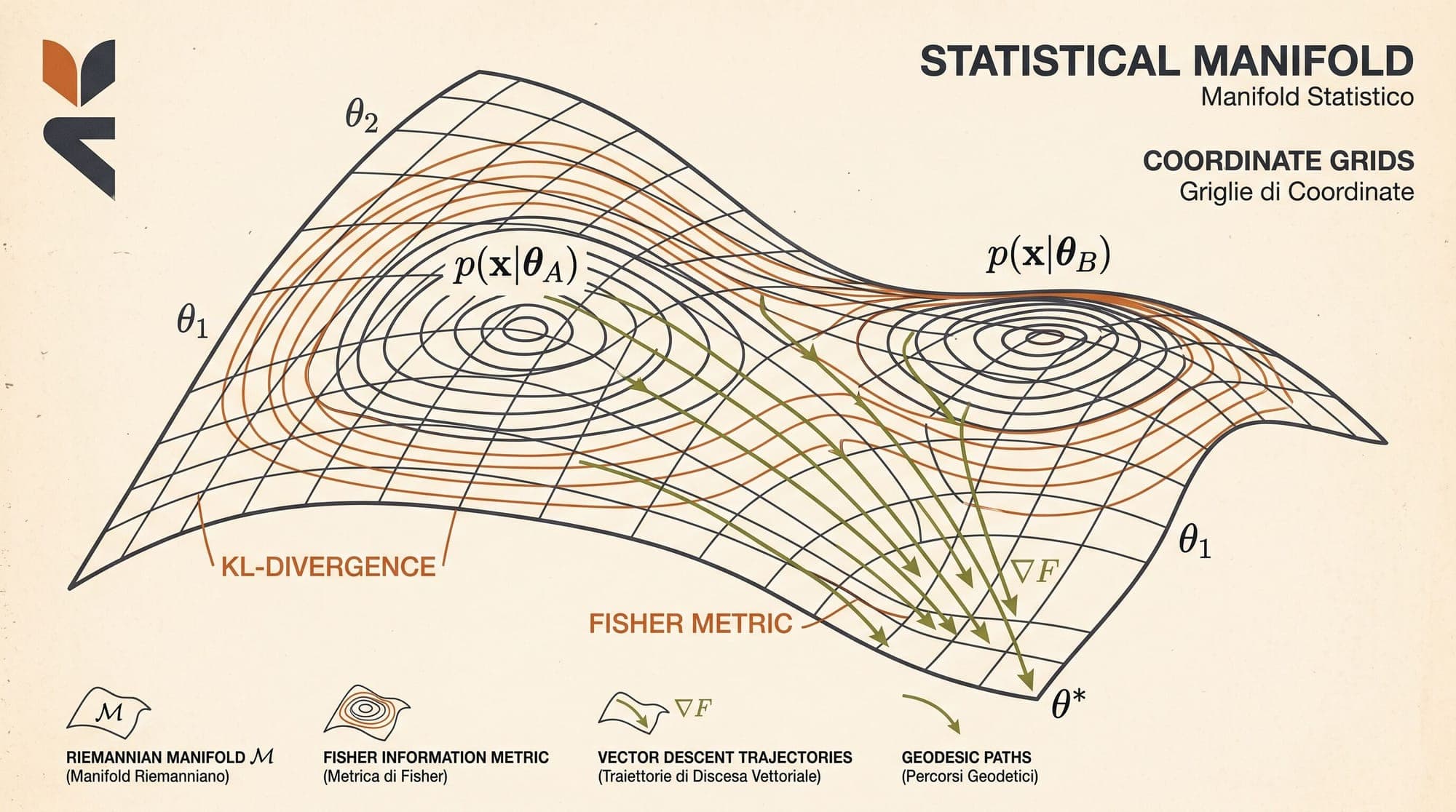
    title: "Linear Mode Connectivity in Deep Neural Networks: How Permutation Symmetries, Git Re-Basin, and the Single-Basin Hypothesis Unify Model Checkpoints" slug: "linear-mode-connectivity-in-deep-neural-networks-how-permutation-symmetries-git-re-basin-and-the-single-basin-hypothesis-unify-model-checkpoints" feature_image: "https://cms.llms.blog/content/images/2026/08/linear-mode-connectivity-cover.png" excerpt: "Linear Mode Connectivity reveals how neural network checkpoints connect along flat

    1 min
  • Chunked and Fused Cross-Entropy: How Online Logit Tiling Slashes Large-Vocabulary VRAM Bottlenecks in LLM Training

    Chunked and Fused Cross-Entropy: How Online Logit Tiling Slashes Large-Vocabulary VRAM Bottlenecks in LLM Training As frontier large language models have scaled, tokenizer vocabularies have expanded substantially. Where early architectures such as LLaMA and Mistral relied on 32,000 subword tokens, contemporary models routinely employ vocabularies of 128,256 tokens (Llama 3), 152,064 tokens (Qwen 2.5), and 256,000 tokens (Gemma 2). Larger vocabularies compress text more densely, improve multilin

    1 min
  • Adaptive Optimizers in Large Language Model Pre-Training: How AdamW, Adafactor, and Lion Scale Gradient Updates Across Billions of Parameters

    Adaptive Optimizers in Large Language Model Pre-Training: How AdamW, Adafactor, and Lion Scale Gradient Updates Across Billions of Parameters Large language model pre-training requires optimizing billions of parameters over trillions of tokens across distributed GPU clusters. Standard stochastic gradient descent (SGD) fails in this regime because Transformer loss landscapes are severely ill-conditioned, with gradient magnitudes differing by orders of magnitude across layers and token positions.

    1 min
  • Warmup-Stable-Decay (WSD): How Decoupled Annealing Replaced Cosine Decay in Modern LLM Pre-Training

    For years, foundation model pre-training adhered to a standard optimization convention: linear learning rate warmup followed by a full-horizon cosine decay. Adopted across GPT-3, PaLM, Chinchilla, and LLaMA, cosine annealing provided stable convergence across diverse parameter scales. However, it introduced a severe structural limitation: the learning rate schedule is rigidly tied to a fixed, upfront token budget. If a team decides to extend pre-training mid-run, branch into domain-specific vari

    1 min
  • Muon Optimizer: How Matrix Orthogonalization and Newton-Schulz Iterations Accelerate LLM Training

    Modern large language model pre-training has relied on AdamW as its default optimizer for nearly a decade. While AdamW provides robust convergence across varied architectures, its fundamental formulation treats neural network weights as flat collections of independent scalar parameters. For the 2D weight matrices that dominate Transformer architectures—including attention projections and feed-forward linear layers—this coordinate-wise treatment ignores the underlying matrix geometry and singular

    1 min
  • Speculative Decoding in Production: Architecture, Economics, and Serving Trade-Offs

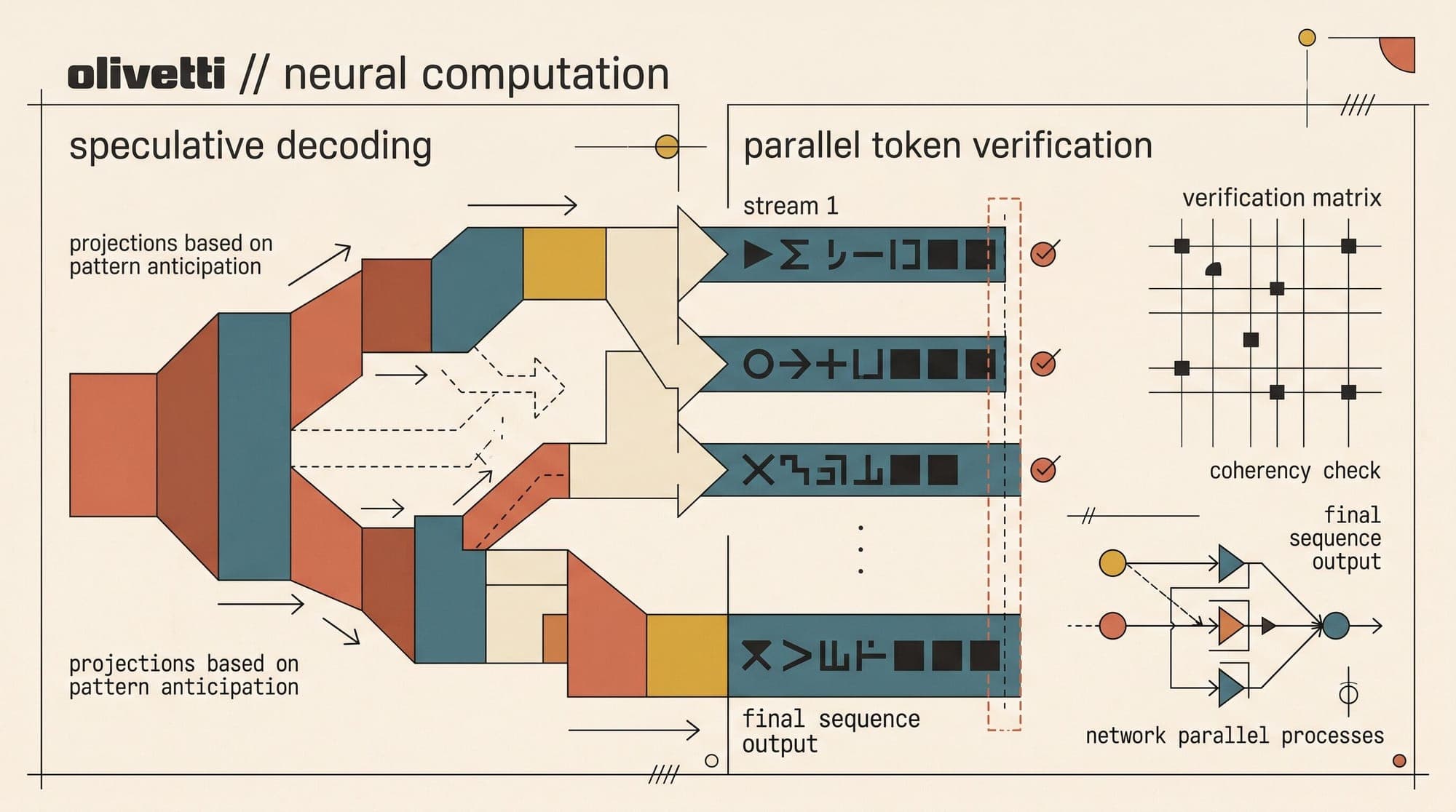
    Standard autoregressive large language model (LLM) generation produces one token per forward pass. Because modern inference architectures must read tens of gigabytes of model weights from high-bandwidth memory (HBM) into SRAM to process each solitary token at low batch sizes, generation is strictly memory-bandwidth bound rather than compute bound. Speculative decoding alters this hardware equation. By pairing a fast draft mechanism with parallel verification by the primary target model, inferen

    1 min