NLP3 articles

NLP

Articles

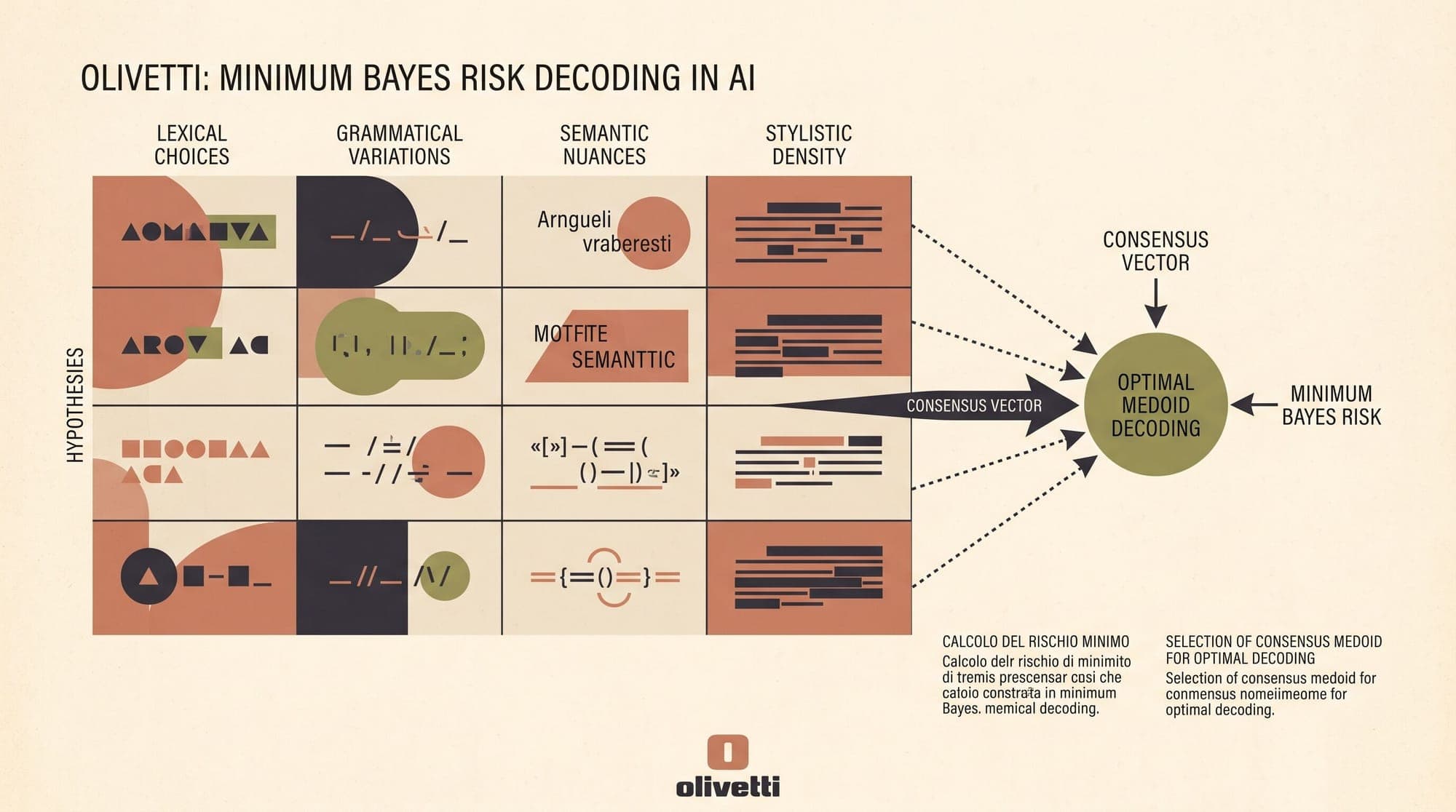
  • Minimum Bayes Risk Decoding: How Utility Consensus and Distributional Reranking Outperform Mode-Seeking in Large Language Models

    Autoregressive large language models generate text by estimating conditional probability distributions over token sequences. In conventional inference pipelines, generating the final output sequence relies almost entirely on search algorithms designed to locate high-probability trajectories: greedy decoding, beam search, or stochastic sampling with temperature and top-p filtering. However, theoretical and empirical analyses demonstrate that the most probable sequence under a model's distributio

    1 min
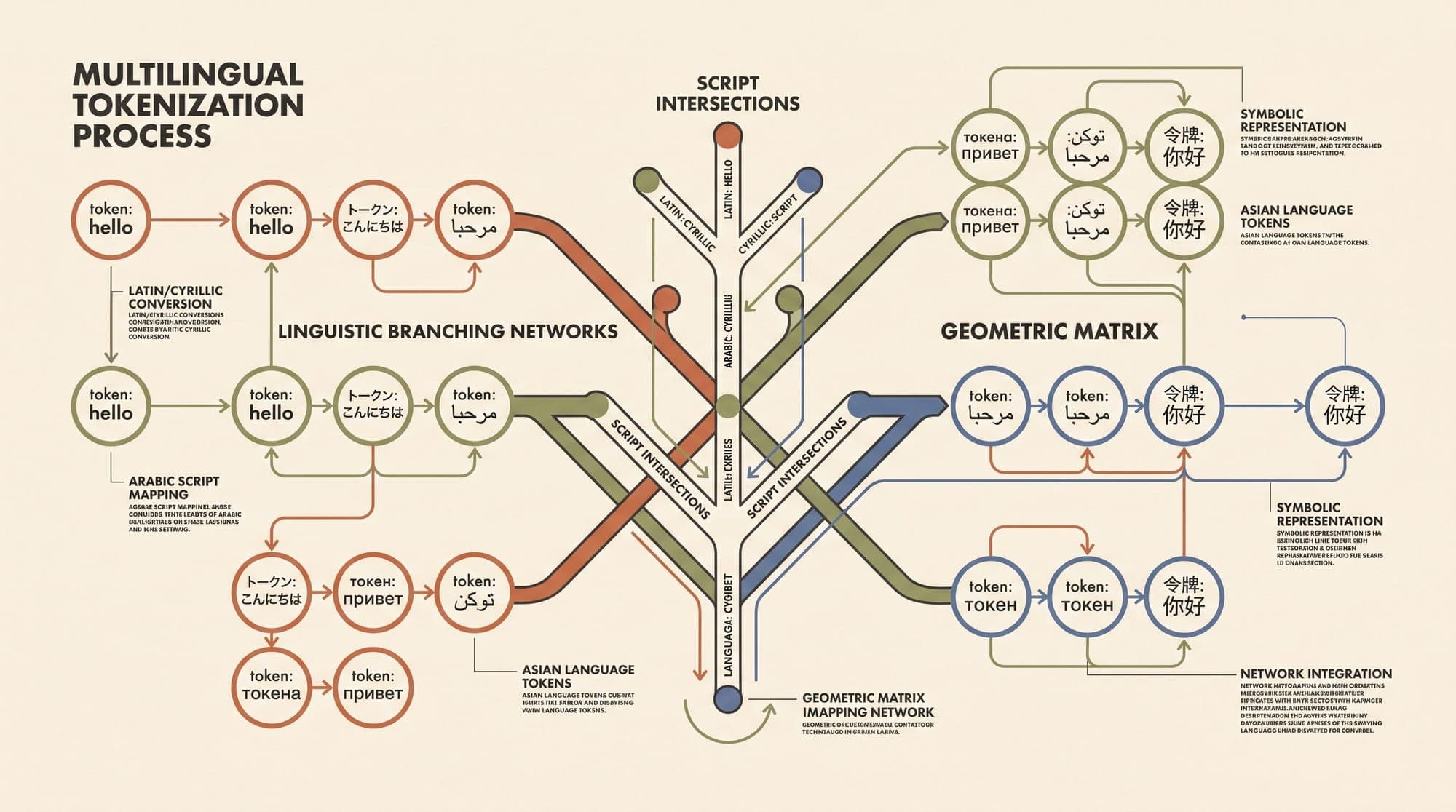
  • The Curse of Multilinguality in Large Language Models: Capacity Dilution, Tokenizer Fertility, and Representation Interference

    The Curse of Multilinguality in Large Language Models: Capacity Dilution, Tokenizer Fertility, and Representation Interference Training a single transformer foundation model to process dozens or hundreds of languages is one of the central goals of modern natural language processing. In theory, massive multilingual pre-training unlocks positive cross-lingual transfer: low-resource languages gain syntactic, factual, and reasoning capabilities from the rich supervision available in high-resource l

    1 min
  • Byte-Pair Encoding in Large Language Models: How Tokenizers Compress Text, Shape Context, and Fail

    Large language models do not process strings directly. Before a single attention weight or linear projection executes, incoming text is converted into a sequence of discrete integers known as tokens. The choice and implementation of the tokenization algorithm establish the model's fundamental vocabulary, define the boundaries of its context window, dictate inference speed, and introduce unique behavioral quirks. Across modern transformer architectures, subword tokenization via Byte-Pair Encodin

    1 min