Mechanistic Interpretability4 articles

Mechanistic Interpretability

Articles

  • Superposition and Polysemanticity in Neural Networks: How High-Dimensional Geometry and Sparsity Allow LLMs to Store More Features Than Dimensions

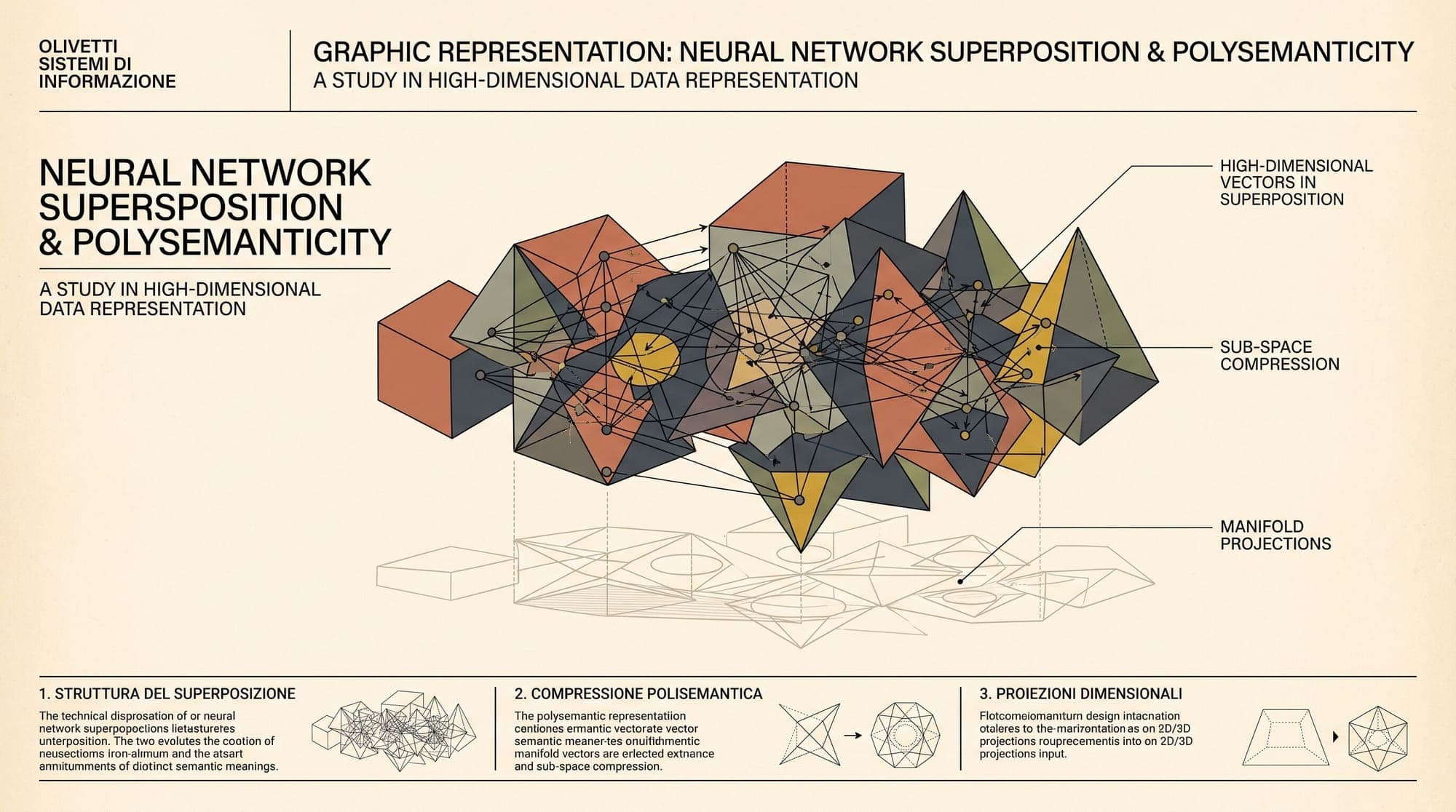
    Superposition and Polysemanticity in Neural Networks: How High-Dimensional Geometry and Sparsity Allow LLMs to Store More Features Than Dimensions In neural network interpretability, one of the most persistent puzzles has been the phenomenon of polysemantic neurons: individual neurons in large language models that activate for seemingly unrelated concepts. A single hidden unit in an MLP layer might fire in response to Python syntax errors, academic citations, and geographic place names. For ye

    1 min
  • The Linear Representation Hypothesis in Large Language Models: How Neural Geometry Organizes Concepts, Latent Truth, and Steerable Features

    The Linear Representation Hypothesis in Large Language Models: How Neural Geometry Organizes Concepts, Latent Truth, and Steerable Features Deep neural networks are composed of alternating non-linear activation functions, multi-head attention operations, and high-dimensional matrix projections. Despite this architectural non-linearity, empirical research across mechanistic interpretability reveals a striking geometric regularity: within the intermediate representation spaces of large language m

    1 min
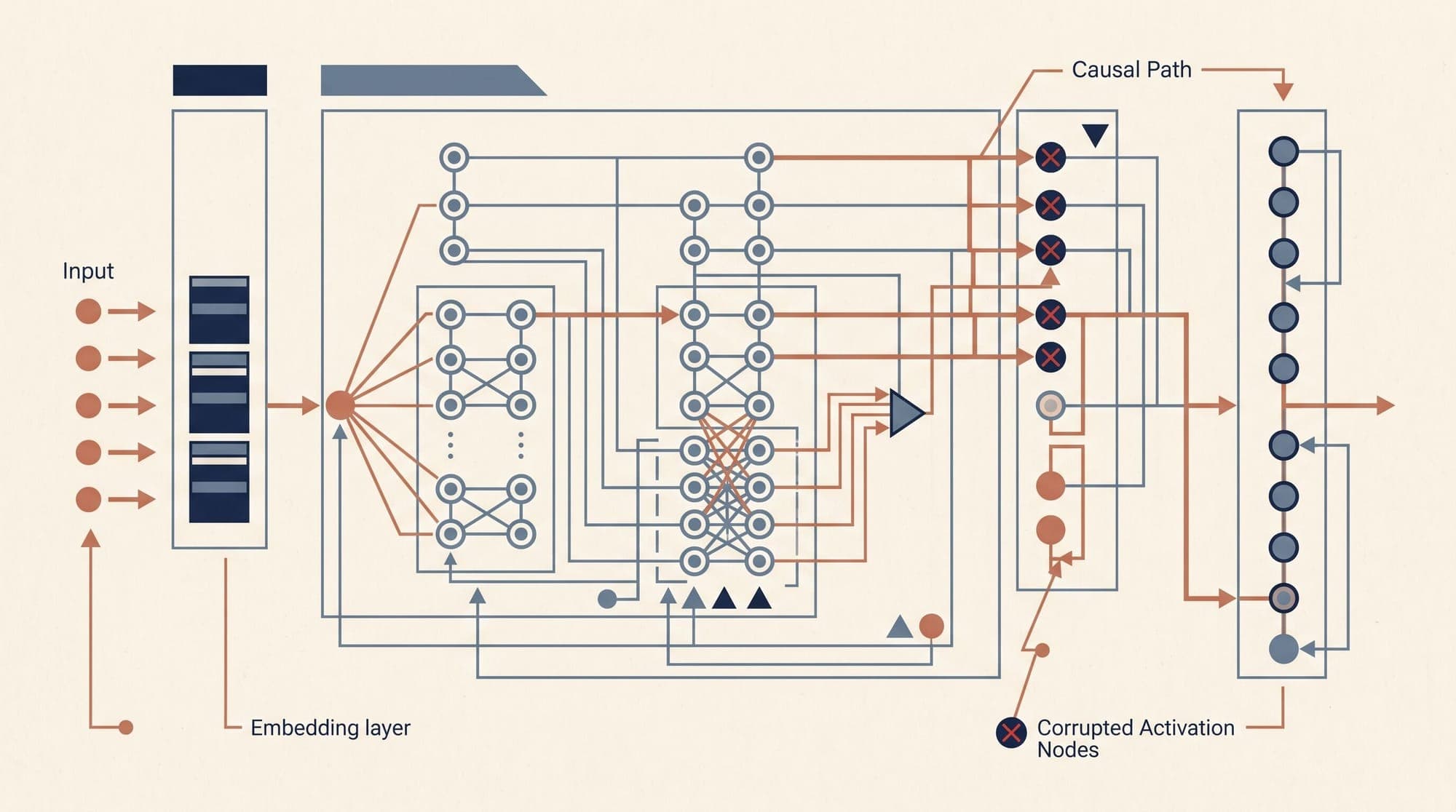
  • Activation Patching and Circuit Discovery in Large Language Models: How Causal Mediation Maps Transformer Subgraphs

    Understanding how large language models perform complex reasoning requires moving beyond passive behavioral evaluation. While behavioral benchmarks measure model outputs on specific datasets, they treat the underlying neural network as an inscrutable black box. Mechanistic interpretability aims to reverse-engineer transformer weights and intermediate representations into human-understandable algorithms and computational graphs. At the core of modern mechanistic interpretability is causal mediat

    1 min
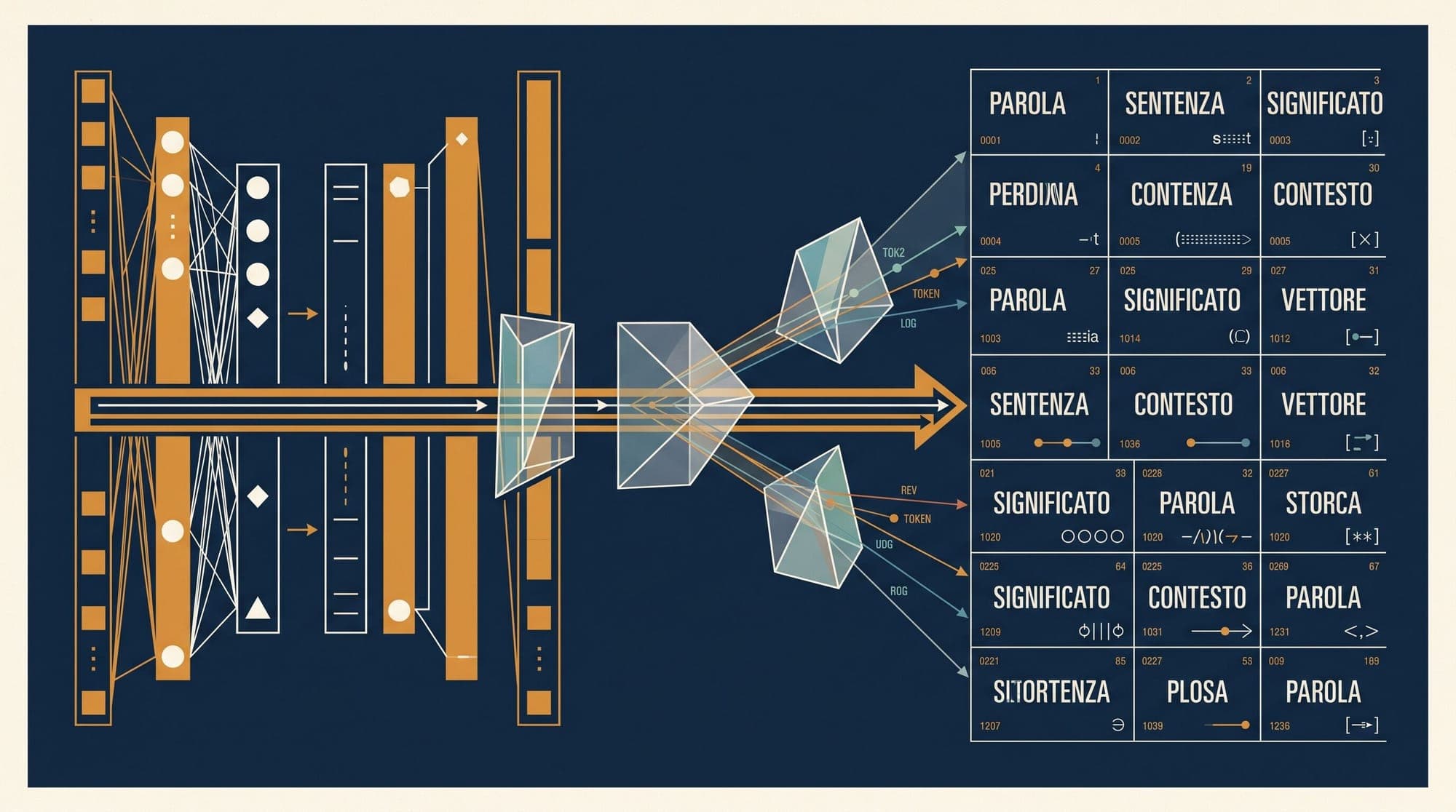
  • The Logit Lens: How Direct Unembedding Decodes Intermediate Representations in Large Language Models

    Autoregressive large language models process input tokens through deep stacks of transformer blocks, generating a final probability distribution over the vocabulary at the final layer. For years, the intermediate computations occurring within these hidden layers were treated as opaque black boxes. Mechanistic interpretability research has demonstrated that modern transformer architectures operate through a structured, iterative refinement process across their residual stream. The logit lens and

    1 min