Explainer2 articles

Explainer

Articles

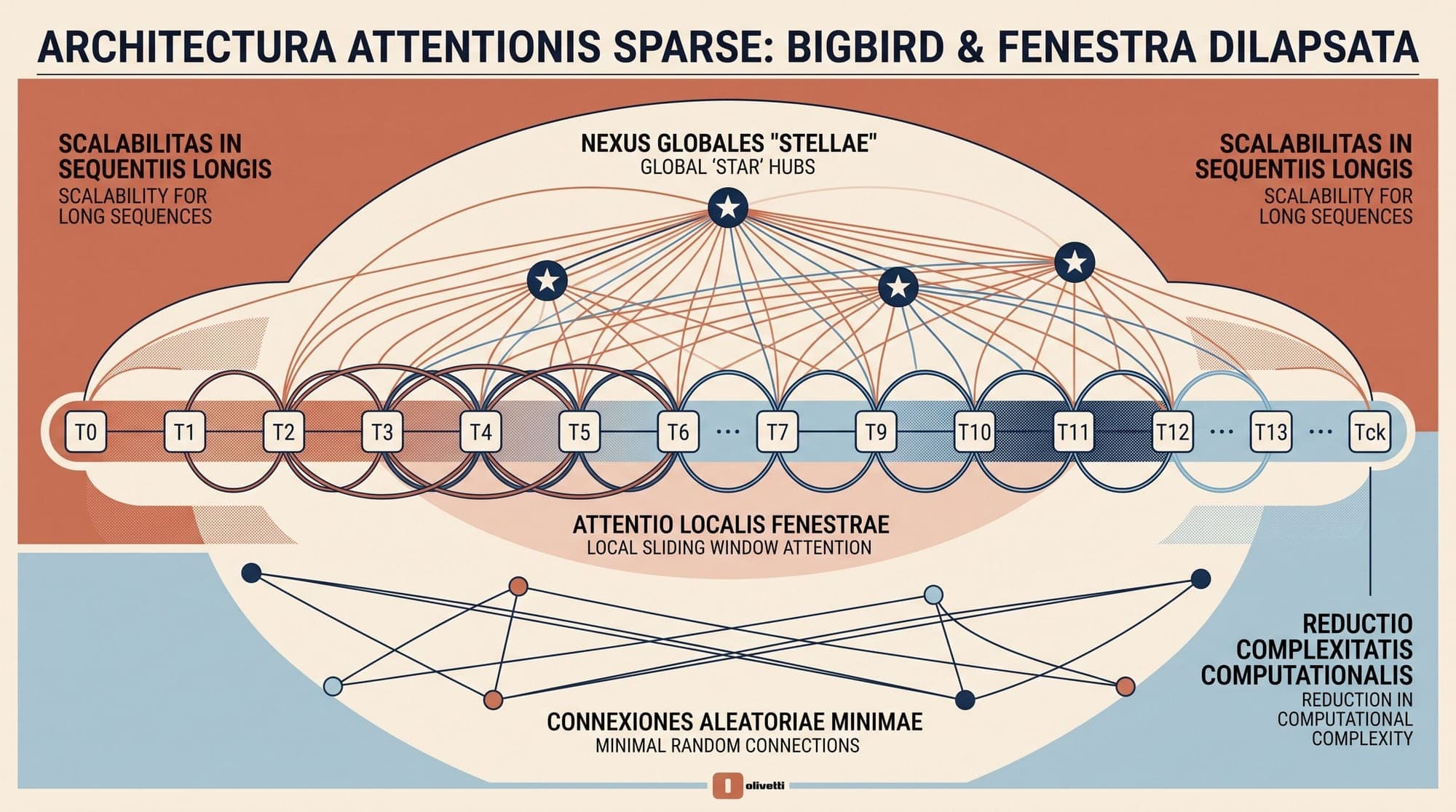
  • Sparse Attention and BigBird: How Window, Global, and Random Graphs Preserve Turing Completeness in Linear Time

    Standard self-attention in transformer architectures scales quadratically with sequence length. Computing full pairwise interactions between n tokens requires evaluating an n x n attention matrix, yielding O(n^2) computational complexity and memory consumption. While hardware accelerators and IO-aware tiling algorithms like FlashAttention optimize memory traffic, the quadratic compute and KV footprint remains a barrier for processing long contexts, document-level summarization, and genomic seque

    1 min
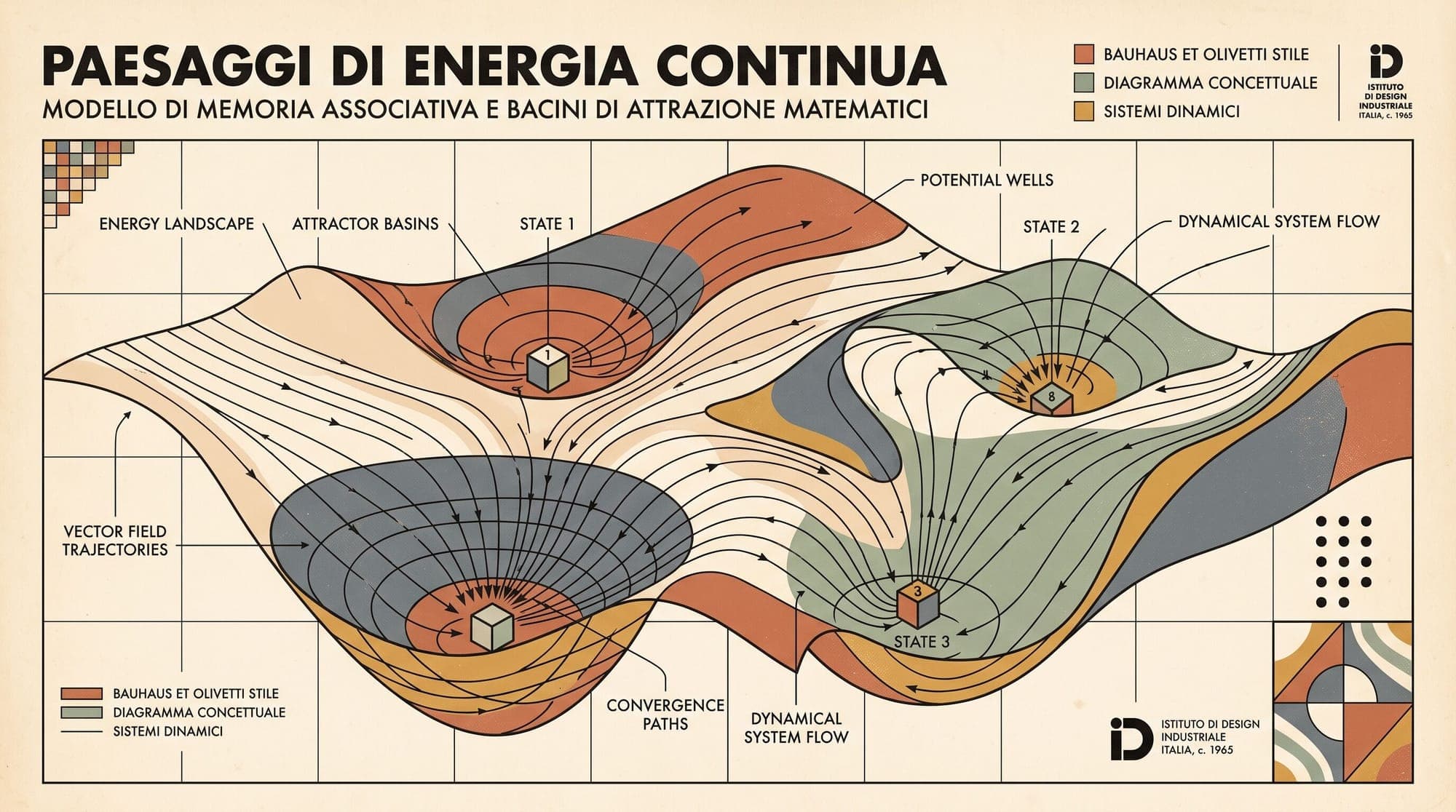
  • Modern Hopfield Networks: How Continuous Energy Landscapes Explain Transformer Attention and Exponential Memory

    When Vaswani et al. introduced the Transformer architecture in 2017, scaled dot-product self-attention was presented primarily as a pragmatic computational mechanism: an efficient, highly parallelizable alternative to recurrence and convolutions. By computing pairwise inner products between queries and keys, normalizing via softmax, and taking a weighted sum of values, attention allowed models to route information dynamically across arbitrarily distant tokens. For several years, self-attention

    1 min