Embeddings4 articles

Embeddings

Articles

  • Embedding Model Fine-Tuning in Production: Hard Negative Mining, Synthetic Data Pipelines, and Contrastive Distillation

    Production retrieval-augmented generation (RAG) and semantic search architectures frequently suffer from domain mismatch when relying on general-purpose embedding models. Off-the-shelf bi-encoders trained on broad web corpora often experience a 15% to 30% degradation in retrieval metrics such as NDCG@10 and MRR@10 when deployed on specialized enterprise corpora, including proprietary codebases, internal API schemas, clinical trials, and technical documentation. While downstream cross-encoder re

    1 min
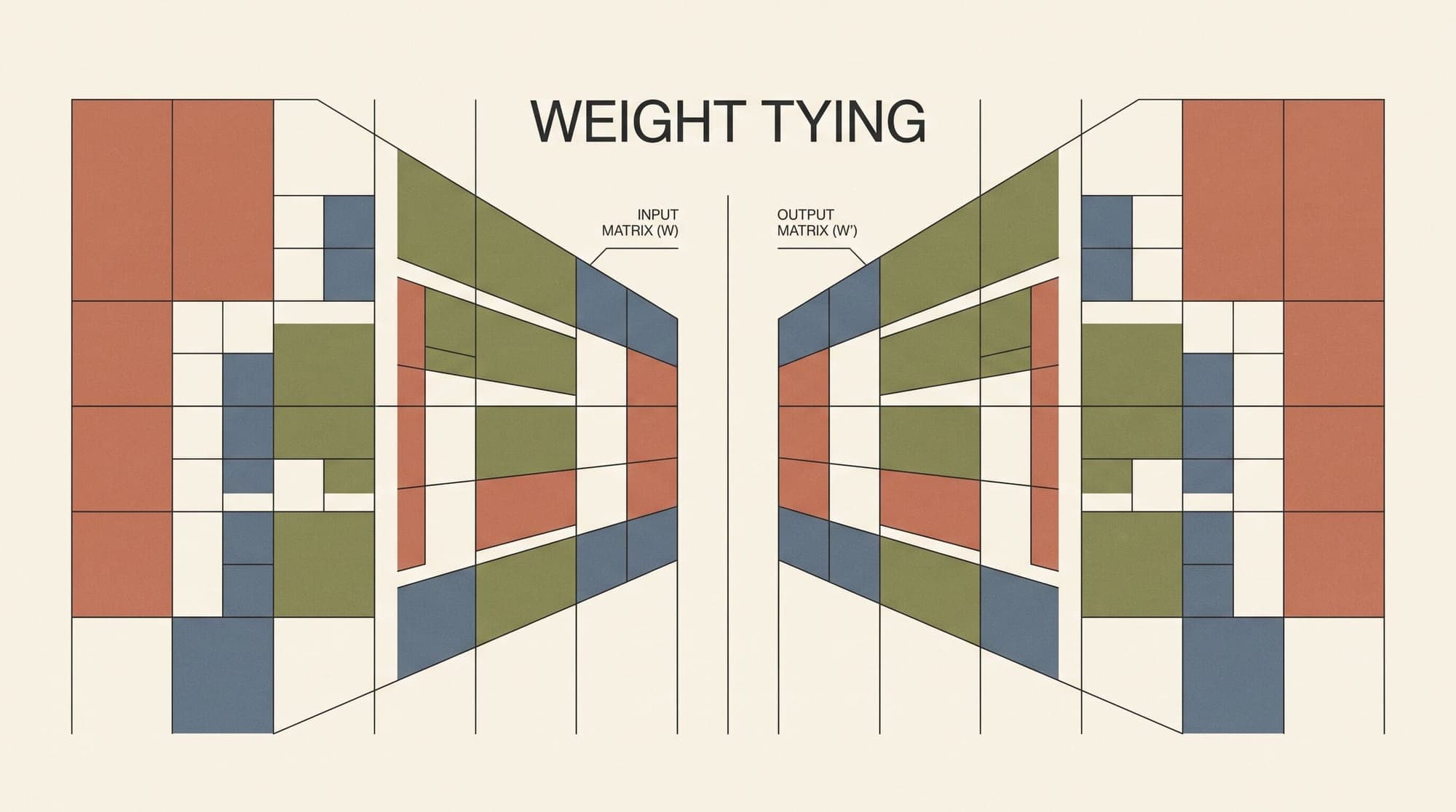
  • Weight Tying in Large Language Models: Mathematical Foundations, Geometric Bottlenecks, and Modern Architectural Trade-Offs

    Weight Tying in Large Language Models: Mathematical Foundations, Geometric Bottlenecks, and Modern Architectural Trade-Offs In autoregressive language models, the embedding layer at the input and the unembedding projection layer at the output serve as the two bridges between discrete vocabulary tokens and the continuous hidden representation space. In the foundational Transformer architecture (Vaswani et al., 2017) and early generative models like GPT-2 (Radford et al., 2019), the weights of th

    1 min
  • Embedding Model Migration in Production: Dual-Indexing, Vector Adapters, and Zero-Downtime Re-Indexing Architectures

    Upgrading embedding models in production retrieval-augmented generation (RAG) and semantic search platforms is often mischaracterized as a routine model bump. When engineering teams replace a legacy embedding model such as OpenAI text-embedding-ada-002 or BAAI bge-large with a modern successor like text-embedding-3-large or Cohere embed-v3, the underlying mathematical coordinate space changes entirely. Because dense vectors generated by distinct neural networks live on incompatible manifolds, v

    1 min
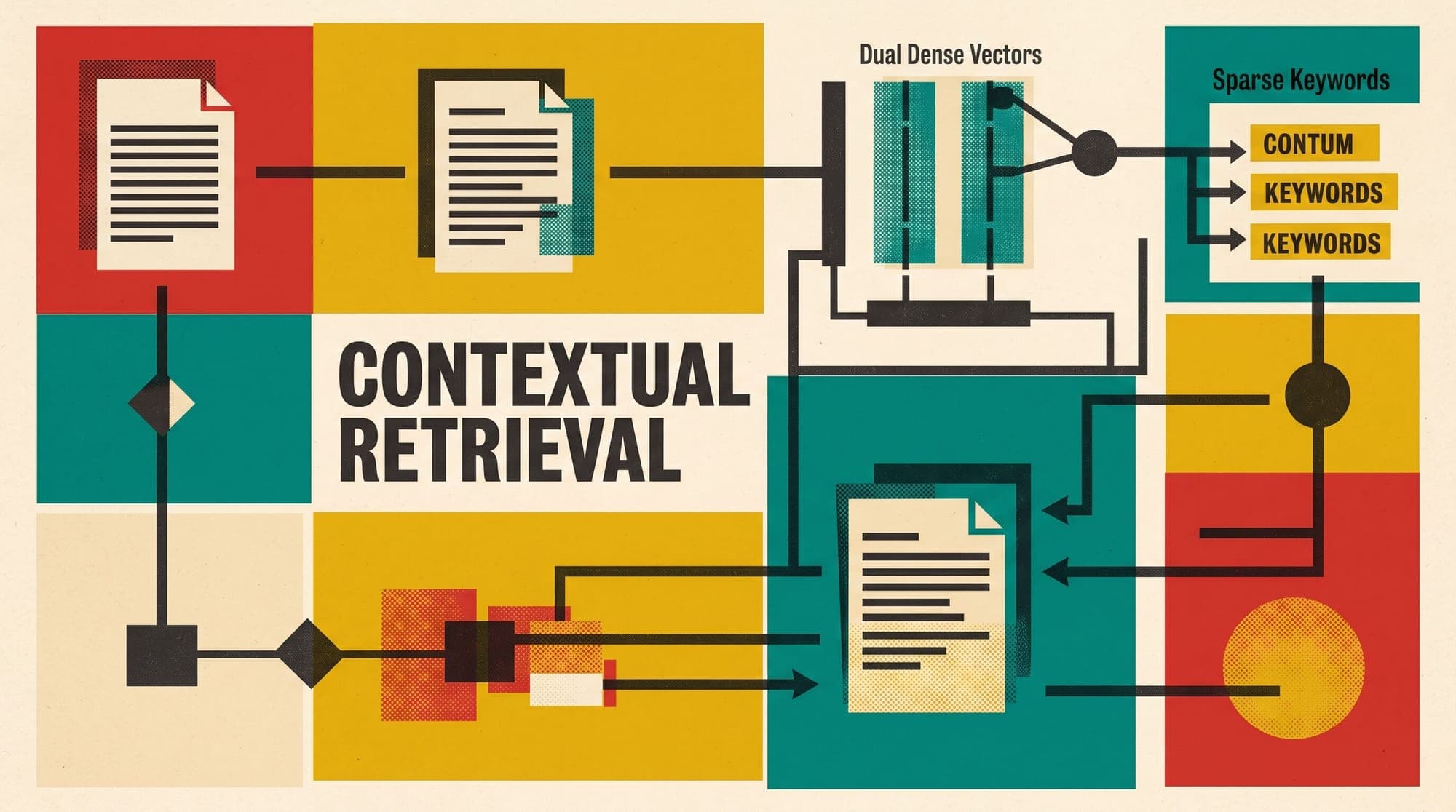
  • Contextual Retrieval in Production RAG: Architecture, Prompt Caching Economics, Hybrid Fusion, and Reranking Pipelines

    Contextual Retrieval in Production RAG: Architecture, Prompt Caching Economics, Hybrid Fusion, and Reranking Pipelines Standard Retrieval-Augmented Generation (RAG) architectures suffer from an inherent design flaw at the preprocessing stage: chunking destroys document hierarchy. When a system divides a large document corpus into fixed-size passages (such as 300 to 800 tokens) or applies semantic boundaries, the resulting chunks lose their surrounding narrative, parent headings, entity definiti

    1 min