XPeng Robotics Raises Over 00M at .3B Valuation to Scale Humanoid Robot Production

Chinese electric vehicle manufacturer XPeng has announced that its robotics affiliate raised over $900 million in its first major institutional financing round. The investment values the robotics business at more than $6.3 billion post-money, representing one of the largest single private capital raises in the embodied AI sector to date. The round was led by IDG Capital and Gaorong Ventures, with participation from strategic tech conglomerates Tencent and Alibaba alongside parent firm XPeng Inc

2 min
XPeng Robotics Raises Over 00M at .3B Valuation to Scale Humanoid Robot Production

Chinese electric vehicle manufacturer XPeng has announced that its robotics affiliate raised over $900 million in its first major institutional financing round. The investment values the robotics business at more than $6.3 billion post-money, representing one of the largest single private capital raises in the embodied AI sector to date.

The round was led by IDG Capital and Gaorong Ventures, with participation from strategic tech conglomerates Tencent and Alibaba alongside parent firm XPeng Inc.

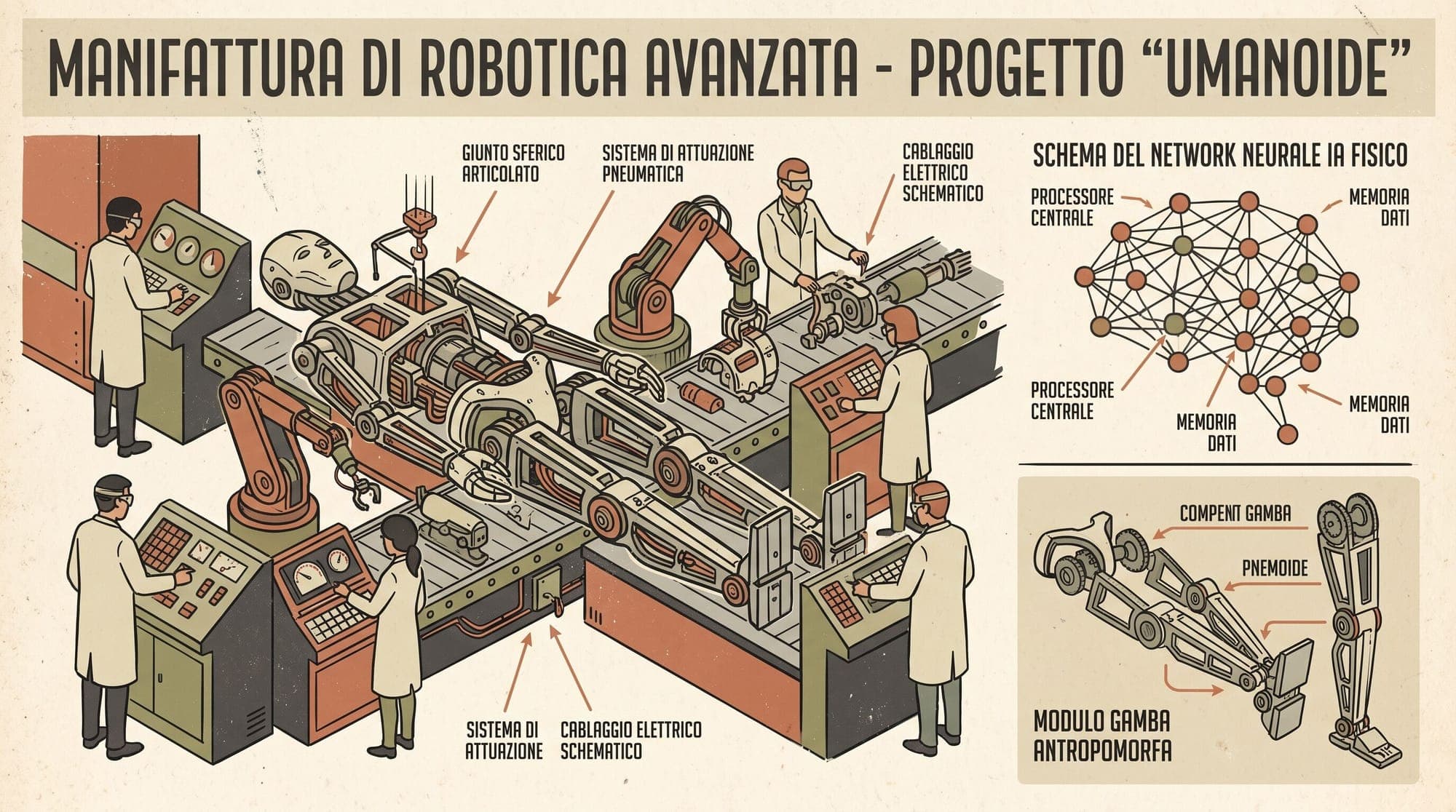
Physical AI and Embodied Robotics Stack

Capital Allocation for Physical AI

According to statements from XPeng, the newly secured proceeds will be allocated across five core operational priorities:

  • Training and scaling physical AI foundation models and multimodal vision-language-action (VLA) policies.
  • Collecting high-fidelity real-world and synthetic manipulation data across industrial and commercial environments.
  • Developing custom electromechanical actuators, sensor suites, and embedded compute controllers.
  • Constructing dedicated mass-production facilities with end-to-end quality validation pipelines.
  • Establishing international commercialization and distribution infrastructure.

XPeng CEO He Xiaopeng, who took direct leadership of the robotics division in June, noted that the convergence of automotive manufacturing expertise and physical AI architecture provides key supply-chain advantages for hardware scaling.

Roadmap for Humanoid Mass Production

The capital infusion accelerates deployment timelines for the company's flagship bipedal humanoid robot, XPeng IRON. XPeng plans to initiate trial assembly and pilot deployments by the end of 2026, placing units in retail showrooms and automotive assembly plants to perform repetitive logistics and material handling tasks.

Commercial availability and customer deliveries across enterprise and international markets are targeted for 2027.

The participation of Tencent and Alibaba underscores expanding strategic interest among Chinese technology conglomerates in embodied AI platforms, following recent capital flows into robotic hardware and real-world intelligence foundation models.


Sources

Written by

More to read

  • Data Pruning and Core-Set Selection in Deep Learning: How EL2N, GraNd, and Memorization Dynamics Break Power-Law Scaling

    Modern foundation models are trained on tens of trillions of tokens, requiring millions of GPU hours. Yet empirical analyses consistently reveal that massive portions of web-crawled corpora and large-scale vision datasets are either highly redundant, uninformative, or dominated by unlearnable noise. Standard empirical scaling laws (such as those formulated by Kaplan et al. and Chinchilla) model generalization error as a power-law function of total training samples ($L(N) \propto N^{-\alpha}$). H

    1 min
  • Alibaba Launches Wan 3.0 AI Video Model with Native 30-Second Generation and Document Inputs

    Alibaba Tongyi Lab has launched a public beta of Wan 3.0, the latest iteration of its video generation model family. Available on Alibaba Cloud Model Studio and Qwen Cloud under the model identifier wan3.0-video, the model produces up to 30 seconds of continuous video in a single pass at resolutions up to 1080p. Unlike predecessor models such as Wan 2.7, which capped single-pass output at 15 seconds, Wan 3.0 consolidates video synthesis into a unified architecture and expands supported input mo

    1 min
  • Long-Context Evaluation in Production: Why Synthetic Needles Fail, Multi-Hop Stress Testing, and Benchmarking Effective Context Size

    Frontier model providers frequently market sequence lengths spanning 128K, 1M, or 2M tokens. However, engineering teams deploying these models in production environments for codebase refactoring, multi-turn agent execution, or complex document analysis regularly observe severe retrieval failures and reasoning breakdowns well before hitting context boundaries. The primary culprit behind this disconnect is the widespread reliance on vanilla Needle In A Haystack (NIAH) evaluations. While standard

    1 min

