Waymo Brings Gemini Voice Assistant to Custom Ojai Robotaxis

Waymo has integrated Google's Gemini large language model into its purpose-built Ojai robotaxis, introducing a conversational in-cabin voice assistant while maintaining strict isolation boundaries between the passenger interface and the vehicle's autonomous driving system. The voice assistant allows passengers to control cabin settings (such as adjusting air conditioning), query trip details, ask about points of interest along the route, and request general information hands-free during autonom

2 min
Waymo Brings Gemini Voice Assistant to Custom Ojai Robotaxis

Waymo has integrated Google's Gemini large language model into its purpose-built Ojai robotaxis, introducing a conversational in-cabin voice assistant while maintaining strict isolation boundaries between the passenger interface and the vehicle's autonomous driving system.

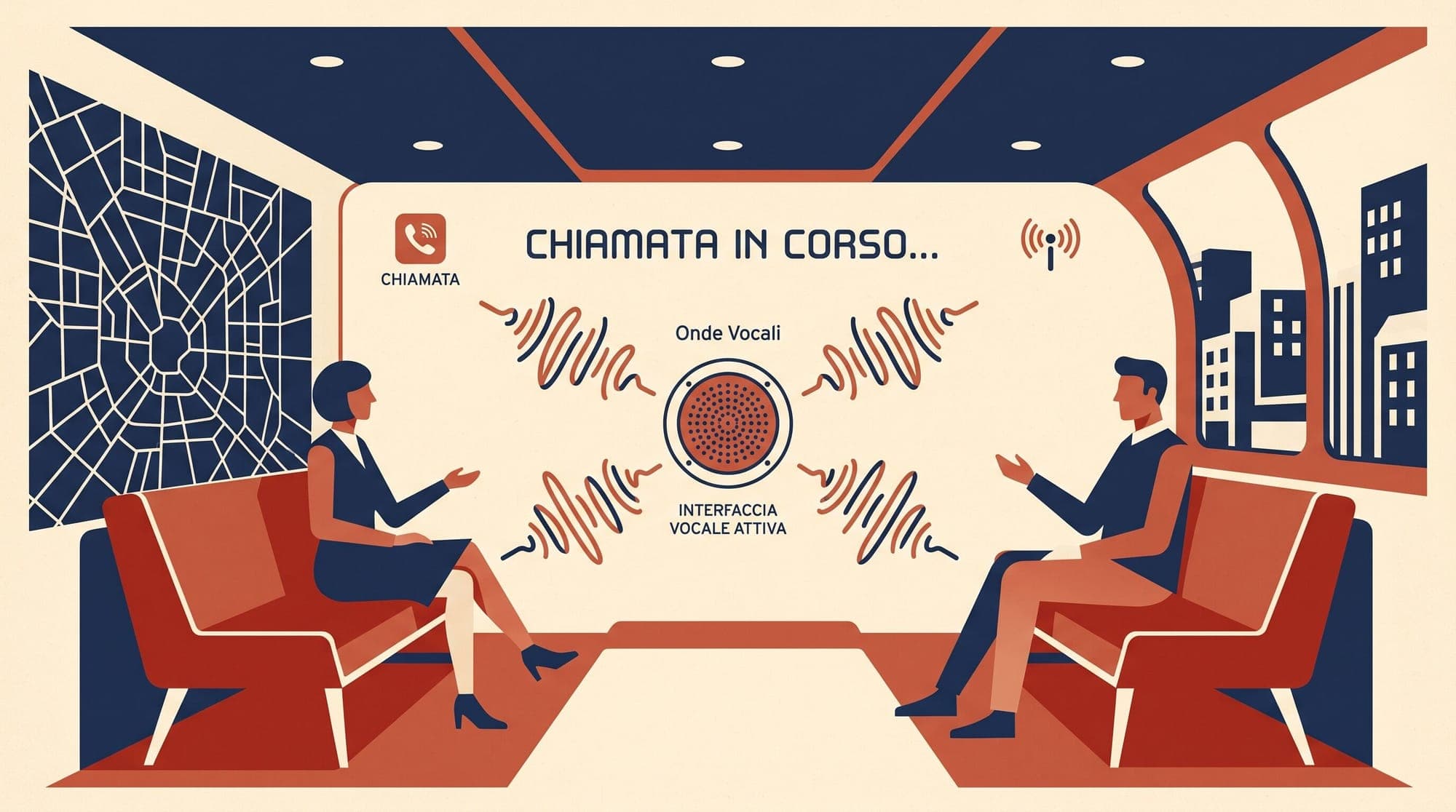
The voice assistant allows passengers to control cabin settings (such as adjusting air conditioning), query trip details, ask about points of interest along the route, and request general information hands-free during autonomous rides.

Waymo Ojai Cabin Architecture and Subsystem Isolation

Air-Gapping Infotainment from the Autonomy Stack

A critical design parameter of the integration is the architectural separation between Gemini and the Level 4 Waymo Driver. Waymo confirmed that Gemini operates strictly within the cabin compute layer and has no access to real-time driving sensor streams, perception pipelines, or vehicle control actuators.

The sole interaction point between the conversational agent and vehicle operation is a passenger-initiated pullover request, which the assistant can pass to the driving stack as a high-level passenger preference. Beyond this, Gemini remains completely dormant until explicitly activated by riders via on-screen controls or voice triggers.

Cabin Interface and Hardware Redesign

The Gemini rollout coincides with a broader redesign of the Ojai's passenger environment:

  • Choreographed Tri-Screen Display: The cabin features three independent screens that dynamically adjust content based on passenger occupancy. Active seats receive full interactive controls, while unassigned displays transition to ambient media or route status views.
  • Calm Mode: A low-distraction visual mode that dims display brightness and reduces the interface to essential arrival times and route indicators.
  • Purpose-Built Rider Architecture: Unlike modified commercial vehicles, the Ojai is built from the ground up for autonomous ride-hailing with a flat floor, no steering wheel or driver controls, and integration with Waymo's 6th-generation Driver hardware.

Waymo is currently offering the Gemini-equipped Ojai experience to participants in its Trusted Tester program across San Francisco, Phoenix, and Los Angeles, with future operational expansions planned for Denver, Las Vegas, and San Diego.


Sources

Written by

More to read

  • Discrete Diffusion in Large Language Models: How Continuous-Time Markov Chains, Absorbing States, and Score Entropy Challenge Autoregressive Generation

    The dominance of autoregressive architectures in large language models rests on a fundamental mathematical formulation: the chain rule of probability. By factoring the joint distribution of a sequence into a product of conditional probabilities, $p(x) = \prod_{i=1}^N p(x_i \mid x_{<i})$, autoregressive models reduce text generation to sequential next-token prediction. While this left-to-right causal factorization has scaled effectively across compute regimes, it imposes rigid operational constr

    1 min
  • AI Agents Surpass Humans on OpenRouter as Agentic Token Usage Jumps 14x

    Autonomous AI agents have overtaken human users as the primary consumers of language model compute on OpenRouter, with agentic token volume surging fourteenfold over the past six months. Data published by OpenRouter analyst Peter Walker indicates that February 6 marked the permanent inflection point where token consumption by automated agents exceeded direct human API traffic. Since that threshold, agentic token volume on the multi-model gateway has climbed from 0.51 trillion to 7.3 trillion to

    1 min
  • Continuous Pre-Training in Production: Domain Adaptation, Replay Buffers, Learning Rate Restarts, and Catastrophic Forgetting Mitigation

    Continuous Pre-Training in Production: Domain Adaptation, Replay Buffers, Learning Rate Restarts, and Catastrophic Forgetting Mitigation Adapting general-purpose foundation models to specialized enterprise domains (such as clinical medicine, corporate law, quantitative finance, and proprietary software codebases) presents a fundamental architectural challenge. While Retrieval-Augmented Generation (RAG) and Supervised Fine-Tuning (SFT) remain standard first-line approaches, both exhibit severe s

    1 min