US Warns 35 Partner Countries to Choose Between Pax Silica and China's WAICO AI Coalition

The U.S. Department of State is preparing formal diplomatic notices instructing 35 partner nations to select between Washington's AI alliance and Beijing's competing framework. According to a draft cable reviewed by Reuters and reported by The Decoder and CNBC, the U.S. warns that countries joining China's newly established AI initiative will be excluded from the U.S.-led Pax Silica coalition. The diplomatic draft states: "To be part of everything is to be part of nothing. Signature of the Pax

2 min
US Warns 35 Partner Countries to Choose Between Pax Silica and China's WAICO AI Coalition

The U.S. Department of State is preparing formal diplomatic notices instructing 35 partner nations to select between Washington's AI alliance and Beijing's competing framework. According to a draft cable reviewed by Reuters and reported by The Decoder and CNBC, the U.S. warns that countries joining China's newly established AI initiative will be excluded from the U.S.-led Pax Silica coalition.

The diplomatic draft states: "To be part of everything is to be part of nothing. Signature of the Pax Silica Declaration is not merely a membership subscription, but a commitment."

The Dual Coalition Landscape

Washington established the Pax Silica initiative in late 2025 to align allied policies across critical AI layers, including semiconductor manufacturing, energy access, critical mineral supply chains, and frontier model deployment. Roughly two dozen partners have joined the framework, including Japan, South Korea, Australia, the United Kingdom, and the European Union.

In July, Chinese President Xi Jinping announced the World Artificial Intelligence Cooperation Organization (WAICO), positioning open-weight Chinese models from developers such as Alibaba, DeepSeek, and Zhipu AI as open alternatives to proprietary U.S. foundation models from OpenAI and Anthropic.

Tensions escalated after Kazakhstan, a key producer of critical minerals used in semiconductor and clean energy manufacturing, joined both Pax Silica and China's WAICO framework. The draft State Department letter was prepared for the 35 nations that signed a U.S. AI Opportunity Statement in June, making clear that dual membership is unacceptable to Washington.

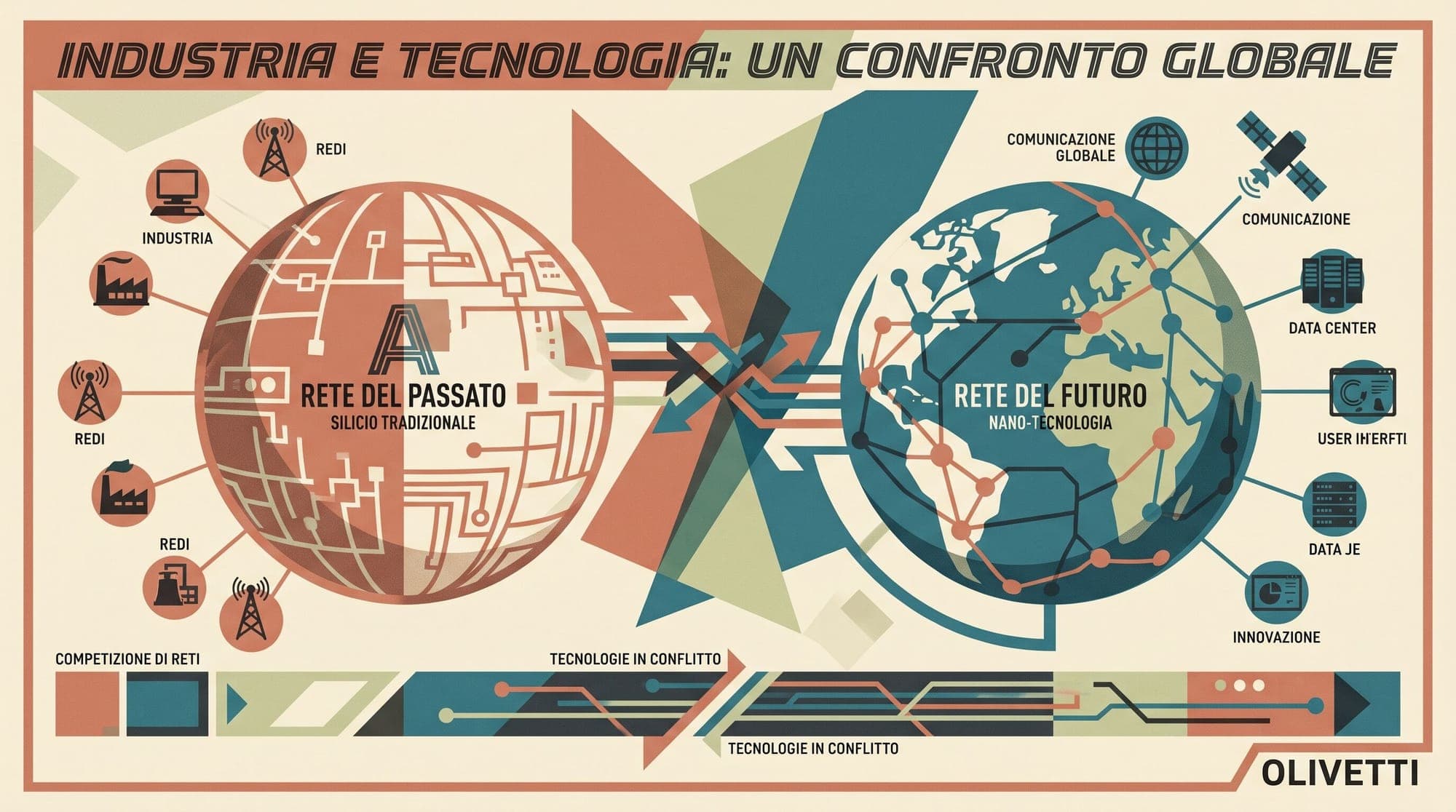
AI Supply Chain and Coalition Map

Strategic Chokepoints and Model Access

The diplomatic friction reflects a widening divide between closed, proprietary Western AI infrastructure and Chinese open-weight architectures. Under Pax Silica, participating nations gain preferred access to U.S. compute investments, advanced silicon allocations, and joint research channels, while agreeing to stringent export security standards.

China's embassy in Washington responded to reports of the letter by stating that pressuring countries to pick sides slows global artificial intelligence development and harms international cooperation. Meanwhile, Beijing has evaluated potential export regulations on frontier open weights to maintain strategic leverage over non-aligned nations.


Sources

Written by

More to read

  • Oxford Study Details Chinese Gray-Market Proxies Reselling Claude Tokens at 90% Discounts

    An investigation by the Oxford China Policy Lab reveals that Chinese developers routinely access Anthropic's frontier Claude models at discounts between 70% and 90% below list price, bypassing geographical blocks, payment filters, and biometric identity verification through a decentralized network of API proxies known locally as "transfer stations" (中转站). The analysis, authored by Oxford researcher Zilan Qian and published via ChinaTalk, outlines the modular supply chain and economic mechanics

    1 min
  • Low-Precision Quantization Kernels in Production: Comparing Marlin, ExLlamaV2, FlashInfer, and BitBLAS

    Low-Precision Quantization Kernels in Production: Comparing Marlin, ExLlamaV2, FlashInfer, and BitBLAS Architecture, Memory Bandwidth, and Decoding Throughput Autoregressive large language model (LLM) serving operates under two distinct compute regimes: a compute-bound prefill phase and a memory-bandwidth-bound decode phase. While processing the initial prompt involves matrix-matrix multiplications (GEMM) with high arithmetic intensity, generating tokens one by one requires matrix-vector multip

    1 min
  • xLSTM: How Exponential Gating and Matrix Memory Scale Recurrent Neural Networks

    xLSTM: How Exponential Gating and Matrix Memory Scale Recurrent Neural Networks For over two decades following its introduction by Hochreiter and Schmidhuber (1997), the Long Short-Term Memory (LSTM) network served as the dominant architecture for sequence modeling. By introducing the constant error carousel and multiplicative gating, LSTMs mitigated the vanishing gradient problem that plagued vanilla recurrent neural networks. However, the emergence of the Transformer architecture (Vaswani et

    1 min