Twitch lets streamers block their content from Amazon's generative AI training
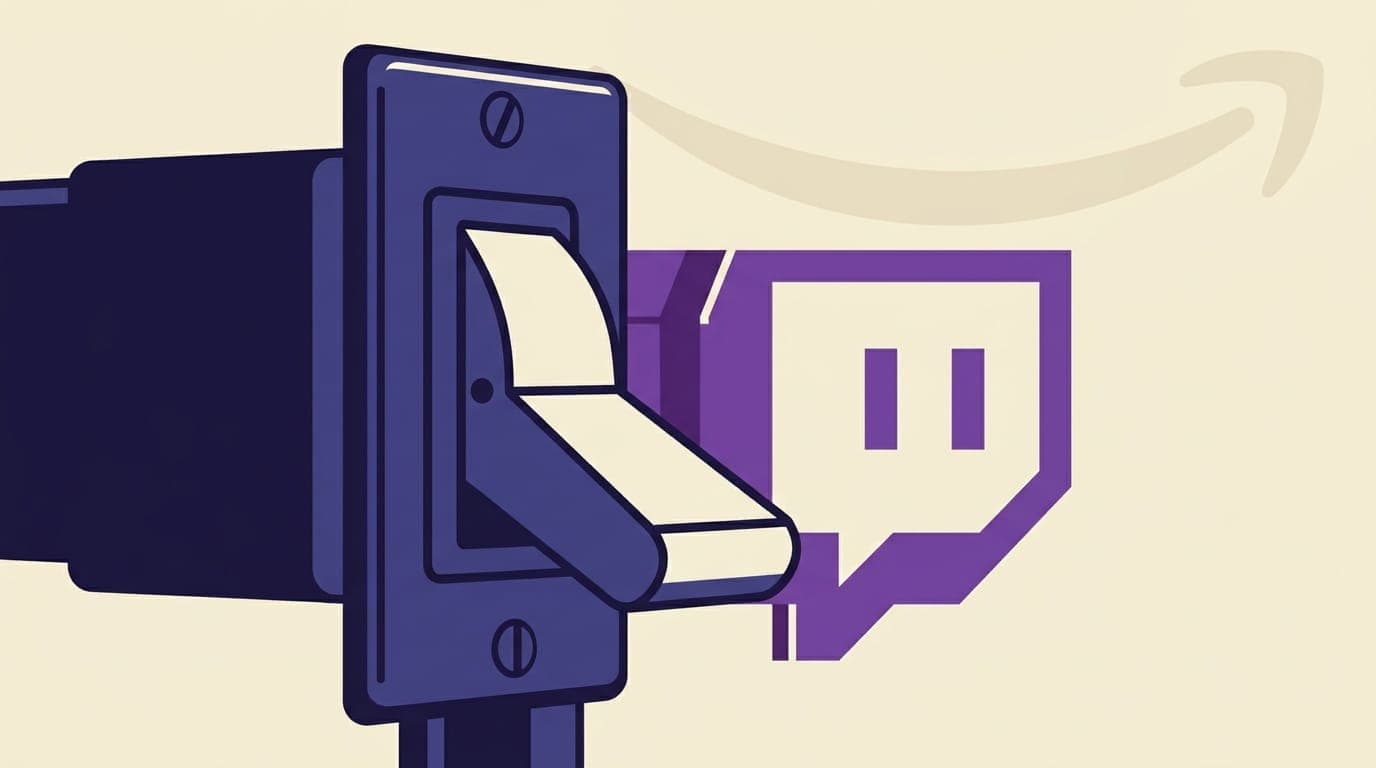
Twitch has quietly added a control that lets creators stop their streams, clips, and chat from being used to train Amazon's generative AI models. The setting, labeled "Training for Generative AI," sits in the Security and Privacy tab of account settings and is live now, but it arrives with a design that puts the burden on users to find it.
What the toggle actually blocks

Flipping the control off excludes a defined list of material from future training of Amazon models built to generate text, audio, images, or video: a user's live streams, VODs, clips, stream chats, and the pictures and text on their channel. Twitch's own documentation spells out the scope, and the limits are as consequential as the opt-out itself.
The control follows the channel owner's choice, not the individual chatter's. If you opt out but post in someone else's stream, the channel owner's setting governs whether your messages can be used for training. There is no separate protection for your words in that room.
It is also not retroactive. Twitch frames the exclusion around "future training," leaving any content already folded into model development untouched.
What keeps running anyway
The toggle stops at generative models. Twitch is explicit that turning it off "does not opt you out of Twitch and Amazon using your channel content for other purposes" described in the Privacy Notice. Three categories of AI-supported features keep running regardless: streamer growth and monetization tools, viewer discovery and recommendation systems, and community safety systems such as AutoMod.
Twitch draws a line it repeats throughout the FAQ: features like AutoMod and automated captions process content to deliver a service but, in its framing, do not retain it to train models that produce new video, images, or text. Some of those features have their own switches; others have none.
Consent by default
The default does the heavy lifting. The toggle grants permission when left on, and Twitch describes opting out as the action a user takes. Accounts that never open the Security and Privacy tab are, by the design of the control, permitting their content to train Amazon's models.
That sits on top of a broader data-sharing structure. Twitch's Privacy Notice, last modified January 15, 2026, states personal information it collects "may be combined with personal information about Amazon customers" and used by both companies to "operate, provide, develop, and improve" their products. The new toggle carves one use, generative training, out of that flow while leaving the rest intact.
The documentation offers no audit mechanism, no confirmation to users that their content was excluded from a given training run, and no answer for material already used before August 12, 2026. For streamers deciding whether to flip the switch, those written boundaries are the entire policy.
Sources: