Developer infrastructure platform Temporal Technologies is in discussions to raise approximately $500 million in a new funding round that would value the company at over $12 billion pre-money, according to reports from Bloomberg. The financing represents a rapid increase in valuation from its $5 billion Series D round earlier this year, driven by accelerating adoption of durable execution runtimes for multi-step AI agents.

The Shift Toward Durable Execution Runtimes
While foundational model developers have captured the largest single venture allocations, infrastructure providers that ensure production reliability for AI agents are commanding higher valuations. Long-running AI workflows—such as autonomous coding agents, financial reconciliation loops, and deep-research syntheses—frequently execute over hours or days across dozens of asynchronous tool calls.
Standard stateless execution architectures are vulnerable to transient API rate limits, server restarts, model timeouts, and network interruptions. A failure mid-way through a 30-step agent trajectory often forces an entire restart, multiplying inference token costs and introducing compounding failure probabilities.
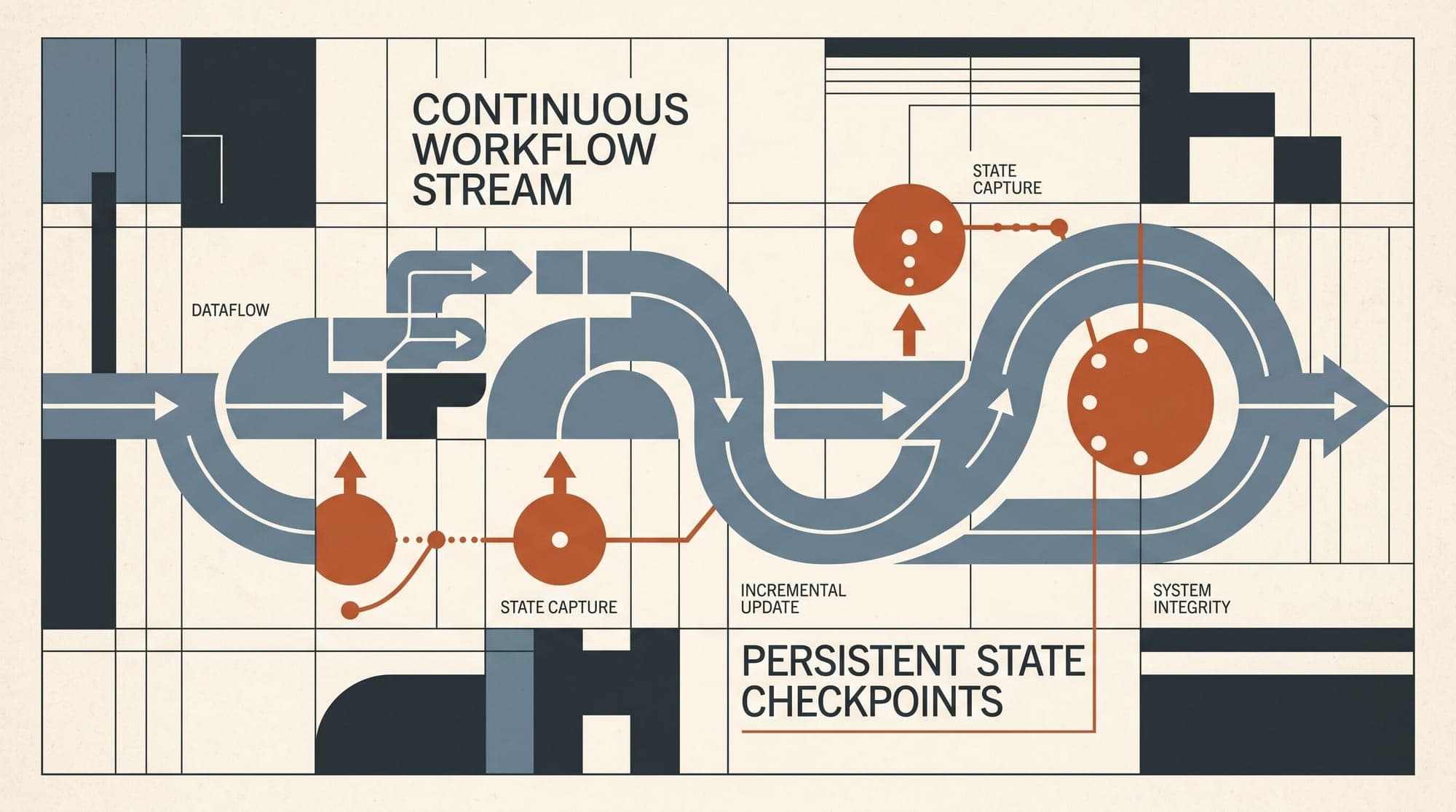
Temporal addresses this bottleneck through durable execution: an architecture based on deterministic event sourcing and automatic state checkpointing. When an agent step fails or hangs, the runtime reconstructs the exact workflow state by replaying previous event logs from a persistent backend, resuming execution from the point of interruption without re-running completed tool actions or LLM calls.
Valuation and Growth Trajectory
The prospective $12 billion valuation marks a more than fourfold increase in Temporal's valuation over the past 18 months:
- Early 2025: $146 million Series C at a $1.72 billion valuation led by Tiger Global.
- Late 2025: $105 million secondary transaction at a $2.5 billion valuation led by GIC.
- February 2026: $300 million Series D at a $5 billion post-money valuation led by Andreessen Horowitz.
- August 2026: Ongoing talks for ~$500 million at a $12 billion+ pre-money valuation.
Temporal's open-source workflow orchestration model has gained widespread enterprise and developer adoption, with production deployments across companies including OpenAI, Block, ADP, Netflix, and Stripe.
Enterprise Infrastructure Economics
The surging enterprise demand highlights how engineering teams are prioritizing system durability and spend governance over ad-hoc agent scripts. By abstracting retry semantics, compensation logic, distributed timers, and human-in-the-loop pause states into code-level SDKs, durable execution engines have become core operational plumbing for production AI applications.