Taiwan Indicts Nine in B300 AI Server Diversion Scheme to China
Taiwan prosecutors have indicted nine individuals for allegedly circumventing international export controls to smuggle advanced AI servers equipped with Nvidia B300 GPUs into mainland China. The indictment, issued on August 24, 2026, by the Keelung District Prosecutors' Office, details an illicit sales channel that operated by falsifying compliance verifications from within the hardware supply chain.
The defendants include a distribution manager at Nvidia's Taiwan branch surnamed Chang, two sales managers at Supermicro's Taiwan branch surnamed Lin and Wang, and the chief executive of authorized Supermicro distributor Albatron Technology surnamed Lu.

Internal Channel Manipulation and Falsified Verification
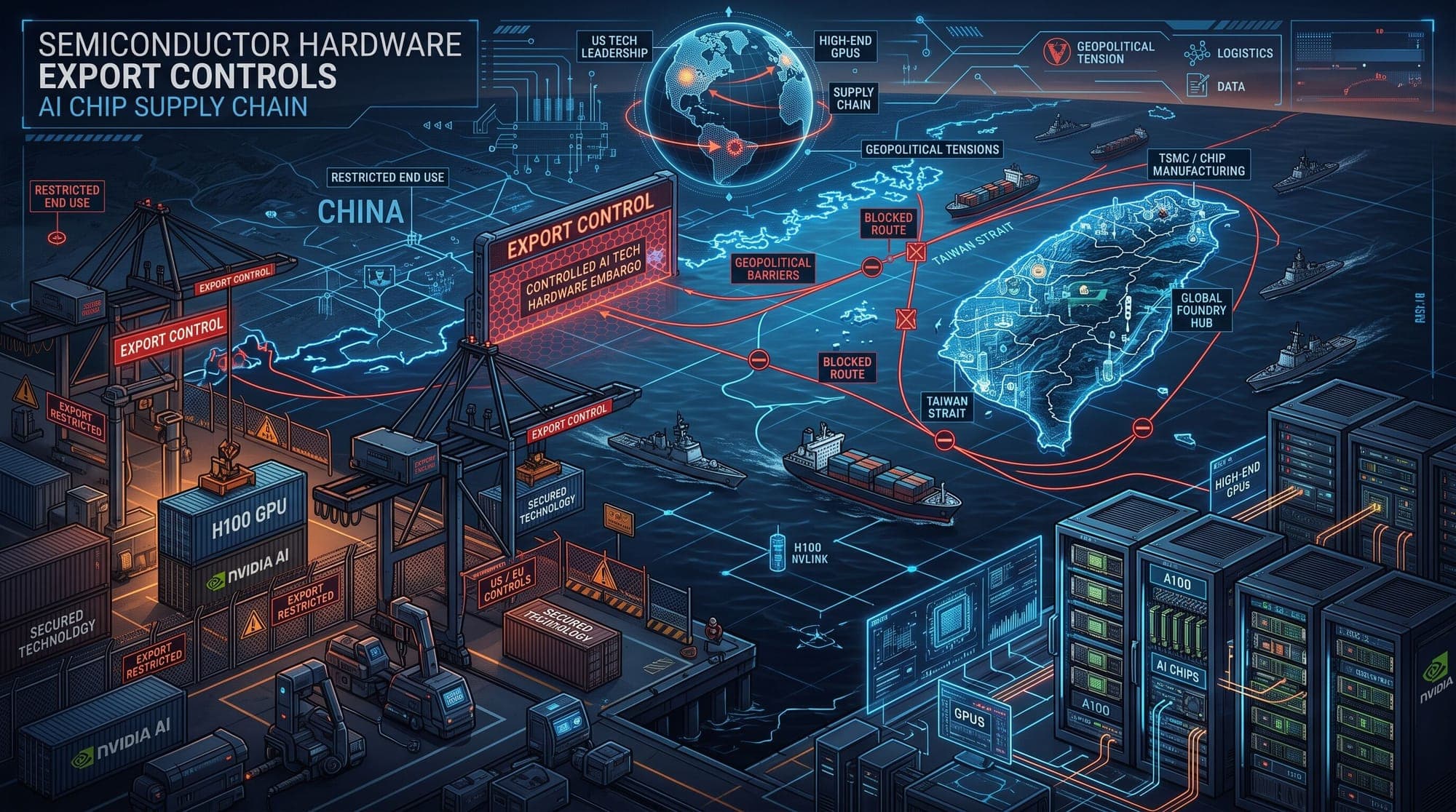
Under existing export control frameworks established by the U.S. Department of Commerce, advanced AI accelerators and multi-GPU server systems cannot be exported to mainland China or Hong Kong without explicit licenses. Manufacturers enforce these rules through strict whitelisting, verification of end-user infrastructure, and mandatory on-site physical audits for orders exceeding eight servers.
According to the Keelung indictment, the defendants compromised these safeguards from the inside:
- Falsified Audit Records: Executives at server vendor Flying Tiger Technology secured an approved whitelist allocation by listing Chief Telecom as the hosting facility. Despite knowing the facility lacked the power capacity and network bandwidth to operate 130 high-density AI servers, the Nvidia distribution manager confirmed the verification was complete.
- Rerouted Shipments: When initial financing stalled after delivery of two servers, the Albatron CEO connected Flying Tiger with buyers in China. A subsequent 64-server batch was arranged through trading firm Long Wins, with Supermicro sales staff agreeing to split proceeds.
- Intermediary Routing: Of the 130 ordered servers, 74 reached Chinese end users across three separate logistics pipelines. Fifty units were transshipped via Indonesia, while eight moved through Japan and Hong Kong.
- Interception: Taiwanese law enforcement intercepted the remaining 56 servers in Taiwan before they could be loaded for export.
Prosecutors stated that illicit proceeds from the completed transfer of 74 servers exceeded $21.2 million. In a related transaction, an executive at Quintai Electronics allegedly fabricated four invoices totaling approximately NT$39.16 million ($1.2 million) to obscure money flows.
Regulatory Context and Parallel U.S. Actions
The Keelung case mirrors federal enforcement actions in the United States. In March 2026, the U.S. Department of Justice unsealed charges against Supermicro co-founder and former board member Yih-Shyan "Wally" Liaw, alleging a $2.5 billion conspiracy that routed restricted server clusters through Southeast Asian shell entities.
The Taiwan indictment underscores that compliance risks increasingly reside inside authorized distribution tiers rather than third-party gray markets. The nine primary defendants face charges of breach of trust and forgery, with three senior figures facing aggravated breach of trust charges under Taiwan's Securities and Exchange Act.