The Trump administration considered sanctions and trade restrictions targeting Chinese open-source AI models in recent weeks, but backed off after a counter-offensive from Nvidia, Meta, Microsoft, and Google, according to a New York Times report citing more than half a dozen current and former government and industry officials.
The deliberations, led by White House Chief of Staff Susie Wiles, Treasury Secretary Scott Bessent, and Commerce Secretary Howard Lutnick, explored options ranging from sanctions to a trade blacklist of Chinese open-model makers and even a ban on US cloud providers doing business with those firms. Officials also discussed which models federal agencies should be permitted to use and whether the Commerce Department should impose new rules.
The effort was triggered by a wave of competitive Chinese models led by Moonshot AI's Kimi K3, which matches top US models on several benchmarks. Michael Kratsios, head of the White House Office of Science and Technology Policy, accused Moonshot on X of distilling Anthropic's Fable model, calling the theft of US technology "unacceptable." Bessent floated sanctions the same day.

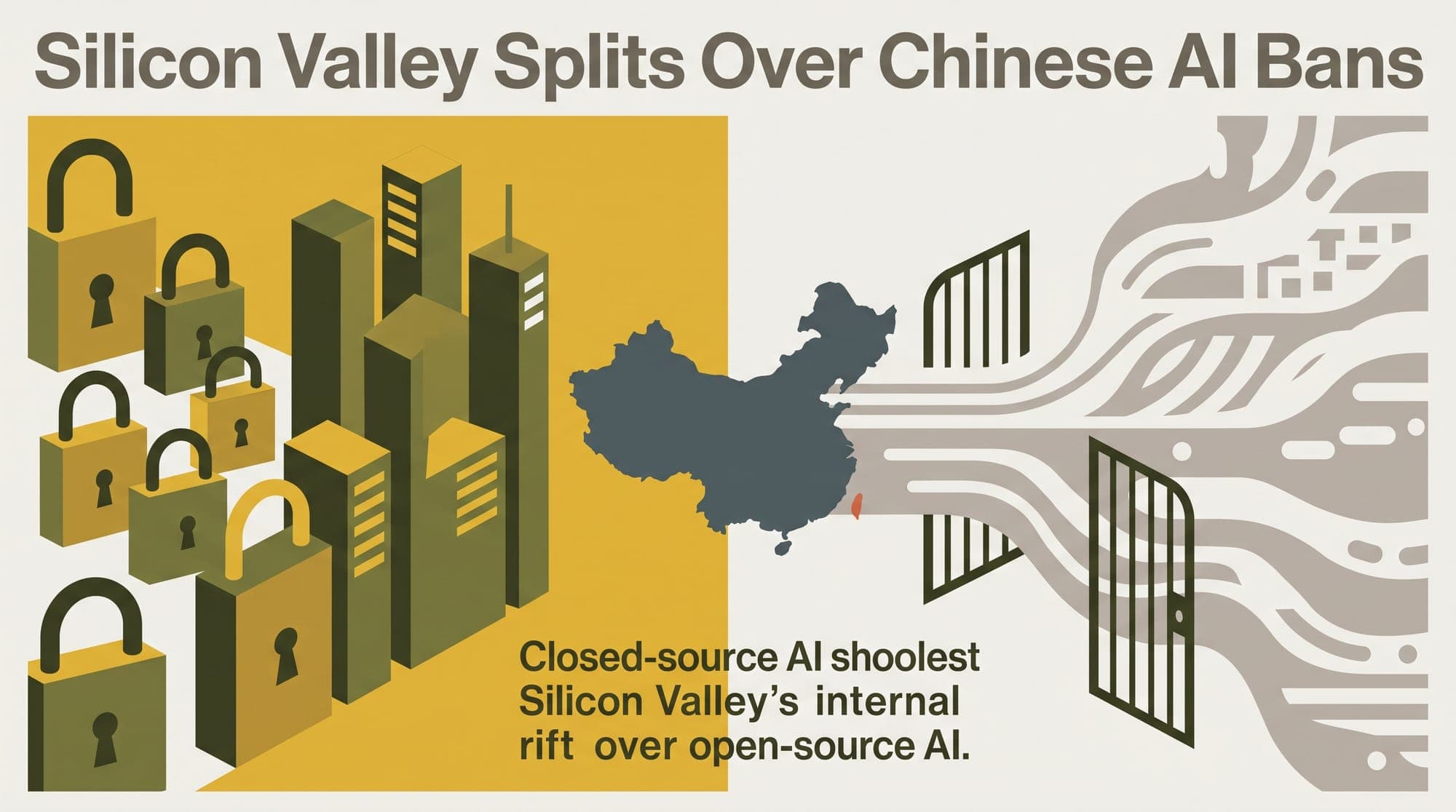
Behind the scenes, the push fractured Silicon Valley along familiar lines. OpenAI and Anthropic, both planning IPOs and building closed models, advocated for restrictions citing national security. On the other side, Nvidia, Meta, Microsoft, and Google mobilized through private messages, phone calls, and video conferences to argue that open models accelerate innovation and strengthen cyber defense.
Nvidia CEO Jensen Huang became the most visible counterweight. On July 24, he published his first-ever post on X to defend open models. Nvidia also launched an alliance for open security tools that grew from a handful of members to more than 230 within weeks.
Christopher Padilla, a former Commerce Department official, described the dispute to the NYT as a "cage fight over the future of the AI industry," saying the argument is primarily about money and market power, with national security concerns tacked on. Industry officials do not expect concrete measures before Chinese President Xi Jinping's scheduled visit in September.
OpenAI told the Times that both open and closed models have a role to play, framing the rise of Chinese open-weight models not as an argument against openness but as a reason for a national framework. Anthropic declined to comment, though CEO Dario Amodei has previously laid out detailed concerns about open-weight model risks.
The administration has now shifted focus toward making US models more competitive rather than restricting Chinese ones, at least for now. The episode reveals how the open-versus-closed debate has moved from philosophy to raw commercial competition, with access to the White House as the prize.
**Sources**