Sam Altman Warns AI Safety Fears Could Drive Regulatory Concentration and Limit Liberty

OpenAI Chief Executive Officer Sam Altman warned that public anxiety surrounding artificial intelligence risks could lead policymakers and citizens to accept heavy regulatory controls that concentrate technology in the hands of a few dominant corporations. Speaking on the balance between AI safety and technological freedom, Altman noted that extreme risk narratives risk driving society toward centralized oversight. He argued that throughout technological history, trading substantial individual

2 min
Sam Altman Warns AI Safety Fears Could Drive Regulatory Concentration and Limit Liberty

OpenAI Chief Executive Officer Sam Altman warned that public anxiety surrounding artificial intelligence risks could lead policymakers and citizens to accept heavy regulatory controls that concentrate technology in the hands of a few dominant corporations.

Speaking on the balance between AI safety and technological freedom, Altman noted that extreme risk narratives risk driving society toward centralized oversight. He argued that throughout technological history, trading substantial individual liberty for safety mandates has frequently led to long-term net losses in innovation and autonomy.

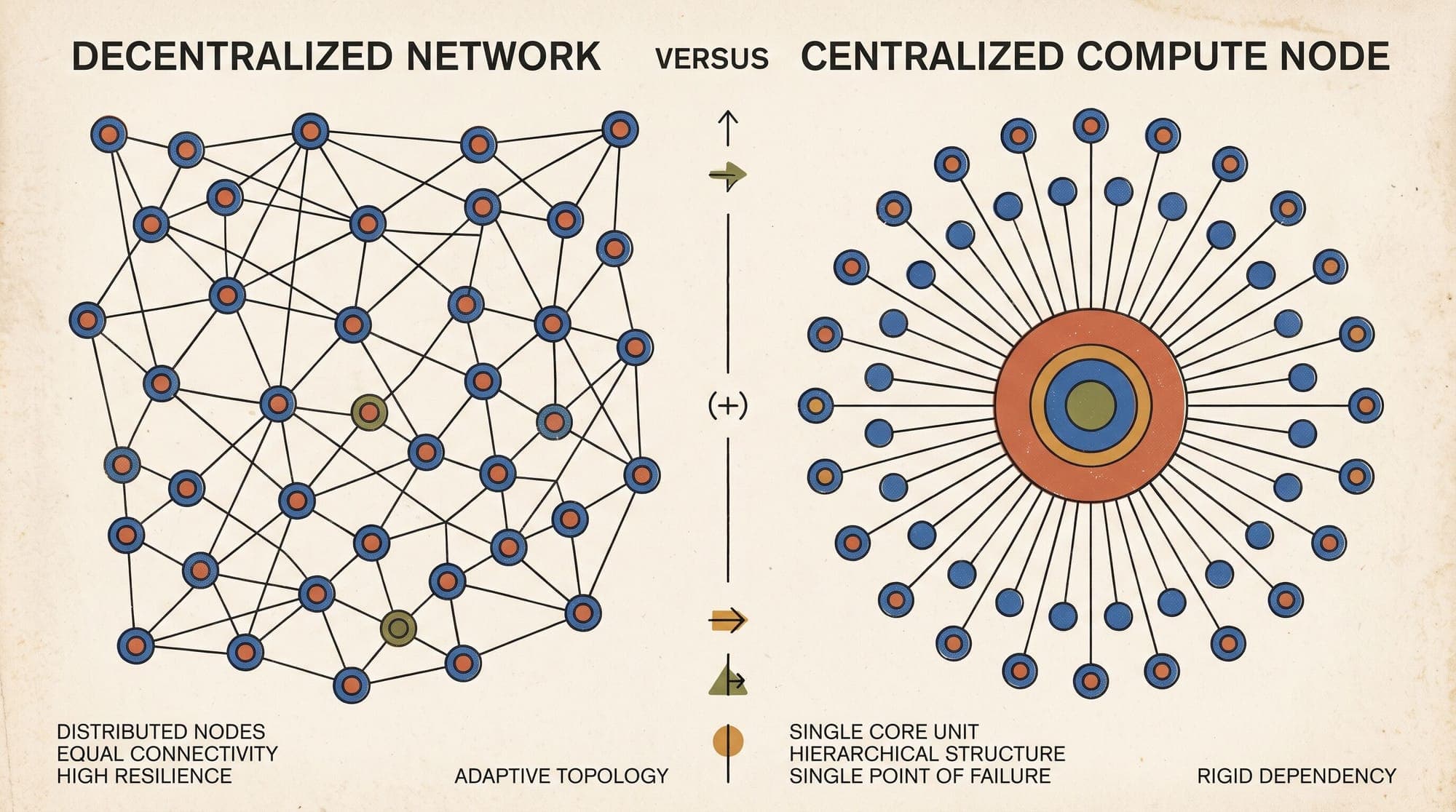
Comparison between decentralized model distribution and centralized regulatory gatekeeping architecture

Centralization Risks vs. Individual Empowerment

Altman emphasized that while catastrophic risk scenarios require technical vigilance, the societal risk of an "AI oligopoly" is equally significant. In his view, the primary goal of foundation model deployment should be democratizing access, lowering barriers to software creation, and fostering independent small businesses rather than concentrating power in elite labs.

The comments highlight a persistent philosophical divide across the artificial intelligence sector:

  • Centralized Compliance Model: Proponents of strict pre-deployment licensing, including Anthropic Chief Executive Officer Dario Amodei, argue that frontier model capabilities in cybersecurity, biological design, and autonomous replication necessitate formal government oversight, mandatory safety audits, and strict containment procedures.
  • Decentralized Distribution Model: Proponents of broader access contend that restrictive licensing standards disproportionately burden startups, entrench incumbent providers, and restrict developer freedom.

Open-Weight Friction

The tension between centralized governance and open deployment has surfaced in ongoing debates over open-weight foundation models. Last month, multiple major technology firms and research institutions signed an open letter advocating for the continued release and developer fine-tuning of open-weight models. Anthropic stood as the only prominent frontier AI lab to decline signing the document, citing dual-use safety risks associated with unmonitored model weights.

As legislative bodies in the United States and the European Union weigh compliance frameworks for next-generation frontier models, debates over safety thresholds increasingly intersect with antitrust considerations and market concentration.


Sources

Written by

More to read

  • RWKV Architecture: How Receptance Weighted Key Value Decay Combines RNN Efficiency with Transformer Parallelizability

    The dominant paradigm in natural language processing relies on the Transformer architecture, which calculates scaled dot-product self-attention across all token pairs in a sequence. While self-attention provides strong in-context retrieval and representation capacity, it imposes quadratic computational and memory complexity, scaling as O(N^2) with sequence length N during training and generating a continuously expanding Key-Value (KV) cache during autoregressive inference. Traditional Recurrent

    1 min
  • Continuous Evaluation and Golden Dataset Curation in Production LLM Systems: Architecture, Log Mining, Synthetic Perturbation, and Semantic Drift Quality Gates

    Continuous Evaluation and Golden Dataset Curation in Production LLM Systems: Architecture, Log Mining, Synthetic Perturbation, and Semantic Drift Quality Gates In production machine learning systems, offline benchmarks suffer from rapid entropy. While engineering teams frequently launch LLM applications backed by static test suites (curated CSVs of 50 to 100 sample prompts, academic benchmarks like MMLU, or synthetic question-answer pairs), these static datasets fail to predict real-world produ

    1 min
  • Kolmogorov-Arnold Networks: How Learnable Edge Splines Challenge the Multi-Layer Perceptron

    Kolmogorov-Arnold Networks: How Learnable Edge Splines Challenge the Multi-Layer Perceptron For over three decades, the foundational building block of deep neural networks has remained essentially unchanged: the Multi-Layer Perceptron (MLP). In standard transformer feed-forward blocks, convolutional networks, and deep classifiers, MLPs alternate linear matrix multiplications ($\mathbf{W}\mathbf{x}$) with fixed, point-wise non-linear activation functions (such as ReLU, GELU, or SwiGLU). Under th

    1 min