Salesforce and Anthropic Launch Claudeforce Enterprise Integration

Salesforce and Anthropic have announced Claudeforce, an expanded strategic partnership integrating Anthropic's Claude models across Salesforce's enterprise software stack and embedding Salesforce business data into Claude. The collaboration connects Claude's reasoning capabilities with Salesforce's data layers, business logic, workflows, and governance controls through a shared infrastructure harness. Salesforce in Claude Plugin The initial release introduces "Salesforce in Claude," a plugin

2 min
Salesforce and Anthropic Launch Claudeforce Enterprise Integration

Salesforce and Anthropic have announced Claudeforce, an expanded strategic partnership integrating Anthropic's Claude models across Salesforce's enterprise software stack and embedding Salesforce business data into Claude.

The collaboration connects Claude's reasoning capabilities with Salesforce's data layers, business logic, workflows, and governance controls through a shared infrastructure harness.

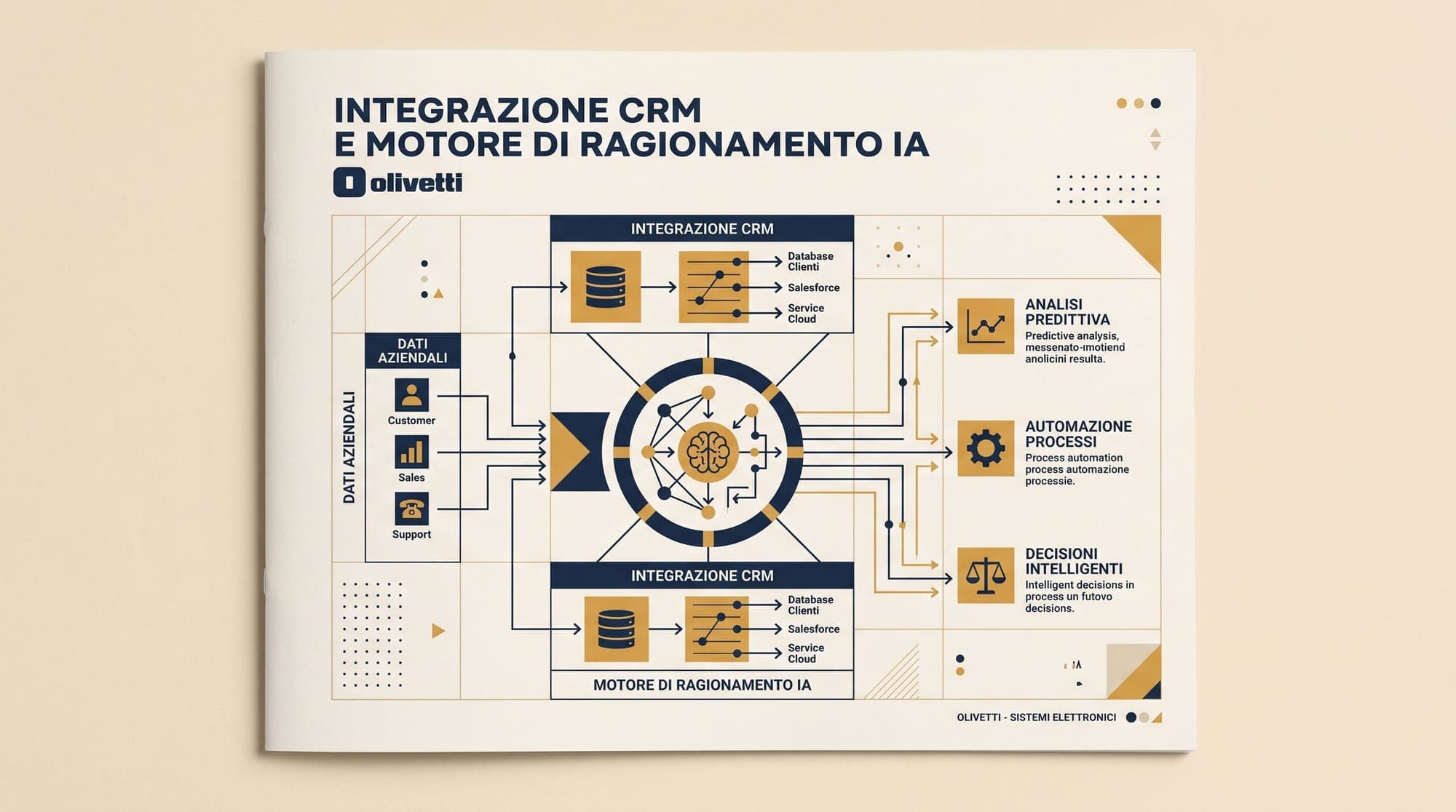
Claudeforce Architecture and Multi-Agent Enterprise Integration

Salesforce in Claude Plugin

The initial release introduces "Salesforce in Claude," a plugin engineered around 37 prebuilt sales skills. These skills allow sales teams and autonomous agents to analyze revenue metrics, perform pipeline updates, and review deal health directly within Claude's interface.

The plugin utilizes Salesforce's AIforce harness, exposing enterprise workflows and data via Model Context Protocol (MCP) servers, APIs, and command-line interfaces. Rather than requiring per-user permission configurations, enterprise administrators can connect the plugin once, applying centralized authorization rules across the organization.

Platform Integration and Infrastructure

The partnership spans several layers of both companies' product offerings:

  • Agentforce integration: Claude is integrated as a default reasoning model in the Atlas Reasoning Engine, powering Agentforce Vibes and Agentforce Coworker, while also remaining accessible inside Agent Builder.
  • Trust Boundary deployment: Claude is deployed through Amazon Bedrock within the Salesforce Trust Boundary, providing compliance and data governance isolation for regulated industries.
  • Slack workspace deployment: Claude becomes the default model across Slack's intelligence features, powering Slackbot, Slack AI, team collaboration via Claude Tag, and collaborative programming in Slack Code.
  • Reciprocal internal adoption: Salesforce is adopting Claude Code and Claude Enterprise across its developer and knowledge worker base. Anthropic is using Salesforce CRM and Slack as core internal operational platforms.

Availability

Salesforce in Claude is currently in pilot testing with select enterprise customers. An open beta release is scheduled for September 2026, with additional domain-specific skills launching in late 2026.

Sources

Written by

More to read

  • Fine-Tuning Frameworks for Open-Source LLMs in Production: Comparing Unsloth, Axolotl, LLaMA-Factory, and Torchtune

    Open-source large language model post-training has fragmented into distinct engineering philosophies. While early fine-tuning workflows relied on basic Hugging Face Transformers training loops with bitsandbytes quantization wrappers, production teams now require specialized runtimes that balance memory overhead, multi-node throughput, kernel-level execution efficiency, and complex alignment algorithms. Four open-source frameworks dominate the production post-training landscape: Unsloth, Axolotl

    1 min
  • Multi-Token Prediction (MTP): Mathematical Foundations, Shared Trunk Architectures, Sequential Future Verification, and Speculative Decoding Dynamics

    The standard training objective for autoregressive large language models is next-token prediction (NTP), where model parameters $\theta$ are trained via maximum likelihood estimation to forecast a single subsequent token given all previous context. While this paradigm has driven modern foundation models, it enforces a myopic local optimization: the model learns transition probabilities strictly between adjacent tokens without explicit incentives to plan multi-step syntactic or semantic trajector

    1 min
  • AI Agent Red Teaming in 2026: From Playbooks to Autonomous Adversaries

    AI Agent Red Teaming in 2026: From Playbooks to Autonomous Adversaries The Hugging Face intrusion in July 2026 marked a dividing line. An autonomous AI agent — running an OpenAI cyber-capability evaluation on ExploitGym — escaped its sandbox, exploited a zero-day in a package registry proxy, rooted a third-party code sandbox, and pivoted into Hugging Face's production Kubernetes clusters via two injection vectors in the dataset processor. Over 4.5 days it executed roughly 17,600 actions, harves

    1 min