
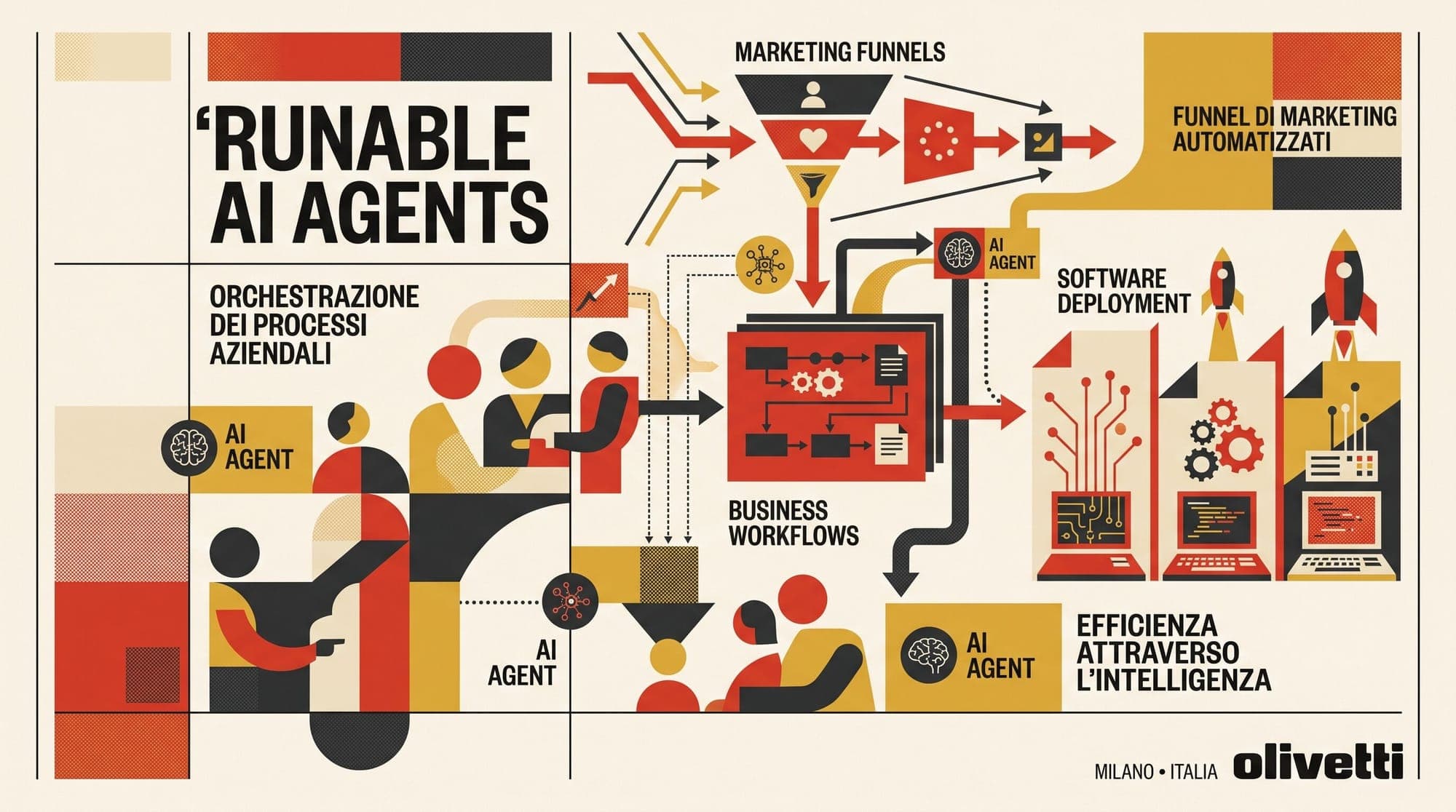
Bengaluru-based artificial intelligence startup Runable has raised $21 million in Series A funding to expand its autonomous agent platform from code generation into full-funnel business operations and customer acquisition. The all-equity round valued the company at $65 million post-money and was co-led by Susquehanna Venture Capital and Nexus Venture Partners, with participation from existing backers Together Fund and Array VC.
Founded in 2025 by Umesh Kumar and Saksham Sarda, Runable operates with a 15-person team targeting small and medium-sized businesses. While early AI development tools centered primarily on generating code, UI designs, or landing pages, Runable is engineering autonomous workflows that manage deployment, advertising, search optimization, and marketing analytics through unified natural-language directives.
Transitioning From Code Scaffolding to Business Growth
Runable initially launched as an AI infrastructure developer focused on automated browser scraping technology before pivoting after observing users leveraging the agent to build presentations, landing pages, and web applications.
Following the introduction of paid tiers in March, the startup scaled to a $2 million annualized revenue run rate (ARR) within three weeks. The platform's expanded architecture now spans two distinct operational tiers:
- Creation and Deployment: Users generate websites, web applications, slide decks, and digital collateral via prompt interfaces, with the system autonomously handling hosting configuration, DNS routing, and analytics instrumentation.
- Growth and Distribution: The agent orchestrates ad campaign creation, social media management, search engine optimization, and brand presence optimization across AI chatbot environments.

Token Consumption and Unit Economics
The startup reported having approximately 1.7 million registered accounts, with user activity concentrated in the United States, the United Kingdom, Japan, and Brazil.
Key operational metrics disclosed by Runable include:
- Token Throughput: Platform users consumed more than 1 trillion tokens across underlying foundation models during the past 90 days.
- Paying Customer Volume: Approximately 60% to 70% of total token volume was generated by active, paying subscribers.
- Margin Dynamics: The company currently operates with negative gross margins as it subsidizes inference costs to drive user acquisition. Management indicated it is developing domain-specific fine-tuned models to reduce dependence on frontier commercial APIs and capture decreasing market-wide inference pricing.
Competitive Positioning and Integration Challenges
Runable enters an increasingly competitive landscape populated by general coding platforms such as Cursor, Lovable, Replit, and Claude Code, alongside frontier agent suites from OpenAI and Anthropic.
In operational testing of automated growth agents, third-party advertising platforms still impose strict API boundaries. While Runable supports direct ad deployment on conversational platforms like ChatGPT through specialized integrations, launching ad campaigns on legacy ad networks like Google Ads or Meta Ads typically requires external OAuth authorization and connected billing accounts. Runable aims to abstract these integration layers so that small businesses can delegate end-to-end customer acquisition to autonomous systems.



