Robot.com Signs Seven-Year Enterprise Deployment Agreement with Sodexo

Autonomous robotics developer Robot.com has signed a seven-year commercial agreement with food services and facilities management corporation Sodexo to scale autonomous delivery operations across college campuses throughout North America. The contract represents Robot.com's largest enterprise deployment to date. The agreement expands a partnership established in 2021, when Sodexo participated in Robot.com's (then Kiwibot) $7.5 million pre-Series A financing round and deployed initial fleets acr

2 min
Robot.com Signs Seven-Year Enterprise Deployment Agreement with Sodexo

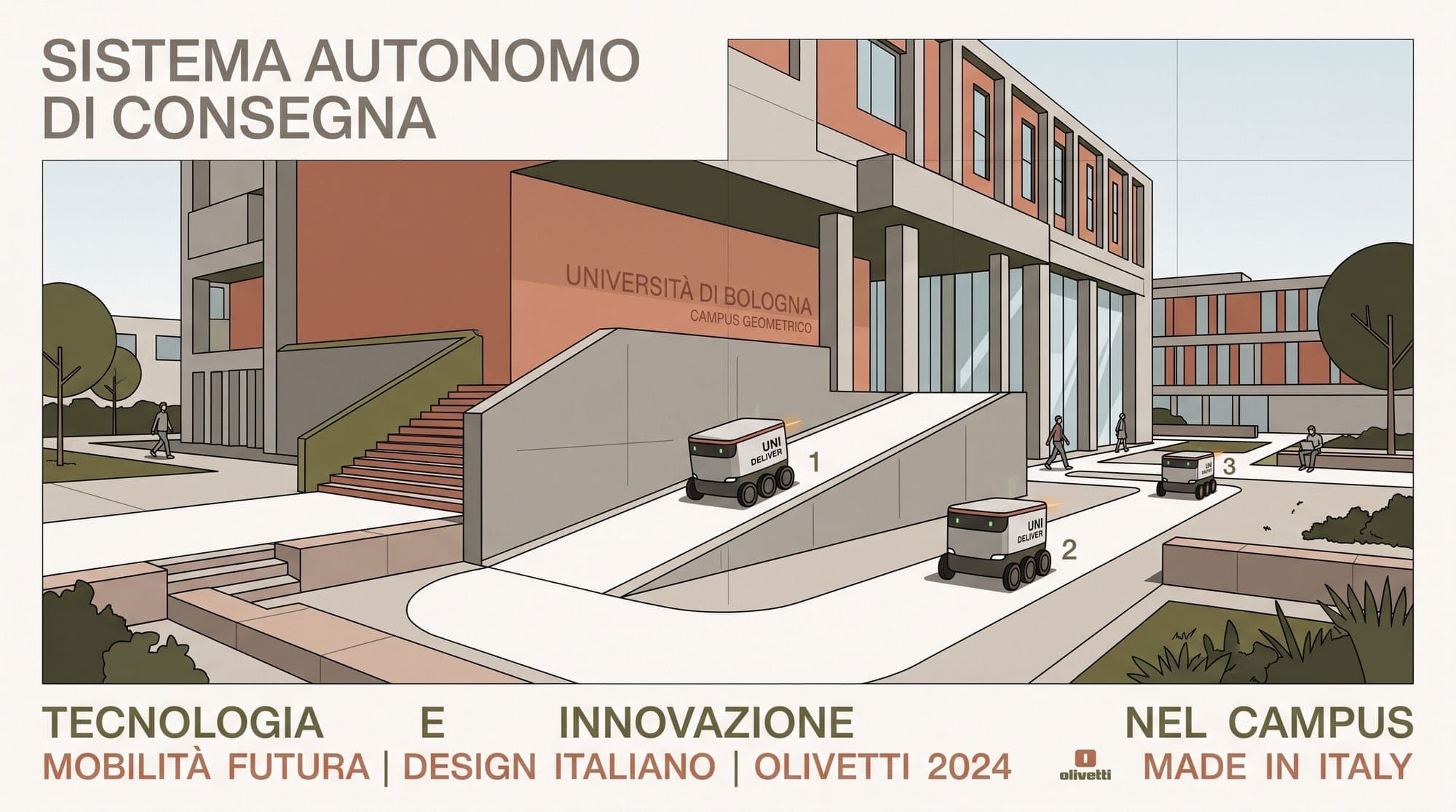
Autonomous robotics developer Robot.com has signed a seven-year commercial agreement with food services and facilities management corporation Sodexo to scale autonomous delivery operations across college campuses throughout North America. The contract represents Robot.com's largest enterprise deployment to date.

The agreement expands a partnership established in 2021, when Sodexo participated in Robot.com's (then Kiwibot) $7.5 million pre-Series A financing round and deployed initial fleets across universities including Gonzaga, Loyola Marymount, and New Mexico State.

Robot.com Autonomous Delivery and Fleet Architecture

Fleet Specifications and Dual Monetization

Under the multi-year contract, Sodexo will expand its operational footprint of Robot.com's sidewalk robotics:

  • Hardware and Autonomy: Primary delivery routes utilize the R-kiwi sidewalk platform, featuring Level 4 autonomous navigation, a 12-hour operational battery lifecycle, and a 19-liter secured cargo compartment for food and package transport.
  • Integrated Advertising Layer: The agreement formalizes the integration of Robot.com's R-ads network across the deployed campus fleet, allowing third-party advertisers to deliver programmatic digital out-of-home campaigns via external chassis screens while robots transit delivery routes.
  • Centralized Fleet Orchestration: Robot fleets are managed via Robot.com's REMI orchestration platform, which handles teleoperation fallback, route dispatching, and health telemetry.

Expansion into Quadruped Robotics

The seven-year framework also establishes a pathway for deploying next-generation robotic form factors:

  • Quadruped Delivery Integration: The companies plan to initiate commercial testing in 2027 with R-dog, a four-legged robotic platform developed in partnership with FieldAI.
  • Terrain Adaptability: Powered by FieldAI's multimodal foundation models, R-dog is engineered to navigate architectural barriers such as outdoor stairwells, steep gradients, and elevated curbs that restrict wheeled sidewalk delivery vehicles.

Robot.com currently operates more than 500 autonomous units across North America and the Middle East, with over 2.5 million verified task completions logged across its commercial fleet.


Sources

Written by

More to read

  • OpenAI Consolidates Product Leadership Under Greg Brockman, Merging ChatGPT and Codex Teams

    OpenAI has executed an internal restructuring that consolidates its core product lines, engineering scaling, and commercial deployment under co-founder and President Greg Brockman. The reorganization merges the teams behind ChatGPT, the Codex coding agent, and developer APIs into a single unified product division. The move flattens decision-making hierarchies across the company as it prepares for an eventual initial public offering and responds to mounting enterprise competition from Anthropic

    1 min
  • Grammar-Constrained Decoding in Production: Finite State Automata, Pushdown Parsers, and Asynchronous Bitmasking

    Autoregressive language models generate text by sampling from a probability distribution over a discrete vocabulary at each step. While unconstrained sampling succeeds across open-ended text tasks, it offers no syntactic guarantees when producing machine-readable formats such as JSON, SQL, or structured tool calls. In automated agent loops, a single missing quotation mark, unbalanced bracket, or unescaped control character breaks downstream parser execution, forcing expensive retry round-trips.

    1 min
  • No Positional Embeddings (NoPE): How Causal Masking and Attention Geometry Encode Sequence Order

    A foundational tenet of the Transformer architecture established by Vaswani et al. (2017) is permutation equivariance. Because standard self-attention calculates token interactions purely through pairwise dot products across sets of vectors, shuffling the order of input tokens yields identical outputs up to the corresponding permutation. To establish word order, standard transformer models inject explicit positional information, ranging from learned absolute position embeddings (APE) to sinusoid

    1 min