Replit Launches Free Mode Powered by OpenAI's GPT-5.6 Luna

Software development platform Replit announced the rollout of Free Mode, a tier powered by OpenAI's GPT-5.6 Luna model designed to support zero-cost planning, exploration, and codebase assistance. The integration utilizes recent inference cost reductions and efficiency improvements within the GPT-5.6 model family to provide unmetered conversational assistance without drawing from paid compute budgets. Model Routing and Persistent Project Context Replit Free Mode integrates directly into the

1 min
Replit Launches Free Mode Powered by OpenAI's GPT-5.6 Luna

Software development platform Replit announced the rollout of Free Mode, a tier powered by OpenAI's GPT-5.6 Luna model designed to support zero-cost planning, exploration, and codebase assistance.

The integration utilizes recent inference cost reductions and efficiency improvements within the GPT-5.6 model family to provide unmetered conversational assistance without drawing from paid compute budgets.

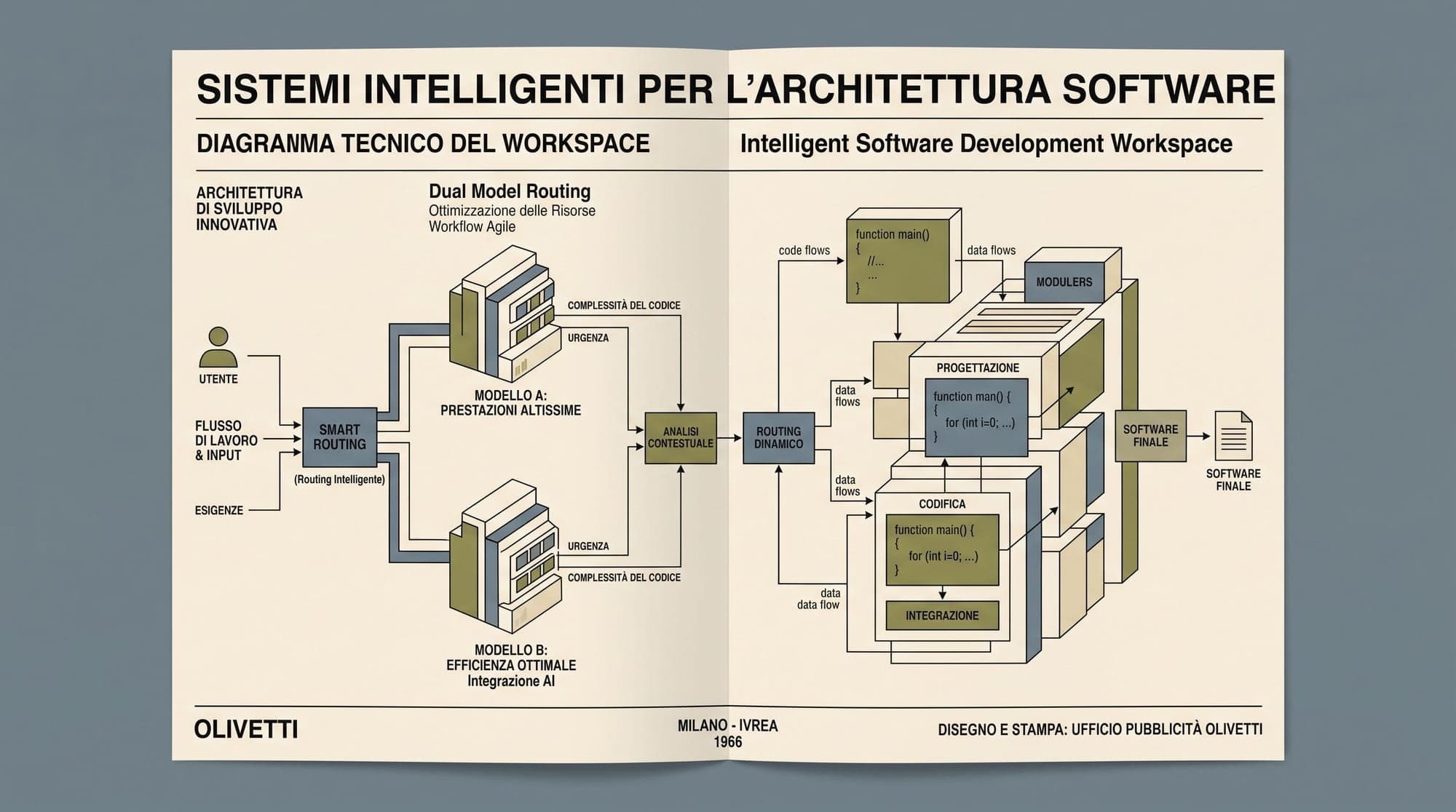
Replit Free Mode Model Routing Architecture

Model Routing and Persistent Project Context

Replit Free Mode integrates directly into the platform's development environment, granting the underlying model access to workspace file trees, repository context, and active configurations. Users can request code explanations, refactoring suggestions, and architectural planning without incurring token fees.

To balance speed, operational cost, and reasoning depth, the environment implements a dynamic routing architecture:

  • Interactive Queries: Routine analysis, code suggestions, and planning tasks are processed by GPT-5.6 Luna.
  • Complex Reasoning Escalation: When tasks require multi-step refactoring, intricate bug isolation, or deep logical verification, queries route to GPT-5.6 Sol.
  • Context Preservation: The development session maintains full project state across model transitions, returning to GPT-5.6 Luna once complex tasks conclude.

Inference Economics and Access

The deployment reflects a broader industry transition toward tiered model orchestration in developer tooling. By delegating high-volume exploratory interactions to lightweight models like GPT-5.6 Luna while reserving higher-tier reasoning models for execution phases, platforms can lower per-seat operational overhead.

According to Replit and OpenAI, the approach aims to eliminate token anxiety during early-stage prototyping, allowing developers to shape software architectures before committing compute resources in Build Mode.


Sources

Written by

More to read

  • FlashAttention-3: How Warp Specialization, Asynchronous TMA Tiling, and FP8 Hardware Acceleration Scale Attention on Hopper GPUs

    FlashAttention-3: How Warp Specialization, Asynchronous TMA Tiling, and FP8 Hardware Acceleration Scale Attention on Hopper GPUs The emergence of Transformer architectures scaled deep learning across language, vision, and multimodal domains, but standard exact attention has historically imposed severe compute and memory bandwidth bottlenecks. The standard multi-head self-attention operation computes: $$\text{Attention}(Q, K, V) = \text{softmax}\left(\frac{QK^T}{\sqrt{d}}\right)V$$ For a seque

    1 min
  • Automated AI Code Review in Production: Architecture, AST Context Assembly, Linter Hybridization, and Multi-Stage Noise Reduction

    Naively piping unified git diffs into a large language model and posting the raw output to GitHub or Bitbucket is a reliable way to degrade engineering velocity. While frontier models demonstrate high zero-shot reasoning capabilities, unconstrained code review bots suffer from high false-positive rates, superficial formatting nitpicks, hallucinated API misuse, and context blindness. When an automated bot generates twenty low-value comments per pull request, developers suffer review fatigue and r

    1 min
  • Anthropic Hires Former Google TPU Head Amir Salek to Drive Custom Silicon Strategy

    Anthropic has hired veteran semiconductor executive Amir Salek to join its compute infrastructure organization, according to reporting from Bloomberg. Salek, who previously founded and led Google's Custom Silicon team responsible for the Tensor Processing Unit (TPU) program, will help direct Anthropic's hardware strategy as the company explores custom silicon development. The appointment comes as leading frontier artificial intelligence laboratories seek greater control over hardware supply cha

    1 min