Perplexity has partnered with Nvidia to launch Portable Computer, an integrated software stack that runs agentic AI workflows locally on consumer and workstation GPUs without incurring per-token API charges.
The system packages model weights, an inference server, an agent harness, tool connectors, and an operating system sandbox into a unified application. It is available immediately on Linux for Pro, Max, and Enterprise subscribers, with Windows support scheduled for September. Hardware requirements specify an Nvidia RTX GPU with at least 24GB of VRAM (RTX 3090 or newer) or Nvidia DGX Spark desktop supercomputers.
Local Agent Architecture and Model Support
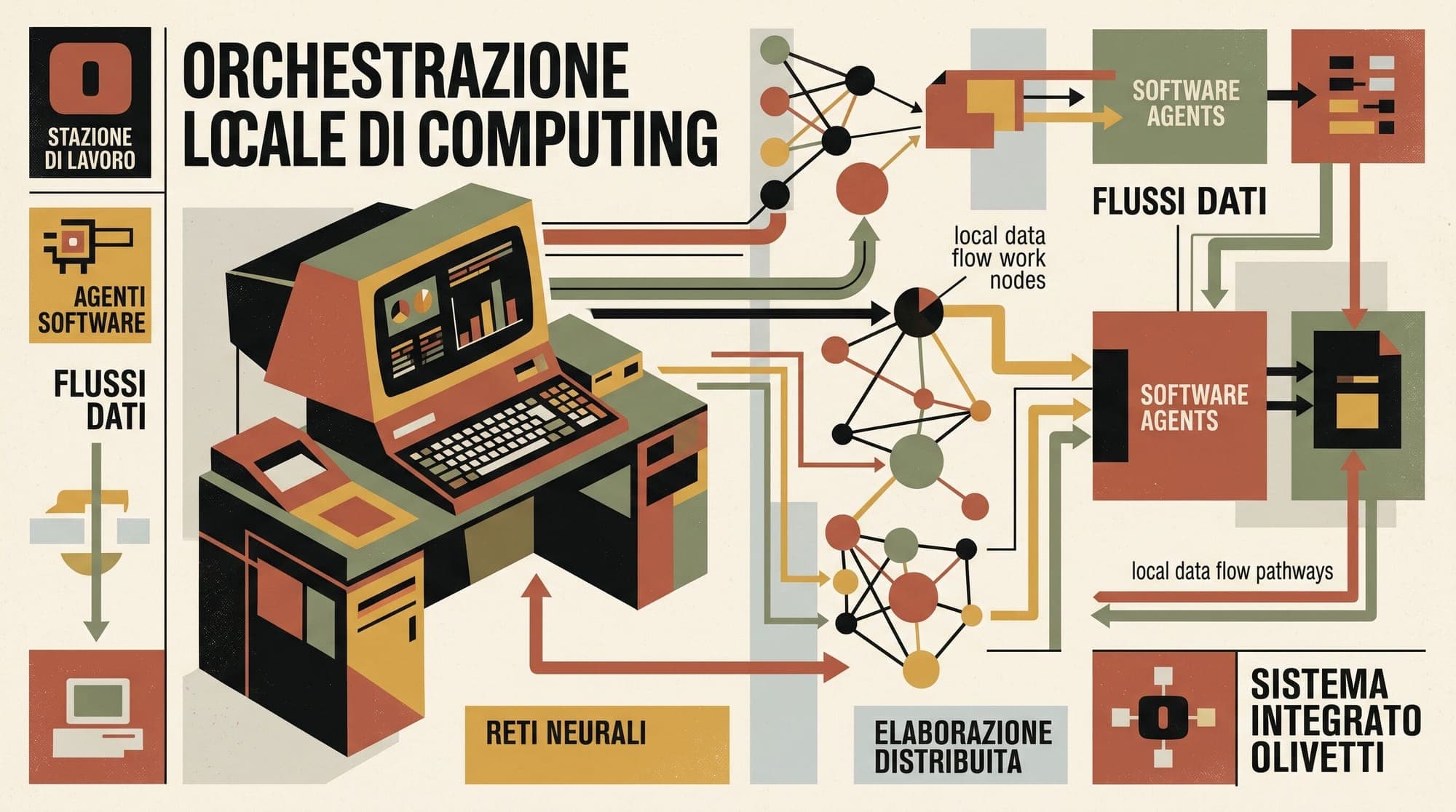
Portable Computer is designed to execute multi-step knowledge work, such as reviewing document folders, analyzing datasets, and pushing results to external endpoints, entirely within the local machine boundary. Because inference runs on local silicon, the billing credit meter remains at zero for on-device operations.
At launch, the platform supports Qwen 3.8 27B as well as PPLX 27B, an in-house post-trained variant tuned specifically for agentic execution. Nvidia's Nemotron 3.5 Lightning is scheduled to follow in an upcoming update.

The application incorporates a hybrid escalation mechanism. If a local model encounters task complexity beyond its capacity, the system can escalate sub-tasks to cloud-hosted frontier models, such as Claude Opus 5. Before dispatching any request off-device, the harness runs an automated PII detector and presents an explicit confirmation dialog detailing what text will leave the local environment.
Agent Harness Co-Design
Alongside the product release, Perplexity published a research paper examining the performance dynamics of smaller models running in agent loops. The paper argues that standard agent frameworks designed for large frontier models overburden smaller local weights with excessively broad tool sets and bloated system prompts.
To address context degradation, Perplexity implemented several harness-level architectural constraints:
- Compact Tooling: Replaced verbose Model Context Protocol servers with lightweight command-line interfaces to reduce prompt overhead.
- Dynamic Skill Loading: Capabilities are loaded into the active context only when required for a specific sub-task rather than remaining persistent.
- Mandatory Sandboxing: An OS-level execution sandbox is enforced by default; the harness automatically disables execution if sandbox isolation cannot be verified.
On Perplexity's internal 53-task Local Knowledge Work Bench evaluation, Portable Computer paired with Qwen 3.8 27B reached an 82.6 percent success rate, compared to 77.6 percent on the Pi harness and 74.0 percent on Hermes. The post-trained PPLX 27B reached 85.4 percent. On the Terminal Bench 2.1 coding benchmark, the standalone local Qwen model scored 59.6 percent, while hybrid escalation to an external advisor model raised the score to 73.0 percent at an estimated operational cost of $0.415 per task.
Token Economics and Privacy Boundaries
The launch highlights a broader shift toward localizing continuous agent workloads. While interactive conversational chat generates intermittent API traffic, autonomous agents can execute thousands of inference cycles while inspecting files and iterating through tool calls.
By moving standard execution loops onto local GPU hardware, enterprises and developers eliminate variable token billing while ensuring sensitive documents, financial data, and source code do not leave the host infrastructure.