Pathway Secures 0M Seed at 00M Valuation to Scale BDH Post-Transformer Architecture

AI research company Pathway has secured additional capital at a $500 million valuation, bringing its total seed funding to $30 million. The company is developing a post-Transformer architecture dubbed Baby Dragon Hatchling (BDH) designed to combine continuous in-weights adaptation, long-horizon reasoning, and memory within neural representations without relying on expanding KV caches or external retrieval pipelines. The BDH Post-Transformer Architecture Standard Transformer architectures suff

2 min
Pathway Secures 0M Seed at 00M Valuation to Scale BDH Post-Transformer Architecture

AI research company Pathway has secured additional capital at a $500 million valuation, bringing its total seed funding to $30 million. The company is developing a post-Transformer architecture dubbed Baby Dragon Hatchling (BDH) designed to combine continuous in-weights adaptation, long-horizon reasoning, and memory within neural representations without relying on expanding KV caches or external retrieval pipelines.

BDH Post-Transformer Architecture: Linear Attention and Internal Dynamic Memory

The BDH Post-Transformer Architecture

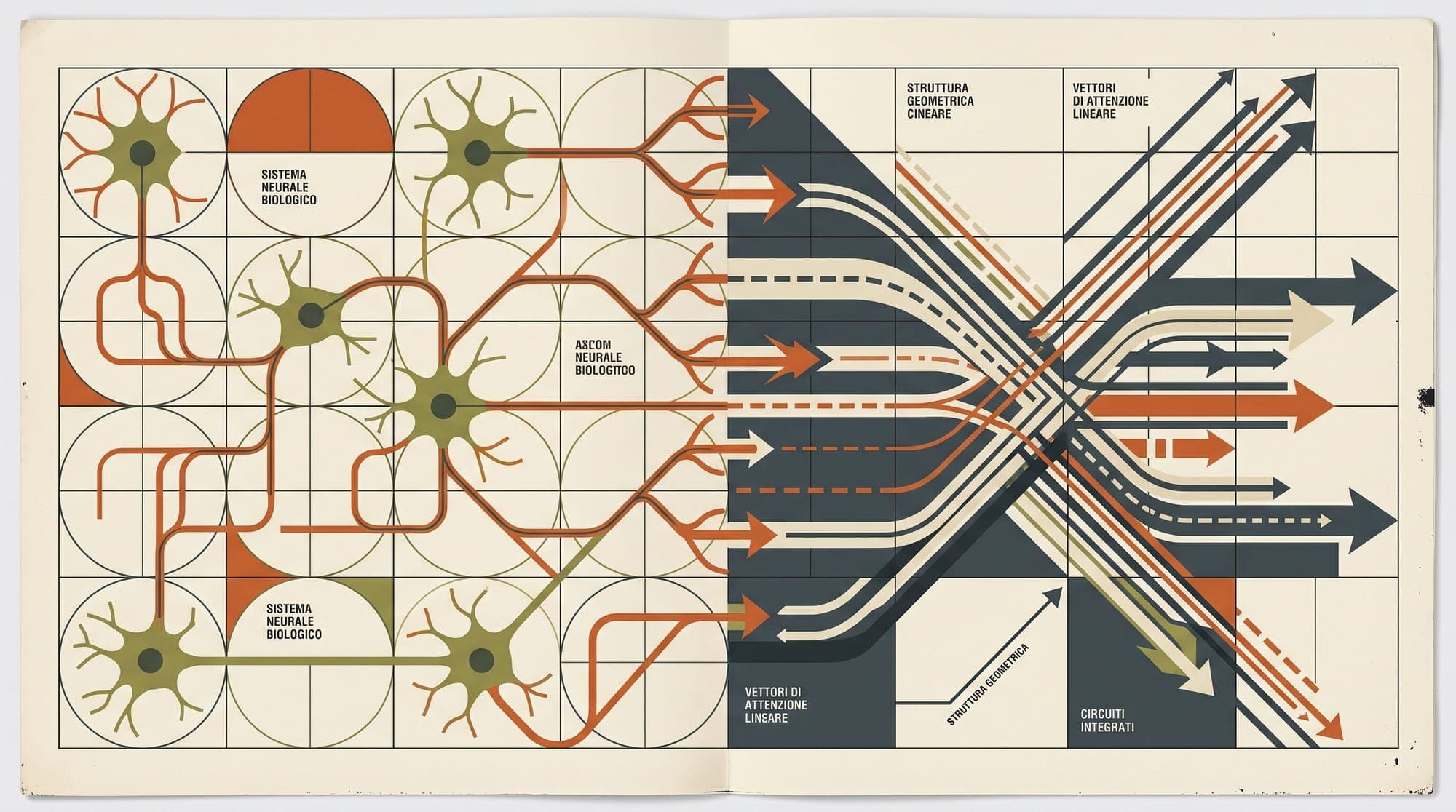
Standard Transformer architectures suffer from quadratic attention complexity relative to sequence length and separate context retention from model parameter weights. In contrast, Pathway's BDH architecture connects linear attention mechanisms with sparse key-query vectors and biologically inspired dynamic neural circuits.

According to Pathway, BDH scales contextual reasoning as a function of the model's active neuron capacity rather than a static sequence window limit. By maintaining internal state continuity, the architecture aims to support:

  1. Continuous In-Context Adaptation: The model modifies internal activation dynamics and state trajectories during runtime without requiring standard gradient fine-tuning.
  2. Linear Attention Scaling: Replacing standard O(N2)O(N^2) softmax attention matrices with linear time-complexity mechanisms reduces memory bandwidth bottlenecks during inference.
  3. Internal Temporal Reasoning: Integrating memory directly into the network dynamics enables long-horizon multi-month enterprise business processes—such as continuous quarterly financial reconciliations—without ballooning KV cache memory footprints.

Compute Partnership and Enterprise Deployment

Pathway developed and trained BDH in partnership with Amazon Web Services (AWS), utilizing Amazon SageMaker HyperPod for distributed compute and cluster orchestration.

Alongside the foundation model architecture, the startup maintains the Pathway Framework—an open-source Python engine optimized for stream processing, real-time ETL, and streaming RAG pipelines. The new funding will support increasing BDH parameter scale and training broader models targeting mathematical reasoning and benchmarks such as ARC-AGI-2 and ARC-AGI-3.


Sources

Written by

More to read

  • Anthropic Bankers Pitch 00B+ Capital Raise at T Valuation Ahead of Historic IPO

    Investment banks underwriting Anthropic's planned initial public offering have initiated preliminary discussions with institutional investors and sovereign wealth funds, outlining a potential capital raise exceeding $100 billion at a valuation of up to $2 trillion, according to reporting from The New York Times. If executed at those terms, the flotation would represent the largest public market debut in history, surpassing both Saudi Aramco's $29.4 billion raise in 2019 and SpaceX's $75 billion

    1 min
  • Amazon Hikes Hardware Prices Across Echo, Fire TV, Kindle, and Eero Over AI-Driven Memory Costs

    Amazon has quietly increased retail prices across its first-party consumer hardware lines, raising MSRPs on Echo smart speakers, Fire TV streaming devices, Kindle e-readers, and Eero mesh networking systems to offset rising component costs for memory and storage. The price adjustments reflect how the enterprise artificial intelligence infrastructure buildout is impacting consumer electronics supply chains. Surging hyperscaler demand for high-bandwidth memory (HBM3e and HBM4) alongside high-dens

    1 min
  • Cross-Encoder Rerankers in Production RAG: Architecture, Score Calibration, Latency Budgets, and Model Trade-Offs

    Retrieval-Augmented Generation (RAG) systems in production frequently suffer from a fundamental precision failure: vector search surfaces the correct chunk somewhere in the top 50 candidates, but fails to place it in the top 3 positions required for high-fidelity LLM synthesis. When irrelevant or tangential chunks lead the context window, generation quality degrades through hallucinations, lost-in-the-middle context neglect, and inflated inference costs. Cross-encoder rerankers serve as the sta

    1 min