OpenAI Adds Apple Messages Integration to ChatGPT Desktop on macOS

OpenAI has released an official Apple Messages plugin for the ChatGPT desktop application on macOS, enabling the conversational model to interact directly with local message databases across all subscriber tiers, including ChatGPT Work and Codex workspaces. The integration allows users to query past text records, generate draft responses, and dispatch outgoing iMessage, SMS, and RCS communications directly from the ChatGPT desktop interface. Architecture and Local Execution Unlike cloud-brid

1 min
OpenAI Adds Apple Messages Integration to ChatGPT Desktop on macOS

OpenAI has released an official Apple Messages plugin for the ChatGPT desktop application on macOS, enabling the conversational model to interact directly with local message databases across all subscriber tiers, including ChatGPT Work and Codex workspaces.

The integration allows users to query past text records, generate draft responses, and dispatch outgoing iMessage, SMS, and RCS communications directly from the ChatGPT desktop interface.

Architecture and Local Execution

Unlike cloud-bridged messaging connectors that ingest conversation histories into remote databases, the Apple Messages plugin operates entirely on the local host machine. According to OpenAI, the plugin interfaces with the native macOS Messages SQLite store directly on device and does not generate an off-premises index of a user's messaging logs.

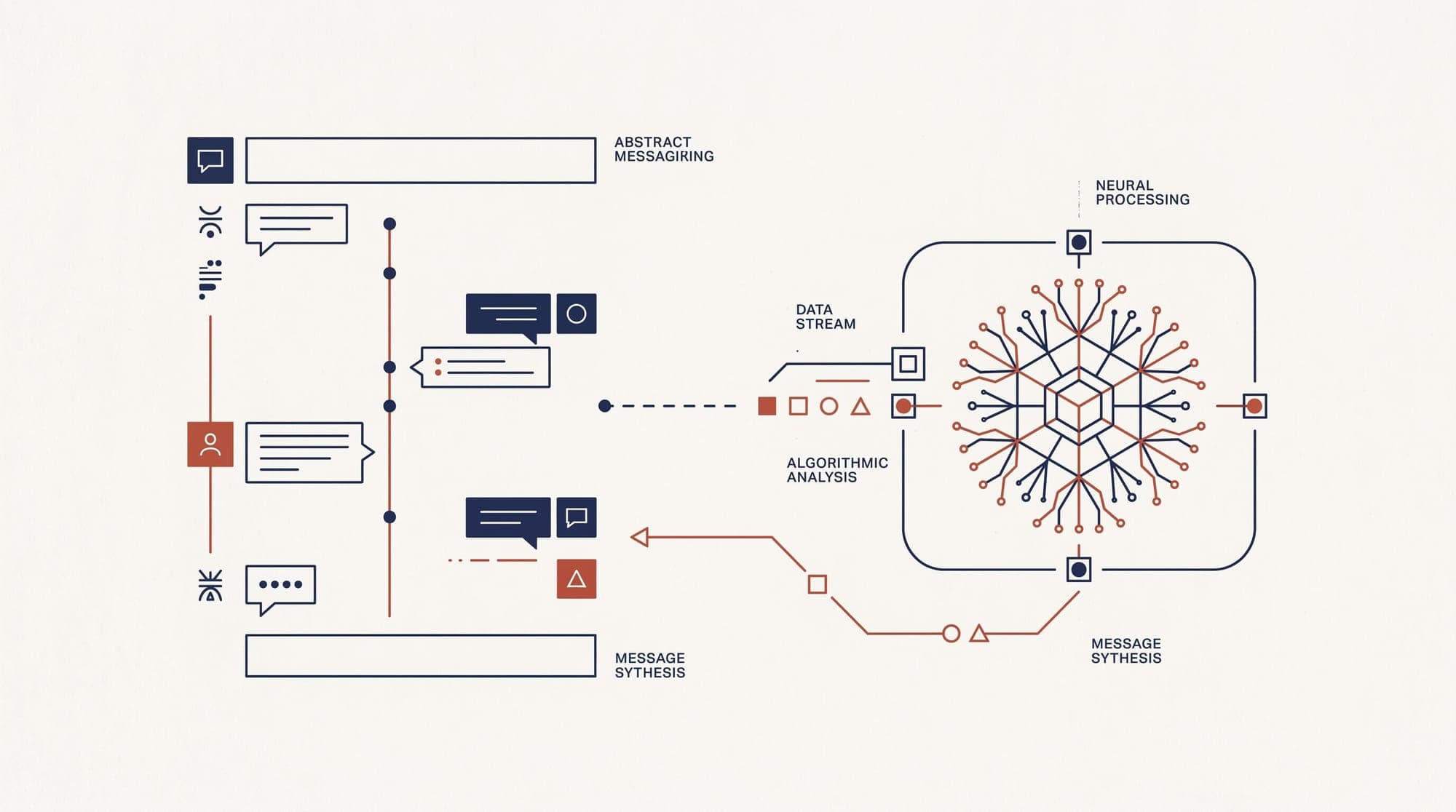
Local desktop message filtering and verification gateway

The tool acts strictly as a client-side execution endpoint. It cannot be queried remotely through an incoming iMessage to trigger background model runs; all interactions must originate from an active ChatGPT desktop, Codex, or ChatGPT Work session.

Permission Boundaries and Task Automation

To prevent unauthorized message transmission, the integration defaults to explicit per-action confirmation prompts. Every drafted dispatch requires active user approval before the native application sends the text.

However, OpenAI provides configuration flags for persistent approval, allowing automated workflows to send messages autonomously. The documentation notes specific caveats regarding background tasks where suppressed confirmation prompts remove the manual inspection barrier before outbound messages reach contacts.

Users can revoke database access or reset plugin permissions directly within the macOS application settings at any point.


Sources

Written by

More to read

  • OpenAI Consolidates Product Leadership Under Greg Brockman, Merging ChatGPT and Codex Teams

    OpenAI has executed an internal restructuring that consolidates its core product lines, engineering scaling, and commercial deployment under co-founder and President Greg Brockman. The reorganization merges the teams behind ChatGPT, the Codex coding agent, and developer APIs into a single unified product division. The move flattens decision-making hierarchies across the company as it prepares for an eventual initial public offering and responds to mounting enterprise competition from Anthropic

    1 min
  • Grammar-Constrained Decoding in Production: Finite State Automata, Pushdown Parsers, and Asynchronous Bitmasking

    Autoregressive language models generate text by sampling from a probability distribution over a discrete vocabulary at each step. While unconstrained sampling succeeds across open-ended text tasks, it offers no syntactic guarantees when producing machine-readable formats such as JSON, SQL, or structured tool calls. In automated agent loops, a single missing quotation mark, unbalanced bracket, or unescaped control character breaks downstream parser execution, forcing expensive retry round-trips.

    1 min
  • No Positional Embeddings (NoPE): How Causal Masking and Attention Geometry Encode Sequence Order

    A foundational tenet of the Transformer architecture established by Vaswani et al. (2017) is permutation equivariance. Because standard self-attention calculates token interactions purely through pairwise dot products across sets of vectors, shuffling the order of input tokens yields identical outputs up to the corresponding permutation. To establish word order, standard transformer models inject explicit positional information, ranging from learned absolute position embeddings (APE) to sinusoid

    1 min

