Meta Releases Pocket in the US for Prompt-Based Game Generation

Meta has released Pocket in the United States, expanding access to an experimental mobile application designed to generate and share lightweight interactive games through natural language prompting. The app first launched as a regional test in Brazil in late June 2026 before receiving its broader version 26.0 update on August 20, 2026. Pocket represents the product integration of Meta's earlier acquisition of the startup Atma Sciences, the original developers behind the Gizmo mobile platform.

2 min
Meta Releases Pocket in the US for Prompt-Based Game Generation

Meta has released Pocket in the United States, expanding access to an experimental mobile application designed to generate and share lightweight interactive games through natural language prompting.

The app first launched as a regional test in Brazil in late June 2026 before receiving its broader version 26.0 update on August 20, 2026. Pocket represents the product integration of Meta's earlier acquisition of the startup Atma Sciences, the original developers behind the Gizmo mobile platform.

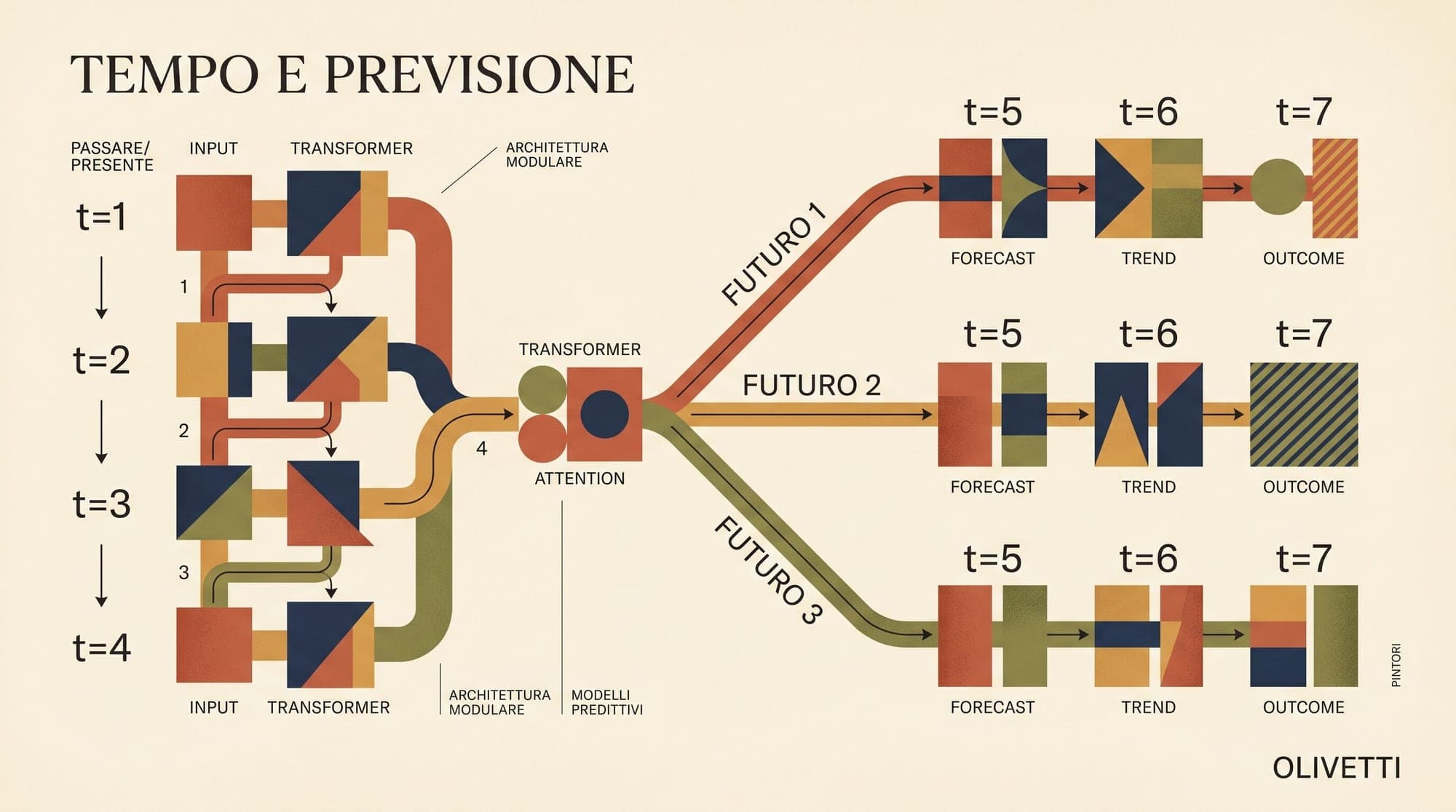
Pocket Interactive Generation Architecture

Mechanics and Content Generation

Pocket allows users to generate interactive software artifacts termed "gizmos" by entering text descriptions. The application compiles these prompts into playable formats that support several mobile hardware primitives:

  • Touch interactions including tapping, swiping, and dragging.
  • Device sensor telemetry, enabling control via phone tilting and shaking.
  • Audio synthesis, background sound effects, and integrated licensed music snippets.
  • Optional device permissions allowing the integration of camera feeds, microphone input, and stored photos.

Creators can modify generated experiences using an integrated editor before publishing to a shared feed. Published gizmos support public playback, sharing via external web links that do not require an app install, and remixing. According to Meta's documentation, remix permissions are enabled by default; once created, derivative remixes persist independently even if the creator deletes the source post.

Standalone App Strategy

Pocket joins a series of targeted mobile applications released by Meta over recent quarters, including Instagram Instants, the Forum discussion app, and the Seller marketplace client. During the company's July earnings call, CEO Mark Zuckerberg noted that internal adoption of AI coding workflows has reduced the engineering overhead required to assemble, test, and ship specialized experimental clients.

User data collected through Pocket, including interaction patterns, profile interests, and device sensor data, is utilized to train Meta's foundation models and feed recommendation algorithms across the company's broader advertising network.

Sources

Written by

More to read

  • Retrieval-Augmented Fine-Tuning (RAFT) in Production: Architecture, Synthetic Distractor Pipelines, and Evaluation

    Standard approaches to enterprise domain adaptation typically force a choice between two paradigms: Supervised Fine-Tuning (SFT) or Retrieval-Augmented Generation (RAG). SFT bakes domain knowledge directly into model weights, functioning like a closed-book exam. When facts change or precise source attribution is required, SFT models often hallucinate or fail to incorporate updated context. Conversely, standard RAG operates like an open-book exam without prior preparation. The base model reads re

    1 min
  • The Information Bottleneck in Deep Learning: How Mutual Information Compression Shapes Generalization and Neural Representations

    The Information Bottleneck in Deep Learning: How Mutual Information Compression Shapes Generalization and Neural Representations Classical statistical learning theory struggles to explain why overparameterized deep neural networks generalize well to unseen test data. Traditional complexity measures such as Vapnik-Chervonenkis (VC) dimension and Rademacher complexity scale with the raw count of tunable weights, predicting severe overfitting when parameter counts exceed dataset sample sizes. Yet

    1 min
  • Fine-Tuning vs. RAG in Production: Knowledge Injection, Task Adaptation, Latency Economics, and Hybrid Architecture Trade-Offs

    Fine-Tuning vs. RAG in Production: Knowledge Injection, Task Adaptation, Latency Economics, and Hybrid Architecture Trade-Offs When adapting large language models to domain-specific enterprise workloads, engineering teams face a fundamental architectural choice: modify the model's parametric weights via fine-tuning, or supply dynamic context at inference time via Retrieval-Augmented Generation (RAG). While early discussions often framed this decision as a binary trade-off, empirical evaluation

    1 min