Meta Ships Muse Code Coding Agent and Muse Spark 1.2 Model

Meta released Muse Code, a terminal-based coding agent, alongside Muse Spark 1.2, the model that powers it. The pair was co-trained to perform best together, with Muse Spark 1.2 showing significant gains on coding benchmarks compared to its predecessor. Muse Code runs as a command-line agent that handles multi-file software engineering tasks. It uses persistent background subagents that stay active across a session rather than spawning fresh for each task, which Meta says reduces latency on com

2 min
Meta Ships Muse Code Coding Agent and Muse Spark 1.2 Model

Meta released Muse Code, a terminal-based coding agent, alongside Muse Spark 1.2, the model that powers it. The pair was co-trained to perform best together, with Muse Spark 1.2 showing significant gains on coding benchmarks compared to its predecessor.

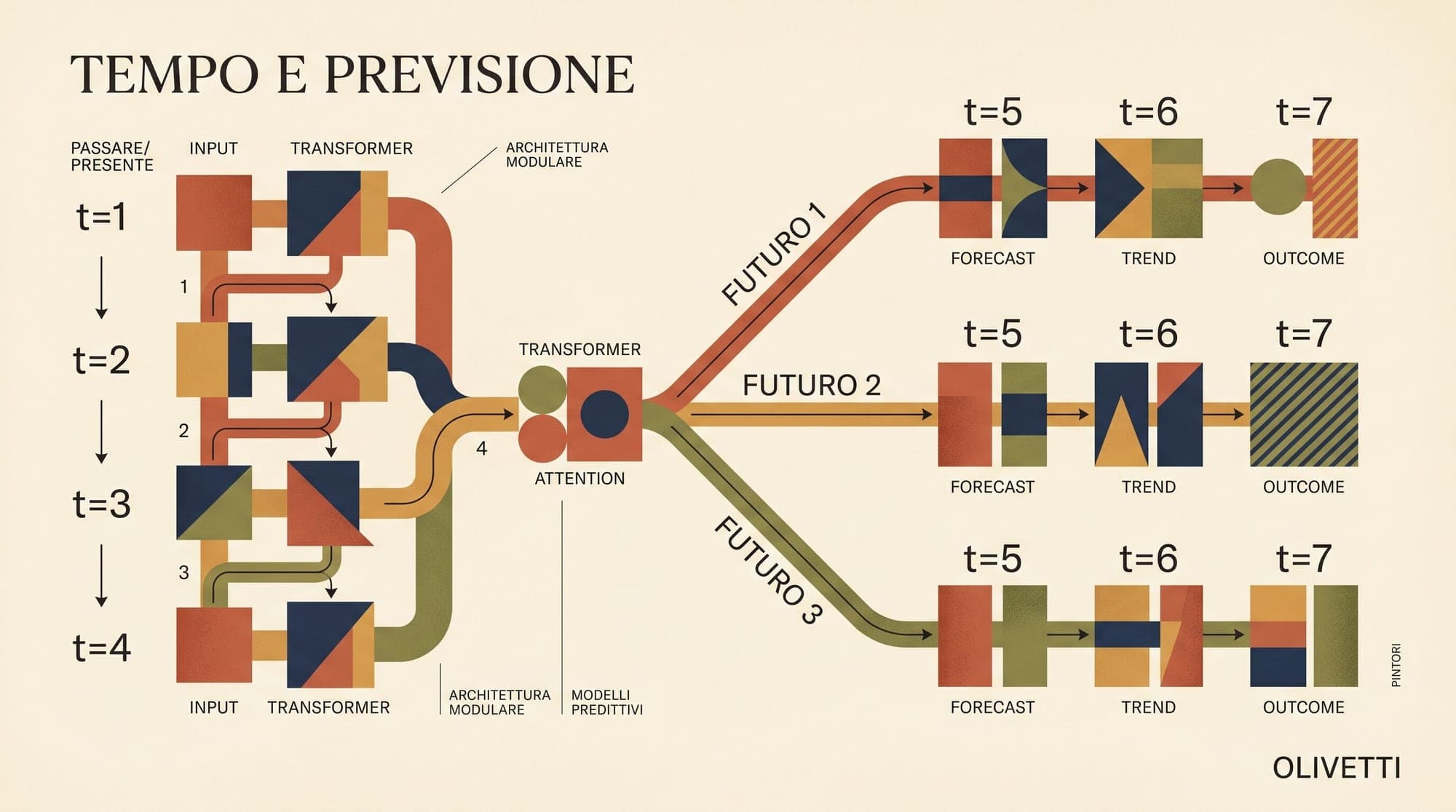
Muse Code runs as a command-line agent that handles multi-file software engineering tasks. It uses persistent background subagents that stay active across a session rather than spawning fresh for each task, which Meta says reduces latency on complex multi-step work. Every model call, tool run, approval, and edit is recorded in a local event log, making the runtime replay-exact and restart-safe after crashes.

The agent ships with several bundled commands: /plan produces an approval-gated plan for a task, /grill stress-tests that plan, and /goal drives toward completion of a specified objective.

Muse Spark 1.2 is a coding-focused update to Muse Spark 1.1. Meta scaled up training compute on coding tasks and expanded training environment diversity. The model was trained on long-horizon coding work including whole-repository generation, large end-to-end projects, and auto-research. It also used a self-improvement loop: Muse Spark 1.1 generated challenging coding environments and graded candidate solutions, producing training data that helped Spark 1.2 follow complex instructions more precisely.

On Terminal-Bench 2.1 and DeepSWE 1.1, Muse Spark 1.2 scores competitively with frontier coding models. Meta also published a case study showing the agent iteratively optimizing GPU kernels (KDA and MLA, on NVIDIA Hopper GPUs) over more than 1,000 tool calls spanning up to 24 hours, with substantial speedup over baseline implementations.

Pricing: Standard and Contributor Tiers

Pricing follows a two-tier model. The standard tier costs $1.25 per million input tokens and $4.25 per million output tokens, roughly in line with Gemini 3.6 Flash. Users who opt into letting Meta use their data for product improvement get the contributor tier at $0.10 per million input and $0.20 per million output, a roughly 12x discount that undercuts even GPT-5.6 Luna.

Muse Spark 1.2 standard vs contributor pricing comparison - 12x difference for data sharing

Muse Code is available now for macOS and Linux. Muse Spark 1.2 is accessible through the Muse Code CLI and the Meta Model API.

Sources

Meta AI Research: Introducing Muse Code and Muse Spark 1.2 — https://research.meta.ai/blog/introducing-muse-code-and-muse-spark-1-2

Simon Willison: Introducing Muse Code and Muse Spark 1.2 — https://simonwillison.net/2026/Aug/5/muse-code-and-muse-spark-12/

Written by

More to read

  • Listwise Reranking in Production: Comparing Pointwise, Pairwise, and Listwise LLM Architectures, Sliding-Window Permutations, and Serving Economics

    Information retrieval systems in production Retrieval-Augmented Generation (RAG) and enterprise search have transitioned through multiple reranking paradigms. While first-stage retrieval (dense vector embeddings and sparse lexical BM25/SPLADE) retrieves candidate sets of 50 to 200 documents in under 20 milliseconds, the precision of downstream generation depends heavily on the reranking stage. Traditional neural rerankers evaluate candidates through pointwise scoring or pairwise classification.

    1 min
  • The Lottery Ticket Hypothesis in Large Language Models: How Sparse Subnetworks and Iterative Magnitude Pruning Retain Transformer Capacity

    The Lottery Ticket Hypothesis in Large Language Models: How Sparse Subnetworks and Iterative Magnitude Pruning Retain Transformer Capacity Modern large language models operate under extreme overparameterization. Frontier architectures allocate tens or hundreds of billions of parameters to achieve low perplexity and robust generalization across reasoning, code generation, and factual retrieval. Yet empirical pruning consistently demonstrates that post-training models can lose 30% to 50% of their

    1 min
  • Enterprises Curb AI Agent Autonomy Amid 40% Project Cancellation Projections

    Enterprises deploying agentic artificial intelligence are shifting architectures away from open-ended autonomy toward bounded, verifiable execution as projects encounter governance, security, and financial bottlenecks in production environments. Data from industry research firms highlights a widening divergence between model capability and operational control. According to projections from Gartner, more than 40% of current agentic AI initiatives are projected to be canceled by the end of 2027.

    1 min