Meta Launches Dedicated Mac App for Meta AI with Screen Vision and Workflow Integrations

Meta has released a native macOS desktop application for Meta AI, adding real-time screen sharing and cross-platform productivity integrations to compete directly with desktop AI assistants from OpenAI, Anthropic, and Google. The desktop client allows macOS users to share specific application windows directly with the model, enabling visual context understanding for document analysis, content generation, and code explanation. The application also introduces system-wide voice dictation across ma

1 min
Meta Launches Dedicated Mac App for Meta AI with Screen Vision and Workflow Integrations

Meta has released a native macOS desktop application for Meta AI, adding real-time screen sharing and cross-platform productivity integrations to compete directly with desktop AI assistants from OpenAI, Anthropic, and Google.

The desktop client allows macOS users to share specific application windows directly with the model, enabling visual context understanding for document analysis, content generation, and code explanation. The application also introduces system-wide voice dictation across macOS apps.

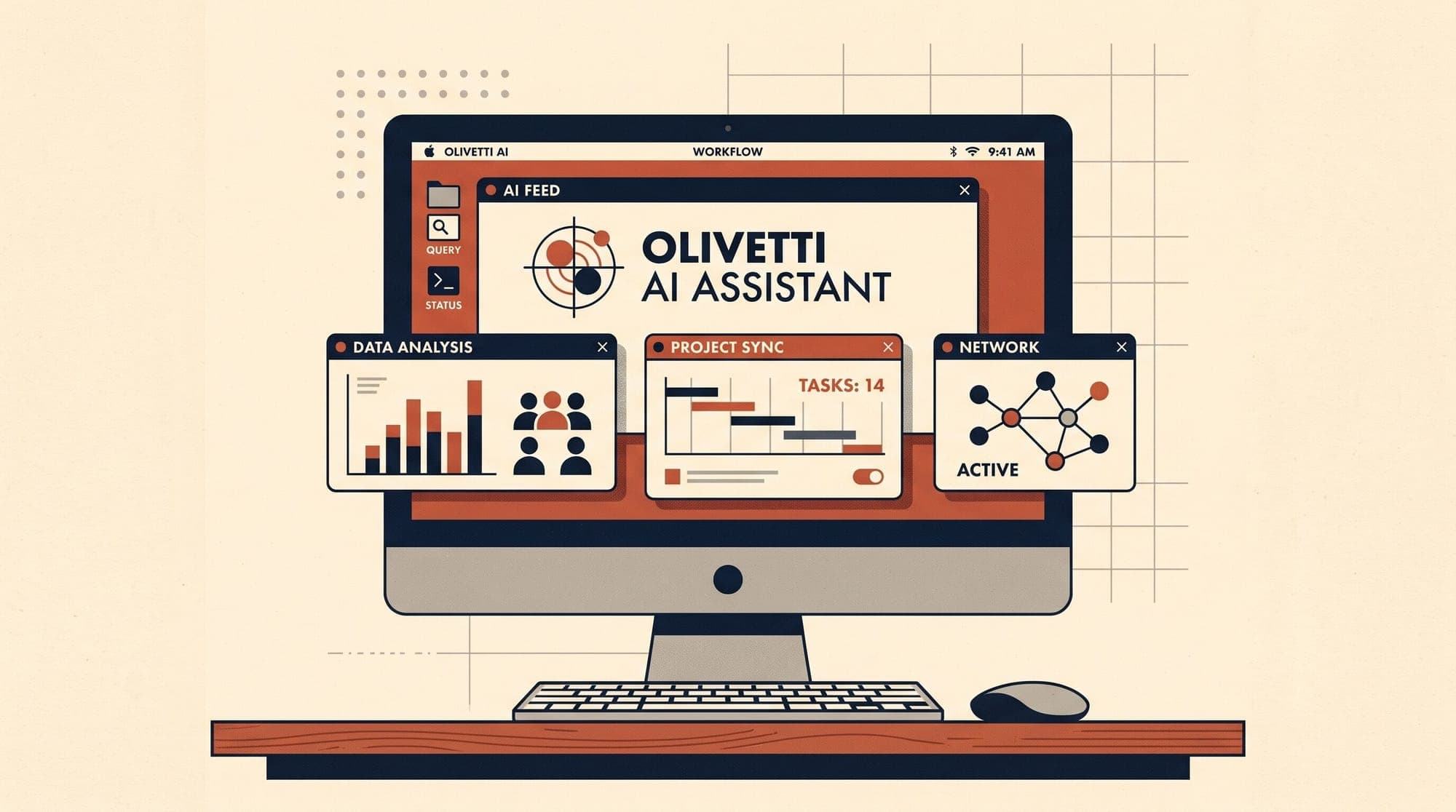
Meta AI macOS Desktop Architecture and Window Sharing Context

Contextual Vision and Desktop Capabilities

The new macOS client brings several core workflow capabilities:

  • Window Context Sharing: Users can select active application windows to provide visual context directly to the model. The assistant can extract data, answer queries about on-screen material, and assist in drafting without manual copy-pasting.
  • System-Wide Dictation: Integrated voice input supports speech-to-text transcription directly into third-party desktop applications.
  • Workspace and Account Integrations: The desktop client links directly with Google Workspace (Docs, Sheets, Slides) as well as Meta-native creator and business tools, including Instagram, Facebook accounts, and Meta Ads Manager.
  • Automated Business Reporting: Meta added capabilities for the assistant to query social metrics, generate structured presentation decks, build spreadsheets, and schedule recurring performance summaries.

The release brings Meta into closer competition with macOS desktop implementations from OpenAI (ChatGPT with desktop integration), Anthropic (Claude Code and Cowork), and Google (Gemini desktop client).

Sources

Written by

More to read

  • The Curse of Multilinguality in Large Language Models: Capacity Dilution, Tokenizer Fertility, and Representation Interference

    The Curse of Multilinguality in Large Language Models: Capacity Dilution, Tokenizer Fertility, and Representation Interference Training a single transformer foundation model to process dozens or hundreds of languages is one of the central goals of modern natural language processing. In theory, massive multilingual pre-training unlocks positive cross-lingual transfer: low-resource languages gain syntactic, factual, and reasoning capabilities from the rich supervision available in high-resource l

    1 min
  • LLM Load Shedding and Overload Control in Production: Adaptive Admission, Preemption Economics, and Graceful Degradation

    LLM Load Shedding and Overload Control in Production: Adaptive Admission, Preemption Economics, and Graceful Degradation Standard web services rely on well-established overload protection patterns: reverse proxies monitor CPU utilization, memory thresholds, or static queue depths and reject excess HTTP requests with 429 Too Many Requests or 503 Service Unavailable status codes. When applied naively to Large Language Model (LLM) serving infrastructure, these conventional heuristics fail catastro

    1 min
  • Reward Model Overoptimization in Large Language Models: How Goodhart's Law, Proxy Exploitation, and KL Drift Degrade Alignment

    Post-training alignment of large language models relies on optimizing a policy toward objectives defined by human intent and preferences. Because querying human evaluators during every step of continuous reinforcement learning or high-throughput rejection sampling is computationally and logistically infeasible, alignment workflows construct a parameterised proxy reward model. Trained on pairwise preference datasets through formulations such as the Bradley-Terry model, this proxy acts as a surrog

    1 min