Meta Emerges as Major Microsoft Azure AI Customer with Multi-Hundred-Million-Dollar Spend

Meta Platforms has emerged as one of Microsoft Azure's largest artificial intelligence customers, spending hundreds of millions of dollars annually to access hosted AI models and inference compute, according to reporting by Bloomberg. The multi-hundred-million-dollar commitment underscores how current commercial demand for large-scale AI infrastructure remains intensely concentrated among frontier technology companies themselves. Bridging Internal Compute Gaps with Third-Party Infrastructure

2 min
Meta Emerges as Major Microsoft Azure AI Customer with Multi-Hundred-Million-Dollar Spend

Meta Platforms has emerged as one of Microsoft Azure's largest artificial intelligence customers, spending hundreds of millions of dollars annually to access hosted AI models and inference compute, according to reporting by Bloomberg.

The multi-hundred-million-dollar commitment underscores how current commercial demand for large-scale AI infrastructure remains intensely concentrated among frontier technology companies themselves.

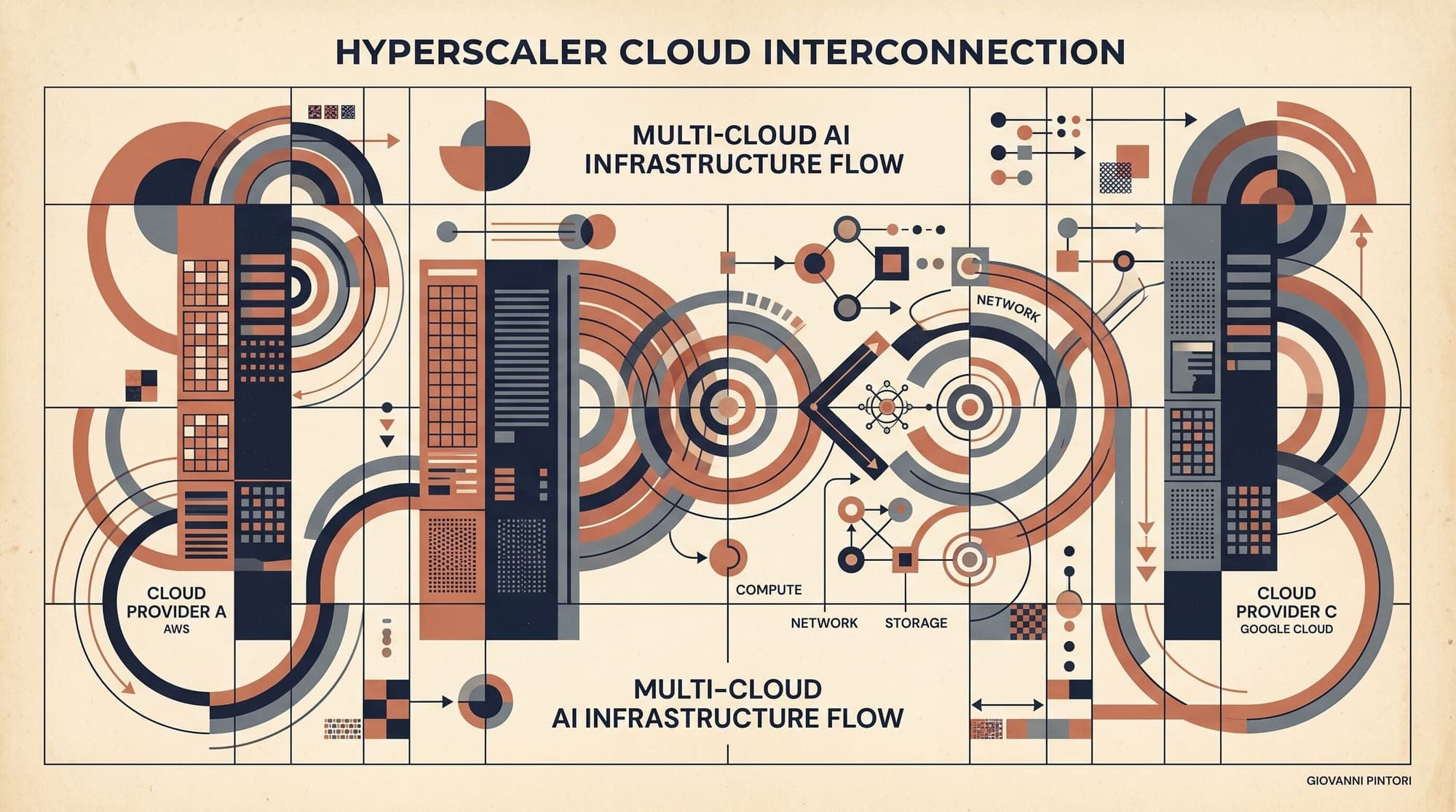
Meta Azure AI Compute Infrastructure Interconnection

Bridging Internal Compute Gaps with Third-Party Infrastructure

Meta has invested tens of billions of dollars into its own internal data center footprint, custom MTIA (Meta Training and Inference Accelerator) silicon, and large-scale Nvidia GPU clusters to power its open-weight Llama model family and social recommendation algorithms.

However, the scale of Meta user-facing AI features across Instagram, WhatsApp, and Facebook, alongside internal research workloads, has outpaced its immediately available on-premises serving capacity. To meet the token demand of hundreds of millions of daily active users interacting with Meta AI assistants, the company has increasingly turned to Microsoft Azure to host models and absorb inference traffic.

Revenue Concentration in Hyperscaler AI Stacks

The commercial arrangement highlights key dynamics across the cloud infrastructure ecosystem:

  • Hyperscaler Interdependence: Despite competing directly across software, virtual reality, and enterprise workplace tooling, major tech incumbents increasingly rely on rival cloud providers to manage elastic capacity spikes.
  • Inference Revenue Driver: While foundational model training demands dedicated cluster allocations, ongoing inference at consumer scale accounts for the bulk of recurring cloud spend.
  • Concentrated Capital Flows: A substantial portion of reported AI cloud growth continues to circulate within a small circle of technology giants cross-licensing compute, models, and platform access.

Microsoft has positioned Azure AI as a multi-model aggregation layer, hosting frontier closed models from OpenAI as well as open weights including Meta Llama and Mistral models. For Meta, offloading portion of its serving workloads to Azure provides immediate capacity buffering while the company expands its own proprietary data center projects.


Sources

Written by

More to read

  • Binary Quantization and Matryoshka Embeddings in Production: Two-Stage Rescoring, Hamming Distance Acceleration, and Vector Storage Economics

    Production vector search workloads face a severe memory scaling bottleneck. In retrieval-augmented generation (RAG) and semantic search architectures, indexing tens of millions of high-dimensional embeddings in raw 32-bit floating-point (FP32) format exhausts memory capacity and drives up infrastructure costs. Indexing 100 million 1536-dimensional vectors requires 614.4 GB of RAM purely for vector payloads, before accounting for graph edges and memory fragmentation in Approximate Nearest Neighbo

    1 min
  • In-Context Learning as Implicit Gradient Descent: How Transformers Optimize Models in Forward Activations

    When large language models (LLMs) adapt to new tasks from a handful of prompt demonstrations, their static weights remain completely untouched. No backpropagation runs through the network, no optimizer updates parameters, and no gradients are calculated. Yet, the model’s predictions improve steadily as more input-output examples are added to the prompt context. For years, this phenomenon (known as in-context learning, or ICL) was treated as an empirical black box. Recent theoretical and mechani

    1 min
  • OpenAI Consolidates Product Leadership Under Greg Brockman, Merging ChatGPT and Codex Teams

    OpenAI has executed an internal restructuring that consolidates its core product lines, engineering scaling, and commercial deployment under co-founder and President Greg Brockman. The reorganization merges the teams behind ChatGPT, the Codex coding agent, and developer APIs into a single unified product division. The move flattens decision-making hierarchies across the company as it prepares for an eventual initial public offering and responds to mounting enterprise competition from Anthropic

    1 min