Instinct AI Assistant Faces Scrutiny Over Data Training Terms and Autonomous Transaction Permissions

Instinct, an autonomous personal AI assistant currently in private beta, has drawn scrutiny across the developer and security community regarding its data collection policies and broad operational permissions. The service is developed by San Francisco-based Spear Street Technology Inc., led by former Sierra research scientist and Reflexion paper co-author Noah Shinn. Operating via SMS and WhatsApp interfaces, Instinct executes multi-step personal workflows by directly interfacing with user devi

2 min
Instinct AI Assistant Faces Scrutiny Over Data Training Terms and Autonomous Transaction Permissions

Instinct, an autonomous personal AI assistant currently in private beta, has drawn scrutiny across the developer and security community regarding its data collection policies and broad operational permissions.

The service is developed by San Francisco-based Spear Street Technology Inc., led by former Sierra research scientist and Reflexion paper co-author Noah Shinn. Operating via SMS and WhatsApp interfaces, Instinct executes multi-step personal workflows by directly interfacing with user devices and third-party services.

System Integration and Autonomous Execution

Unlike standard conversational interfaces, Instinct requires deep access to connected devices and application accounts. The assistant is designed to handle tasks such as inbox management, travel bookings, calendar coordination, and local file organization.

To achieve this level of execution, the agent's architecture integrates:

  • Full read and write access to personal email, messaging platforms, and calendar services.
  • Real-time monitoring of device peripherals, including screen captures, keyboard inputs, cursor coordinates, and audio streams.
  • Autonomous execution hooks capable of scheduling rides, placing retail orders, and confirming travel reservations.
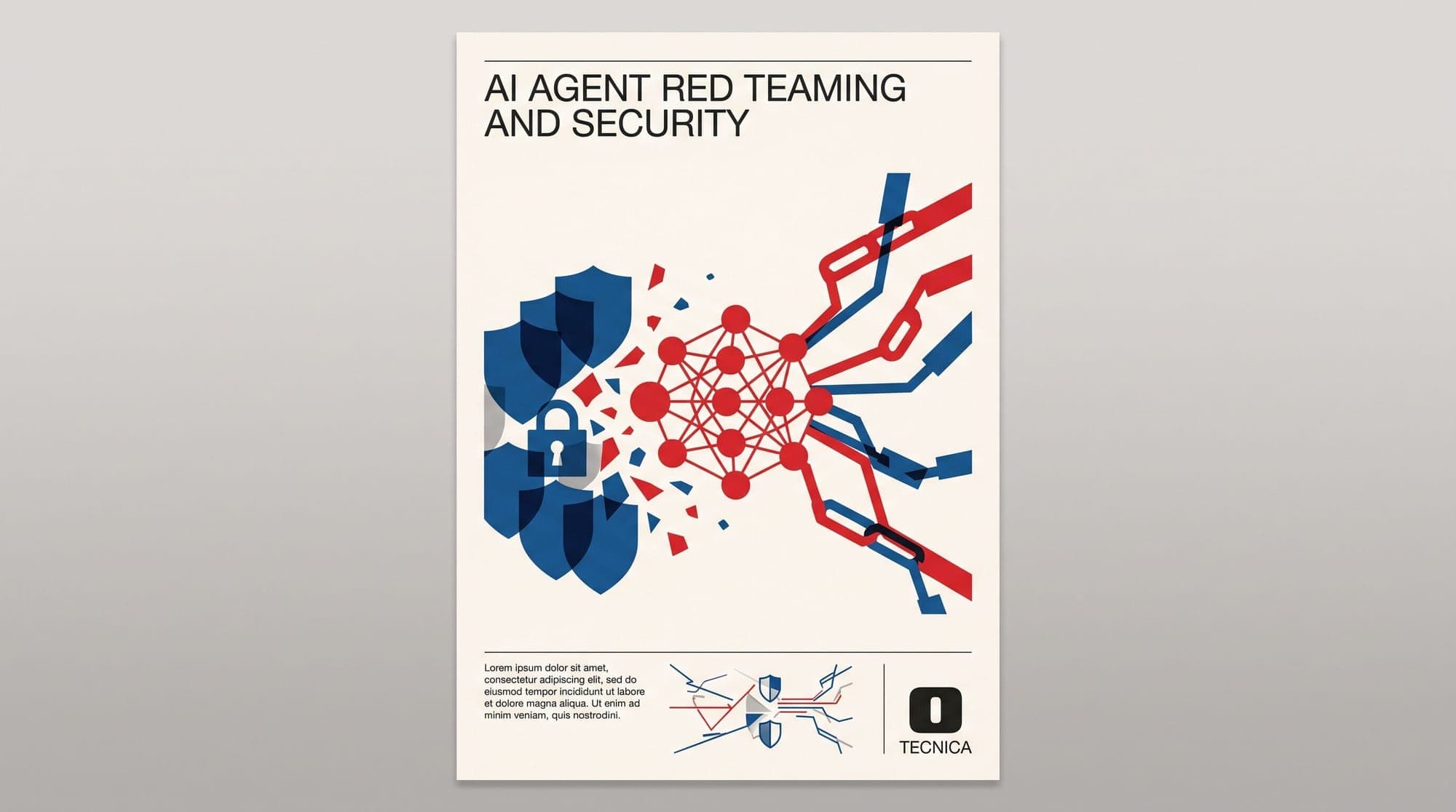
AI Agent System Boundaries and Data Flow

Terms of Service and Liability Trade-Offs

Security researchers and early testers have raised concerns regarding clauses in Instinct's user agreement governing data retention, training rights, and legal agency:

  • Training Rights on User Data: The terms grant Spear Street Technology a perpetual, irrevocable, worldwide, and sublicensable license to cache, store, modify, and utilize user-submitted materials—including screen recordings and transcribed inputs—to train future machine learning models.
  • Binding Transactional Authority: The agreement explicitly permits the AI agent to enter into legally binding contracts, commitments, and financial transactions on the user's behalf without requiring secondary human confirmation for each individual API or checkout call.

The controversy highlights an unresolved structural tension in agentic AI deployments: consumer agents requiring comprehensive system context to execute autonomous tasks frequently request broad data access and execution authority that conflict with standard enterprise data-isolation and privacy norms.


Sources

Written by

More to read

  • Writer Releases Palmyra X6 Flagship Agentic Model with Rebuilt Enterprise Agent Harness

    Enterprise generative AI platform Writer has launched Palmyra X6, its new flagship agentic foundation model, alongside a rebuilt runtime harness engineered for multi-step workflow execution and governance. The model release introduces substantial latency and efficiency improvements over previous Palmyra iterations, cutting inference costs by 52% while accelerating output generation by 48%. Writer reported average generation speeds of 82 tokens per second and a mean task completion time of 26 se

    1 min
  • River AI Secures .1B Led by General Catalyst to Build Open-Weight Model Infrastructure

    River AI, an artificial intelligence startup founded by former xAI co-founder Igor Babuschkin, has secured $1.1 billion in early-stage funding to build an open-weight model stack and decentralized AI infrastructure platform. The financing round was led jointly by General Catalyst and public benefit corporation AMP PBC, with strategic participation from NVIDIA, AMD Ventures, Y Combinator, and Singapore sovereign fund Temasek. Babuschkin, whose prior engineering background spans OpenAI, Google De

    1 min
  • Unlikelihood Training in Large Language Models: How Negative Candidate Loss and Sequence-Level Penalties Suppress Repetition Loops and Hallucinations

    Unlikelihood Training in Large Language Models: How Negative Candidate Loss and Sequence-Level Penalties Suppress Repetition Loops and Hallucinations Autoregressive language models generate text by iteratively predicting the probability distribution of the next token conditioned on preceding tokens. While standard maximum likelihood estimation (MLE) via cross-entropy loss serves as the universal training objective across modern foundation models, it possesses a fundamental structural asymmetry:

    1 min