Hugging Face Explores Sale at 3B+ Valuation as AI Platform Hubs Consolidate

Hugging Face, the primary open-source model repository and developer collaboration hub for machine learning, is exploring a sale that could value the company at $13 billion or more, according to people familiar with the matter reported by Business Insider. The New York-based startup, co-founded and led by Chief Executive Officer Clement Delangue, has engaged an investment bank to solicit interest from prospective acquirers. Discussions remain at an exploratory stage, and no formal acquisition a

2 min
Hugging Face Explores Sale at 3B+ Valuation as AI Platform Hubs Consolidate

Hugging Face, the primary open-source model repository and developer collaboration hub for machine learning, is exploring a sale that could value the company at $13 billion or more, according to people familiar with the matter reported by Business Insider.

The New York-based startup, co-founded and led by Chief Executive Officer Clement Delangue, has engaged an investment bank to solicit interest from prospective acquirers. Discussions remain at an exploratory stage, and no formal acquisition agreement has been signed.

Valuation Expansion and Strategic Shift

Hugging Face last raised capital in August 2023, securing $235 million in a Series D funding round at a post-money valuation of $4.5 billion. That round included participation from Salesforce Ventures, Lux Capital, Addition, Google, Amazon, Nvidia, and Qualcomm. A transaction at or above $13 billion would represent a near threefold increase in the company's valuation over a three-year span without intervening equity rounds.

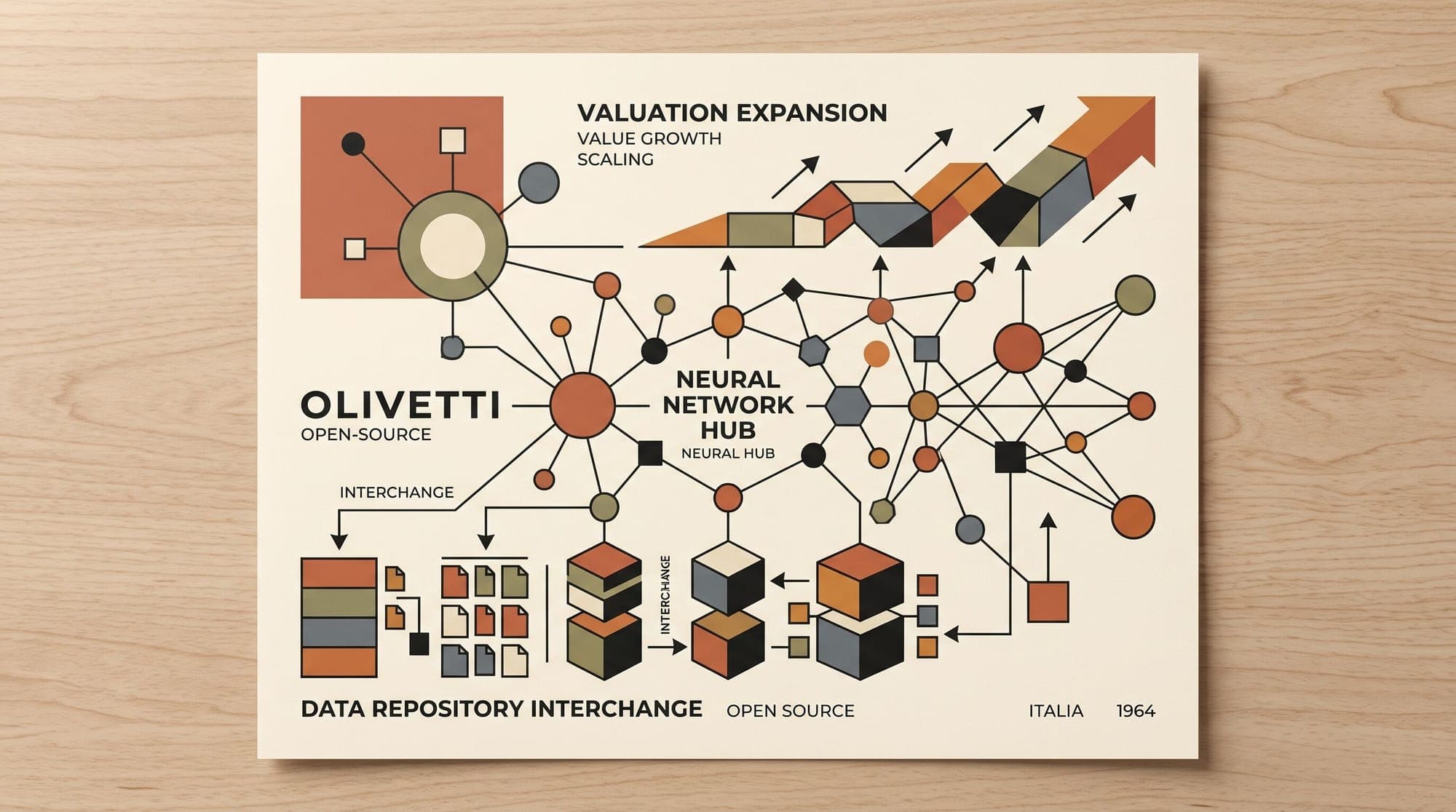
Hugging Face Developer Ecosystem and Model Distribution Architecture

The M&A exploration follows a wave of large-scale consolidations targeting developer platform layers rather than foundation model providers. Earlier this month, payments infrastructure provider Stripe moved to acquire AI routing platform OpenRouter for approximately $7 billion to $8 billion, highlighting sustained buyer interest in distribution bottlenecks, multi-provider gateways, and developer aggregators.

Platform Reach in the Open-Weight Ecosystem

Hugging Face operates as the default repository for open-weight neural network weights, evaluation datasets, and interactive demos. The platform hosts more than one million public and private repositories, serving as the core distribution layer for foundational releases including Meta's Llama family, Alibaba's Qwen suite, Mistral AI architectures, and DeepSeek checkpoints.

In its recent Summer 2026 platform report, Hugging Face noted that derivative models based on open-weight architectures had surpassed 150,000 distinct variants, with automated agent runtimes and programmatic client SDKs driving a growing share of API and file transfer traffic.

While frontier model developers face escalating pre-training capital expenditure, developer hubs such as Hugging Face maintain defensibility through hosted repository networks, Git-based version control for large binaries, fine-tuning infrastructure, and community Spaces. An acquisition would mark one of the largest transactions in the AI developer tooling market to date.


Sources

Written by

More to read

  • Dynamic Tool Synthesis in Production AI Agents: Architecture, AST Validation, Sandboxed Execution, and Lifecycle Governance

    Dynamic Tool Synthesis in Production AI Agents: Architecture, AST Validation, Sandboxed Execution, and Lifecycle Governance Standard tool-augmented AI agents rely on pre-configured, static API registries. Developers define a fixed set of JSON schemas, OpenAPI specifications, or Python wrapper functions at build time, and the language model selects from this catalog during execution. While sufficient for narrow, deterministic tasks, static registries encounter severe operational bottlenecks in o

    1 min
  • Denoising Diffusion Probabilistic Models and DDIM: Mathematical Foundations, Variance Schedules, and Fast Deterministic Sampling

    Generative modeling in continuous state spaces underwent a fundamental transformation with the formulation of Denoising Diffusion Probabilistic Models (DDPM) by Ho et al. (2020), building on the non-equilibrium thermodynamics foundations established by Sohl-Dickstein et al. (2015). Prior to diffusion models, deep generative synthesis was dominated by Generative Adversarial Networks (GANs), which suffered from training instability and mode collapse, and Variational Autoencoders (VAEs), which ofte

    1 min
  • Runtime Tool-Call Interception and Policy Enforcement in Production AI Agents: Architecture, Policy-as-Code, and Execution Sandboxing

    Runtime Tool-Call Interception and Policy Enforcement in Production AI Agents: Architecture, Policy-as-Code, and Execution Sandboxing Large language model agents are increasingly delegated operational authority across enterprise infrastructure, ranging from automated database modifications and cloud resource provisioning to customer refund processing and internal API orchestration. When an autonomous system is granted access to executable tools, its attack surface shifts from conversational gen

    1 min