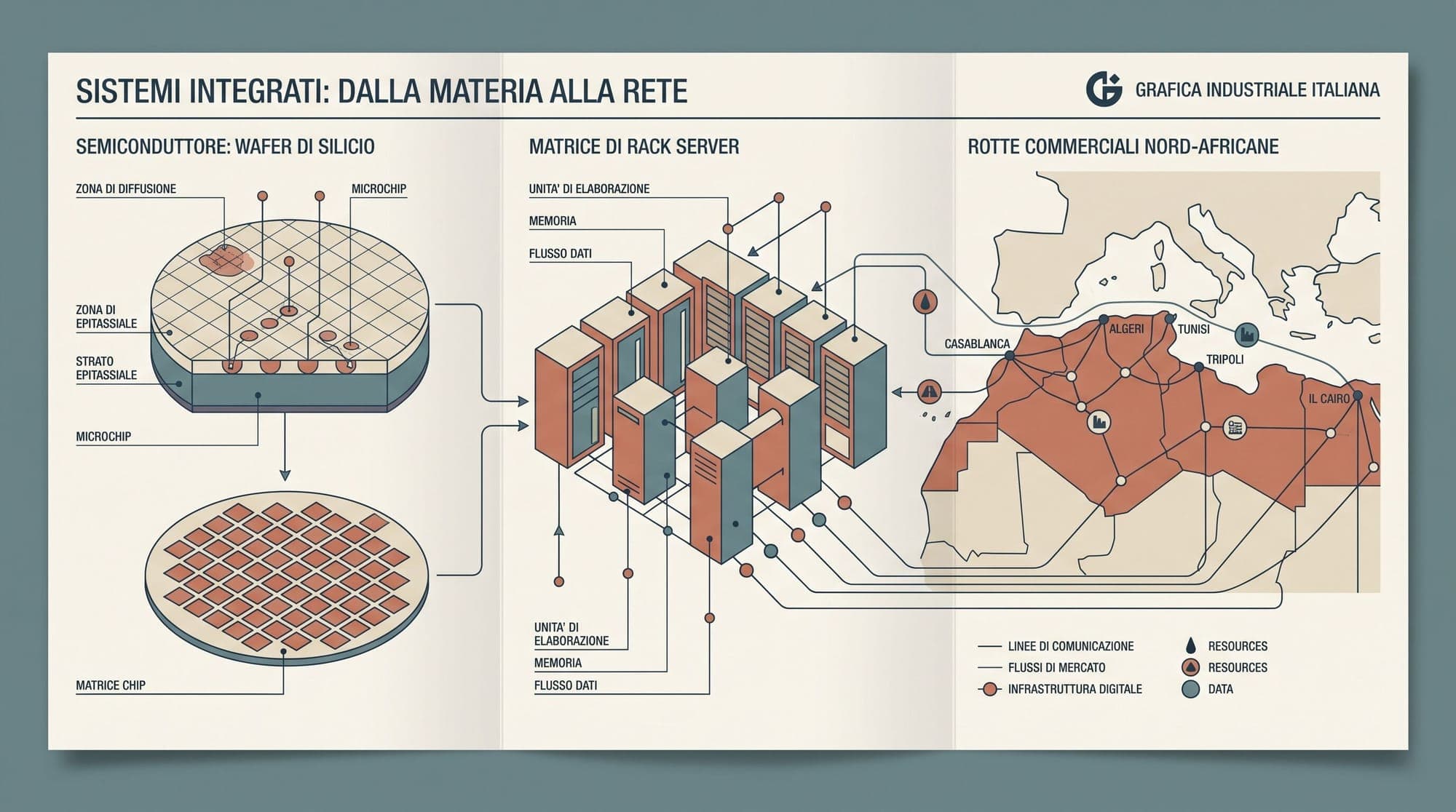
Huawei Technologies has submitted a proposal to build sovereign artificial intelligence infrastructure for the Egyptian government, offering to export more than 2,000 of its proprietary Ascend AI accelerators. The tender represents China's most significant known push to export its highest-end AI silicon to international public sector clients.
The proposal has drawn immediate attention in Washington, prompting the U.S. State Department to contact American semiconductor and cloud providers to assemble a competing consortium.
Hardware Architecture and Infrastructure Scope
According to procurement documents and reporting by Bloomberg, Huawei responded to a tender issued by Cairo with a 12-month infrastructure deployment blueprint:
- Training Cloud: 1,408 flagship Ascend 950-series accelerators dedicated to large-scale foundation model training.
- Inference Clusters: 600 additional accelerators (consisting of either Ascend 950-series chips or earlier Ascend 910B models) divided across two separate inference deployments.
- Surveillance and Civic Integration: Developed in partnership with Chinese AI firm iFlytek, the software stack includes municipal population tracking, computer vision analytics, and centralized monitoring dashboards.
While 2,008 Ascend 950DT accelerators deliver compute throughput comparable to only a few hundred top-tier Nvidia GPUs, the deployment would establish Huawei's silicon architecture within Africa's second-largest economy.

Geopolitical Friction and U.S. Counter-Bids
Egypt has targeted AI to contribute 7.7% to its national GDP by 2030 under its national digital strategy. However, because Egypt lacks domestic semiconductor fabrication capabilities, the country must rely entirely on foreign hardware imports.
The U.S. government placed advanced AI chip exports to Egypt and approximately 40 other nations under licensing restrictions in 2023. Upon learning of Huawei's bid, U.S. State Department officials initiated discussions with Nvidia, Advanced Micro Devices (AMD), and Microsoft to explore constructing an American-backed alternative.
Washington has also previously cautioned international partners that unauthorized deployment of restricted Huawei hardware could trigger secondary regulatory penalties. Similar pushback occurred in 2025 when Malaysia evaluated Huawei hardware for a national compute deployment before clarifying its compliance with international export regulations.
Export Strategy and Industry Impact
The Egypt proposal signals a transition in Huawei's commercial strategy. In earlier international outreach across Southeast Asia and the Gulf, Huawei offered primarily secondary-tier silicon due to constrained manufacturing yields for its leading models. Offering the Ascend 950 indicates stabilizing production lines at Chinese domestic foundries.
The competitive bidding process in Cairo marks the first instance where U.S. and Chinese hardware ecosystems are competing directly for a national government AI data center contract, establishing a template for sovereign AI procurement across developing markets.