HoneyBook Launches Claude MCP Connector for Autonomous Small Business CRM

Small-business CRM platform HoneyBook has rolled out an official integration for Anthropic's Claude built on the Model Context Protocol (MCP). The connector exposes structured customer records, project timelines, and billing systems to conversational AI agents, allowing service professionals to run client workflows through natural language interfaces. While large enterprises have increasingly deployed autonomous AI agents into core enterprise resource planning systems, smaller operators face st

2 min
HoneyBook Launches Claude MCP Connector for Autonomous Small Business CRM

Small-business CRM platform HoneyBook has rolled out an official integration for Anthropic's Claude built on the Model Context Protocol (MCP). The connector exposes structured customer records, project timelines, and billing systems to conversational AI agents, allowing service professionals to run client workflows through natural language interfaces.

While large enterprises have increasingly deployed autonomous AI agents into core enterprise resource planning systems, smaller operators face structural gaps. According to McKinsey's State of AI survey, nearly 50 percent of companies generating over $5 billion in revenue have moved AI past the pilot phase into operational production, compared to 29 percent of companies earning under $100 million.

HoneyBook Claude MCP Connector Architecture

Exposing Business Context Over MCP

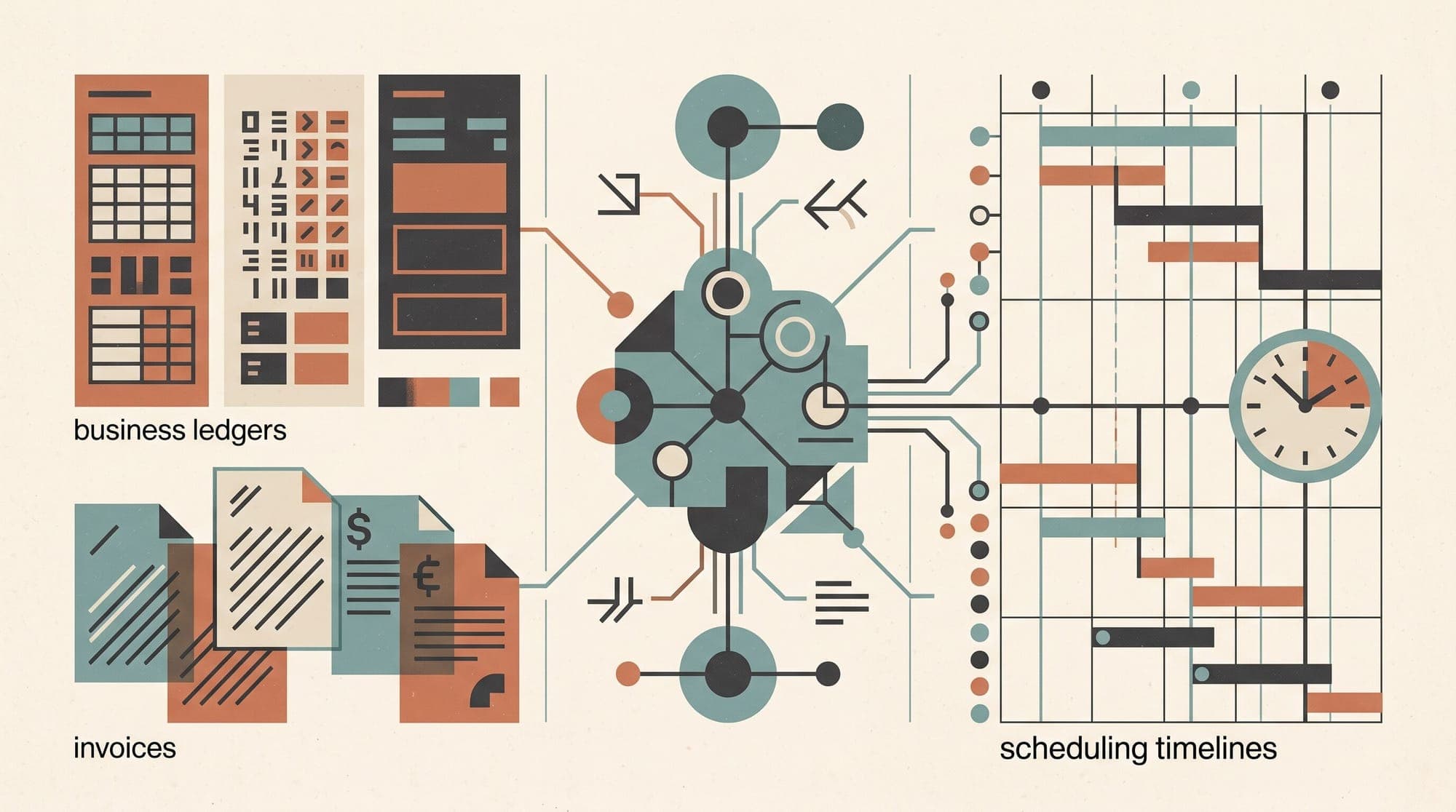
The HoneyBook MCP connector exposes CRM endpoints to any client environment supporting the open MCP specification, with Anthropic's Claude serving as the initial primary interface. Rather than switching between fragmented billing apps, email clients, and scheduling calendars, users can query active pipeline state directly.

The tool interface supports both read and write operations across standard CRM entities:

  • Pipeline Reconciliation: Users can query stale leads, outstanding deliverables, and client response statuses to flag forgotten follow-ups.
  • Contract and Proposal Generation: Claude can pull client details, populate dynamic templates, and draft formal agreements.
  • Invoicing and Payment Operations: The model can generate invoices, issue payment reminders for past-due accounts, and create ad-hoc billing requests.
  • Lifecycle Tracking: Project milestone dates and status labels can be updated automatically based on conversational summaries of client meetings.

Sandboxed Execution and Data Privacy

Connecting sensitive operational ledgers to hosted LLM providers raises data governance concerns. HoneyBook implements an ephemeral execution boundary: each MCP tool call runs within an isolated sandbox environment that is purged immediately after session termination.

This architecture prevents long-term caching of proprietary financial documents, customer contact details, or transaction histories within third-party model context buffers. Granular permission controls also restrict which data subsets are exposed to the agent runtime during specific queries.

Sources

Written by

More to read

  • Hallucination Detection and Faithfulness Verification in Production RAG: Architecture, NLI Claim Decomposition, and Runtime Guardrail Economics

    Retrieval-Augmented Generation (RAG) is commonly deployed under the assumption that grounding generation in retrieved passages eliminates factual inaccuracies. In practice, grounding provides an evidence boundary but does not guarantee factual fidelity. Production language models regularly synthesize claims absent from the retrieved context (extrinsic hallucinations) or directly assert statements conflicting with retrieved premises (intrinsic contradictions). As enterprise RAG pipelines scale i

    1 min
  • Sparse Attention and BigBird: How Window, Global, and Random Graphs Preserve Turing Completeness in Linear Time

    Standard self-attention in transformer architectures scales quadratically with sequence length. Computing full pairwise interactions between n tokens requires evaluating an n x n attention matrix, yielding O(n^2) computational complexity and memory consumption. While hardware accelerators and IO-aware tiling algorithms like FlashAttention optimize memory traffic, the quadratic compute and KV footprint remains a barrier for processing long contexts, document-level summarization, and genomic seque

    1 min
  • Oxford Study Details Chinese Gray-Market Proxies Reselling Claude Tokens at 90% Discounts

    An investigation by the Oxford China Policy Lab reveals that Chinese developers routinely access Anthropic's frontier Claude models at discounts between 70% and 90% below list price, bypassing geographical blocks, payment filters, and biometric identity verification through a decentralized network of API proxies known locally as "transfer stations" (中转站). The analysis, authored by Oxford researcher Zilan Qian and published via ChinaTalk, outlines the modular supply chain and economic mechanics

    1 min