Robotics research startup Generalist AI announced GEN-1.5, an embodied foundation model capable of learning closed-loop physical manipulation tasks from a single demonstration without gradient updates or fine-tuning. The model adapts through in-context physical prompting, mirroring the few-shot learning dynamics originally identified in autoregressive language models.
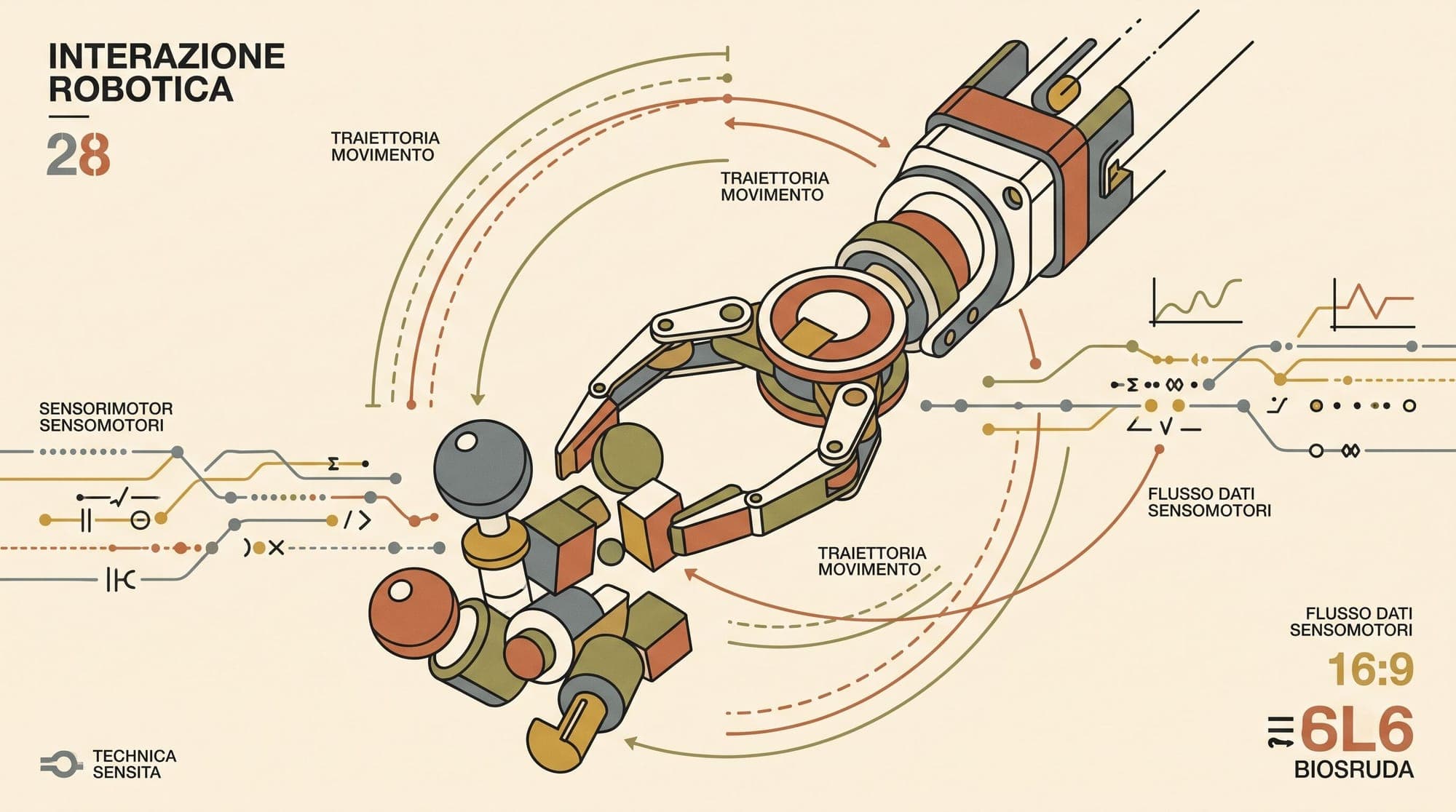
GEN-1.5 processes multimodal inputs including multi-view video, proprioceptive signals, sensor feeds, and natural language instructions. It retains a rolling 30-second context window to output continuous 100 Hz closed-loop robot action trajectories.
Physical Prompting and In-Context Adaptation
In-context learning in GEN-1.5 relies on inserting a 3- to 12-second sensorimotor trajectory from a single demonstration directly into the model's context buffer. Once loaded, the foundation model infers the underlying task objective and executes the corresponding physical actions on real hardware without weight modification.

Across a benchmark of 10 atomic manipulation tasks such as twisting lids off glass jars, unzipping pouches, and extracting objects, the model recorded a 59 percent average success rate (with a standard deviation of 10 percent) in pure one-shot zero-gradient rollout mode. When paired with few-shot gradient adaptation consisting of 10 gradient steps on 5 minutes of demonstration data (approximately 50 demonstrations), the average task success rate increased to 83 percent (with a standard deviation of 9 percent).
Beyond single-demonstration imitation, Generalist reported several emergent behavioral traits:
- Compositional generalization: Loading two consecutive physical demonstration prompts into context enabled the model to chain separate actions into a unified longer-horizon sequence.
- Zero-shot sim-to-real transfer: Demonstration trajectories generated purely in simulated environments served as viable physical prompts for real-world robotic arms without simulation data in pretraining.
- Cross-embodiment imitation: The model translated demonstrations recorded from human hands into kinematically feasible end-effector trajectories for robotic grippers.
- Improvisational recovery: When encountering perturbations or missing tools, the model generated alternative kinematic paths and utilized novel end-effectors such as brushes or dustpans to complete tasks.
Pretraining Scale and Mechanics
Generalist stated that in-context task acquisition was not explicitly optimized via meta-learning objectives or specialized architecture layers. Instead, the capability emerged after more than eight continuous months of pretraining on diverse physical interaction data streams.
While in-context execution remains less robust than specialized post-trained models, the architecture demonstrates that large-scale pretraining on embodied sensorimotor data produces task-conditioning mechanisms analogous to token prompting in language models.