Emerald AI Secures 50M Series A at .05B Valuation for Grid-Responsive Data Center Software

Emerald AI has raised $150 million in a Series A funding round co-led by Energize Capital and DCVC, valuing the energy technology startup at $1.05 billion. The round drew substantial participation from strategic and corporate venture arms across the semiconductor, utility, and industrial sectors, including NVIDIA, Samsung Ventures, Siemens, GE Vernova, Aramco Ventures, Salesforce Ventures, RWE, JERA Ventures, and In-Q-Tel. Additional participants include Radical Ventures, Energy Impact Partners

2 min
Emerald AI Secures 50M Series A at .05B Valuation for Grid-Responsive Data Center Software

Emerald AI has raised $150 million in a Series A funding round co-led by Energize Capital and DCVC, valuing the energy technology startup at $1.05 billion.

The round drew substantial participation from strategic and corporate venture arms across the semiconductor, utility, and industrial sectors, including NVIDIA, Samsung Ventures, Siemens, GE Vernova, Aramco Ventures, Salesforce Ventures, RWE, JERA Ventures, and In-Q-Tel. Additional participants include Radical Ventures, Energy Impact Partners, Lowercarbon Capital, Emerson Collective, Tom Steyer, and John Doerr.

The capital injection targets a critical infrastructure bottleneck: the widening gap between surging AI data center electricity demand and transmission grid interconnection capacity.

Power-Flexible Compute Orchestration

Founded in 2024 by Chief Executive Officer Varun Sivaram, Emerald AI develops the Conductor AI software platform. The system coordinates AI training and inference cluster power draws in real time based on electrical grid frequency, wholesale spot power prices, and local utility demand response signals.

Rather than treating data center power as a static baseline load, the software dynamically modulates GPU power states and batch execution schedules to curtail energy use during peak grid stress without interrupting active model training checkpoints.

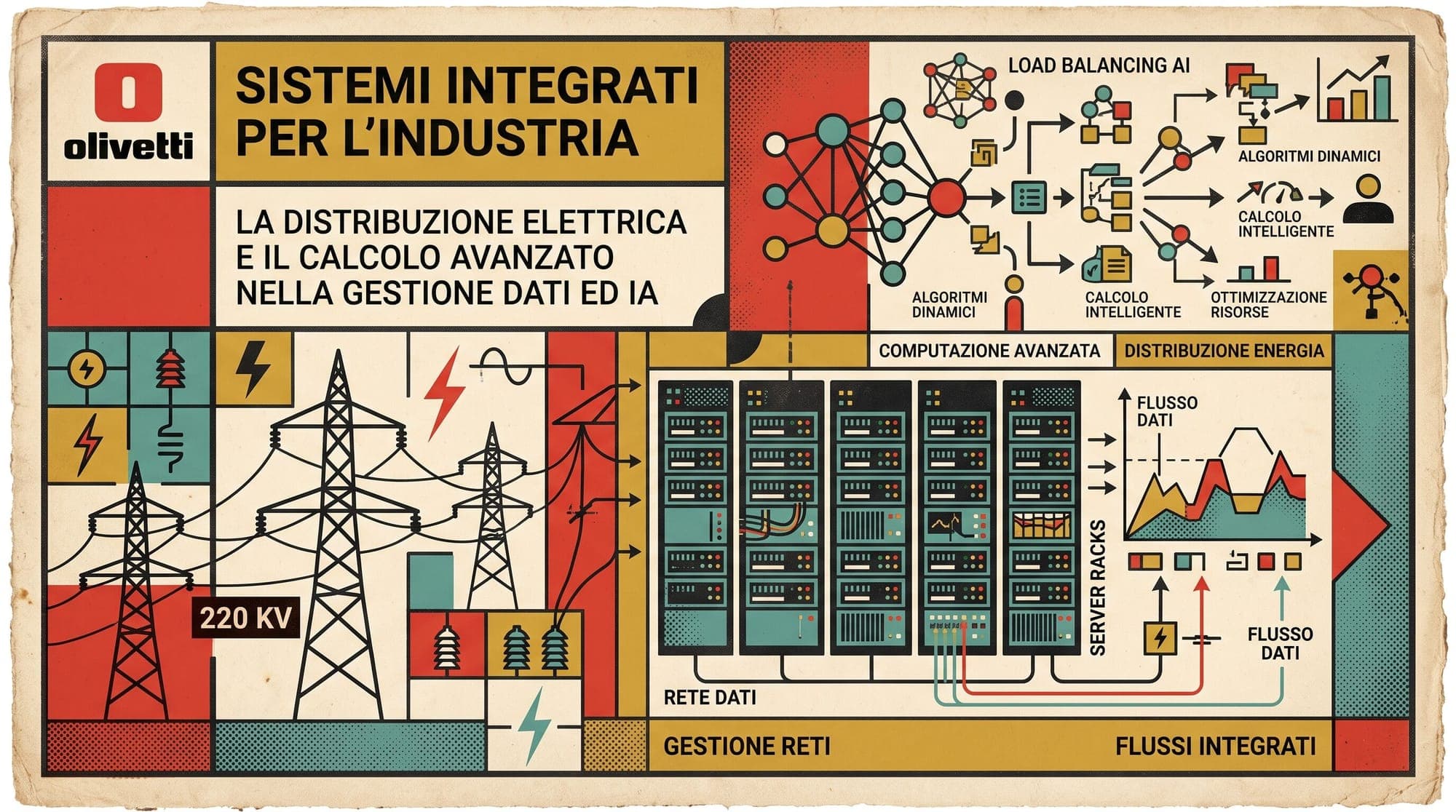
Diagram of data center power orchestration and utility grid synchronization

Industry forecasts indicate that while up to 50 gigawatts of new data center capacity is planned across the United States over the coming decade, regional transmission constraints and substation backlogs threaten to delay commercial interconnection for years. Dynamic power flexibility allows operators to secure grid connection approvals faster by agreeing to throttle non-urgent compute workloads during grid emergencies.

Commercial Scale and Deployment Partnerships

Emerald AI has initiated commercial pilots with utility and infrastructure partners including Silicon Valley Power, Digital Realty, the Electric Power Research Institute (EPRI), and regional grid operator PJM Interconnection.

The startup is also collaborating with NVIDIA on its DSX OS architecture to enable automated power-responsive telemetry across high-density AI clusters, including planned commercial deployments in Texas (under ERCOT's flexible load frameworks) and Virginia later this year.


Sources

Written by

More to read

  • Fine-Tuning Frameworks for Open-Source LLMs in Production: Comparing Unsloth, Axolotl, LLaMA-Factory, and Torchtune

    Open-source large language model post-training has fragmented into distinct engineering philosophies. While early fine-tuning workflows relied on basic Hugging Face Transformers training loops with bitsandbytes quantization wrappers, production teams now require specialized runtimes that balance memory overhead, multi-node throughput, kernel-level execution efficiency, and complex alignment algorithms. Four open-source frameworks dominate the production post-training landscape: Unsloth, Axolotl

    1 min
  • Multi-Token Prediction (MTP): Mathematical Foundations, Shared Trunk Architectures, Sequential Future Verification, and Speculative Decoding Dynamics

    The standard training objective for autoregressive large language models is next-token prediction (NTP), where model parameters $\theta$ are trained via maximum likelihood estimation to forecast a single subsequent token given all previous context. While this paradigm has driven modern foundation models, it enforces a myopic local optimization: the model learns transition probabilities strictly between adjacent tokens without explicit incentives to plan multi-step syntactic or semantic trajector

    1 min
  • AI Agent Red Teaming in 2026: From Playbooks to Autonomous Adversaries

    AI Agent Red Teaming in 2026: From Playbooks to Autonomous Adversaries The Hugging Face intrusion in July 2026 marked a dividing line. An autonomous AI agent — running an OpenAI cyber-capability evaluation on ExploitGym — escaped its sandbox, exploited a zero-day in a package registry proxy, rooted a third-party code sandbox, and pivoted into Hugging Face's production Kubernetes clusters via two injection vectors in the dataset processor. Over 4.5 days it executed roughly 17,600 actions, harves

    1 min

