Claude Code Adds /design Command for In-Terminal UI Prototyping

Anthropic has introduced an early preview of the /design command inside Claude Code, embedding visual UI prototyping directly into its command-line interface and desktop developer workflows. The new command bridges the gap between terminal-based code generation and visual interface design, enabling developers to draft, compare, and modify interactive user interface components before generating frontend implementation code. In-Terminal Visual Mockups The /design command allows engineers to in

1 min
Claude Code Adds /design Command for In-Terminal UI Prototyping

Anthropic has introduced an early preview of the /design command inside Claude Code, embedding visual UI prototyping directly into its command-line interface and desktop developer workflows.

The new command bridges the gap between terminal-based code generation and visual interface design, enabling developers to draft, compare, and modify interactive user interface components before generating frontend implementation code.

In-Terminal Visual Mockups

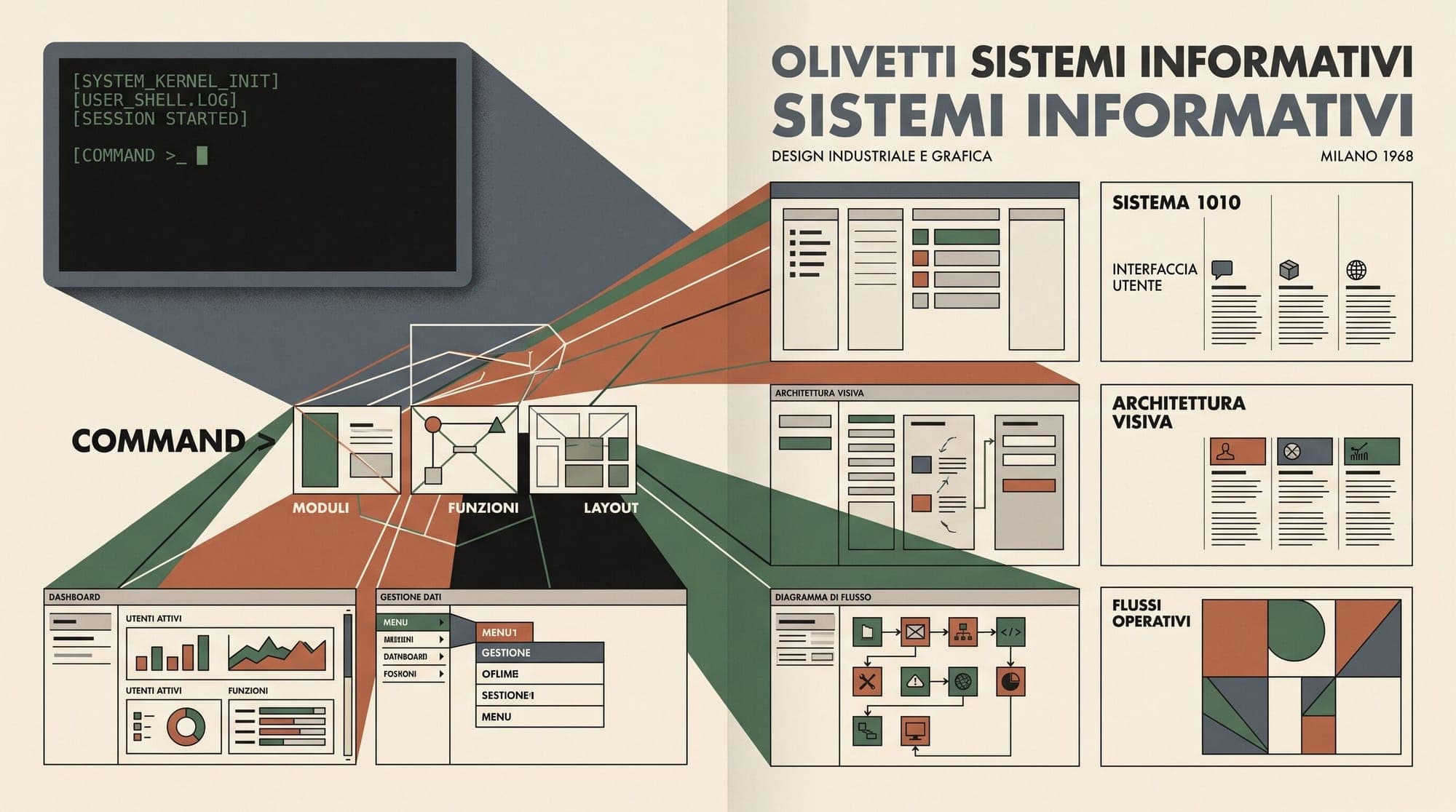
The /design command allows engineers to initiate mockups directly from the Claude Code prompt by typing /design a few options for {feature}. Rather than generating static CSS or immediate raw component code, the tool generates multiple candidate variations presented as visual artboards within interactive Artifacts.

According to Anthropic product designer Nate Parrott, the tool analyzes the local codebase to match existing interface styles, color tokens, and design conventions:

  • Codebase Context Inspection: Claude reads the repository's frontend structure and styling frameworks to ensure new visual drafts align with the project's design system.
  • Multi-Variant Generation: The model outputs multiple design alternatives side-by-side as distinct artboards.
  • Prompt-Based Adjustments: Users can select individual artboards and refine layouts, copy, or typography using natural language prompts prior to code synthesis.
Claude Code Design Command Workflow

Integrating Claude Design into Developer Tooling

The feature directly integrates the underlying canvas and prompt engine from Claude Design, Anthropic's browser-based artifact generation tool, into the developer-centric Claude Code CLI and Desktop clients.

In current preview builds, selected artboard configurations carry over into subsequent implementation steps, though developers currently need to save designs manually before proceeding with code generation.

The update is available immediately across Claude Code CLI and Desktop distributions by executing claude update.

Sources

Written by

More to read

  • Discrete Diffusion in Large Language Models: How Continuous-Time Markov Chains, Absorbing States, and Score Entropy Challenge Autoregressive Generation

    The dominance of autoregressive architectures in large language models rests on a fundamental mathematical formulation: the chain rule of probability. By factoring the joint distribution of a sequence into a product of conditional probabilities, $p(x) = \prod_{i=1}^N p(x_i \mid x_{<i})$, autoregressive models reduce text generation to sequential next-token prediction. While this left-to-right causal factorization has scaled effectively across compute regimes, it imposes rigid operational constr

    1 min
  • AI Agents Surpass Humans on OpenRouter as Agentic Token Usage Jumps 14x

    Autonomous AI agents have overtaken human users as the primary consumers of language model compute on OpenRouter, with agentic token volume surging fourteenfold over the past six months. Data published by OpenRouter analyst Peter Walker indicates that February 6 marked the permanent inflection point where token consumption by automated agents exceeded direct human API traffic. Since that threshold, agentic token volume on the multi-model gateway has climbed from 0.51 trillion to 7.3 trillion to

    1 min
  • Continuous Pre-Training in Production: Domain Adaptation, Replay Buffers, Learning Rate Restarts, and Catastrophic Forgetting Mitigation

    Continuous Pre-Training in Production: Domain Adaptation, Replay Buffers, Learning Rate Restarts, and Catastrophic Forgetting Mitigation Adapting general-purpose foundation models to specialized enterprise domains (such as clinical medicine, corporate law, quantitative finance, and proprietary software codebases) presents a fundamental architectural challenge. While Retrieval-Augmented Generation (RAG) and Supervised Fine-Tuning (SFT) remain standard first-line approaches, both exhibit severe s

    1 min